Surfing is one of the best feelings there is. The first rays of morning sun, the sound of the Atlantic, and that moment when a wave carries you—that’s exactly what many people look forward to for months on end. It’s all the more wonderful when you can enjoy your surfing vacation from day one and aren’t completely exhausted after just your first few sessions.
From our experience at FreshSurf, we know that good preparation often makes all the difference. Those who arrive with a little more stamina, flexibility, and paddling strength learn faster, feel more confident in the water, and can get more out of every session.
With the following twelve tips, we’ll show you how to prepare for your next surf trip easily and effectively.

Based on our experience at FreshSurf
For many years now, we’ve been welcoming beginner and advanced surfers from all over Europe to Fuerteventura every year. Time and again, we’ve seen that those who prepare specifically four to six weeks before their surfing vacation start with significantly more stamina, paddle more relaxed into the lineup, and usually experience noticeably more success right from the first few days. The goal isn’t to achieve peak performance—but to optimally prepare your body for the physical demands of surfing.
The Most Important Points at a Glance

✔ Start training 4–6 weeks before your surfing trip.

✔ Work on your endurance, strength, balance, and flexibility.

✔ Swimming is one of the most effective ways to prepare.

✔ Supplement your workout with yoga, mobility exercises, and functional exercises

✔ The better you prepare, the more energy you’ll have later in the water.
Preparation in 3 stages
In this guide, we’ll show you twelve proven ways to get ready for your next surfing vacation —from swimming training and strength exercises to yoga, mental preparation, and the final steps before your trip. We’ve been using many of these tips ourselves for years or recommend them to our guests before their stay on Fuerteventura.

- Board Sports
- Fitness and Endurance Training
- Balance Boards and Slacklines

- Travel Preparations
- Surfing Technique Training
- Personal Care
Why Good Preparation Is Really Worth It
Preparing well for your surfing vacation doesn’t mean you have to be particularly athletic or train for hours every day. Even just a few weeks of regular training can make a noticeable difference.
Those who prepare specifically often benefit from:
- More endurance while paddling
- Faster progress in the surfing course
- More Power for Takeoff
- better balance on the surfboard
- lower risk of injury
- shorter recovery periods between sessions
- More confidence in the water
- More fun throughout your entire surfing vacation
Beginners, in particular, often underestimate just how physically demanding surfing can be. The combination of paddling, standing up, balancing, and reading the waves engages many muscle groups at the same time. With proper preparation, you can therefore focus much more on what it’s really all about: surfing and the experience in the water.
More on this topic: Triathlon Training on Fuerteventura: Swimming, Cycling, and Running Between the Atlantic Ocean and Volcanic Landscapes · No Swell – What to do on days without waves?
Good to Know
Before their first surfing trip, many guests believe that they mainly need to train their arms. In reality, however, you’ll benefit most from a combination of endurance, core stability, flexibility, and proper paddling technique. It’s exactly this combination that allows you to stay in the water longer and use your energy efficiently.
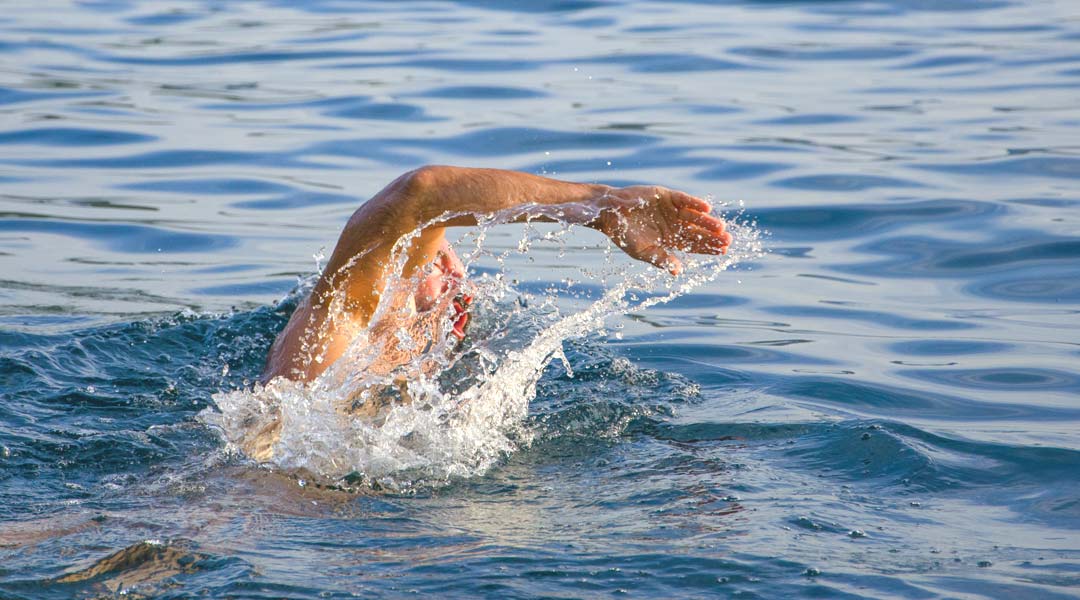
1. Swimming—the best way to prepare for surfing
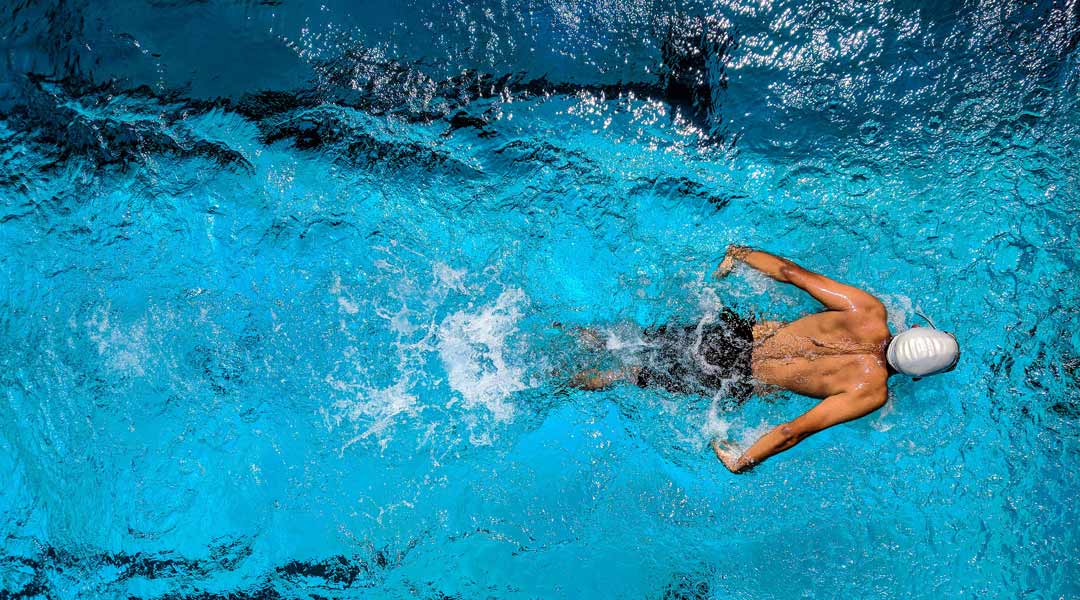
Surfing doesn’t start with the takeoff—it starts with paddling. If you can paddle in a relaxed manner, you’ll reach the lineup with more energy, catch more waves, and have more fun in the water.
That’s why swimming is one of the most effective ways to prepare for your surfing vacation. The crawl stroke, in particular, builds endurance and strengthens your shoulders, back, and breathing—exactly the areas you’ll need when you’re surfing.
Our Tip
If you don’t have any experience with the crawl stroke yet, it’s worth taking a technique class at the pool. Proper technique saves energy—just like it will later when you’re paddling on a surfboard.
In a nutshell
Swimming improves your endurance, paddling strength, and feel for the water—making it one of the best ways to prepare for your surfing vacation.
2. Paddling—the key to catching more waves
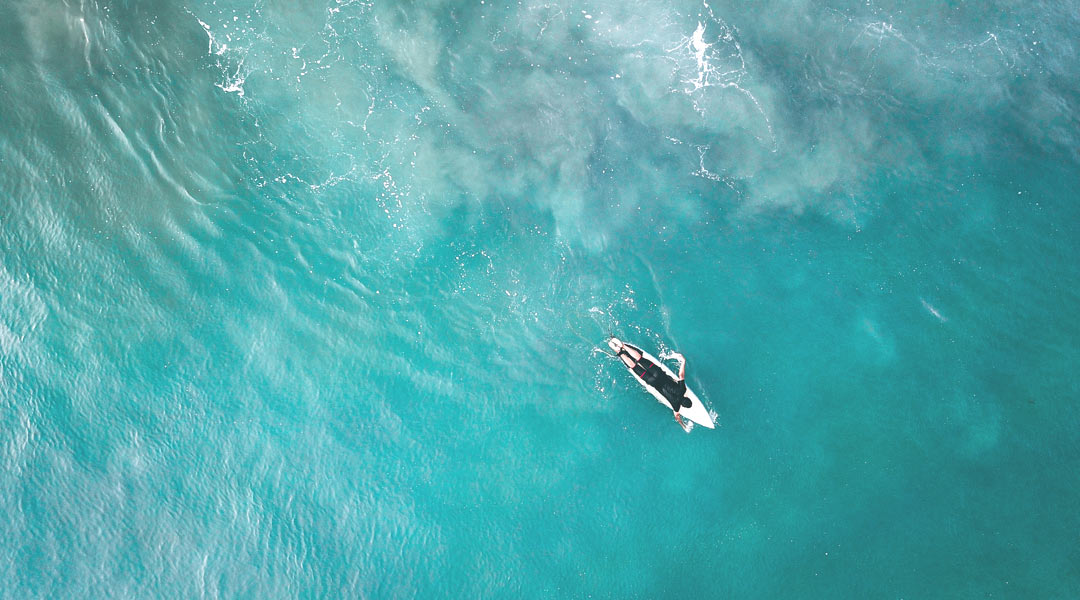
“If you want to surf more waves, you have to learn to paddle better first.”
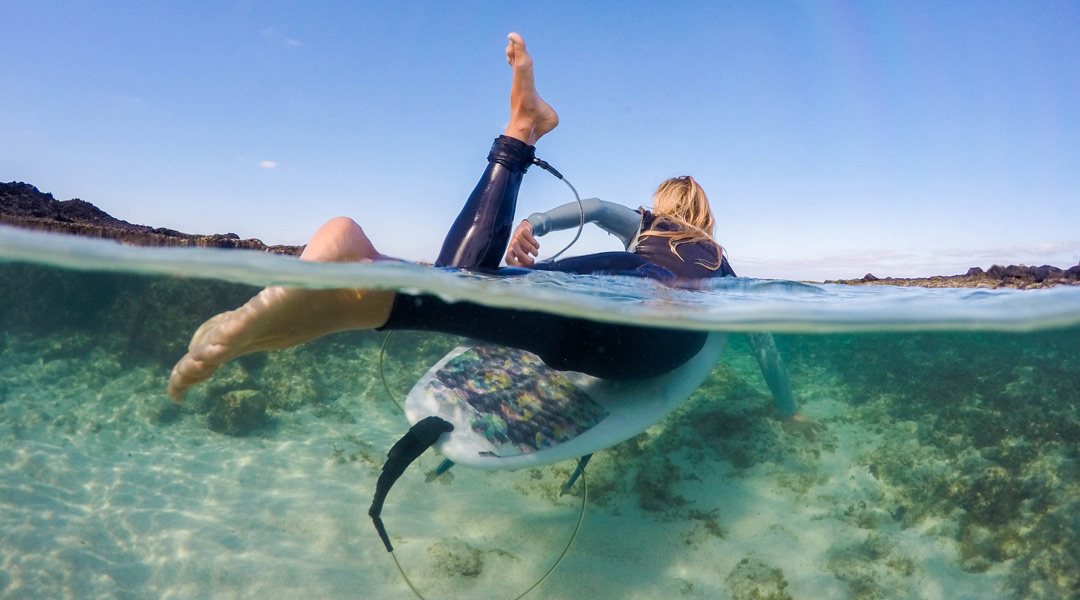
When people think of surfing, most think of the takeoff first. But in reality, you spend most of your time paddling on your surfboard.
The more efficiently you paddle, the more relaxed you’ll be when you reach the lineup, the more waves you’ll be able to paddle up to, and the more energy you’ll have left for the actual wave.
Here’s how you can practice paddling
Of course, the best way to practice paddling is on a surfboard. If that’s not possible, other exercises can help you, too:
- Front crawl
- Resistance Bands
- Back and Shoulder Exercises
- Fuselage Stabilization
What’s important here isn’t using as much strength as possible, but rather a smooth and controlled movement.
Our Tip
Many beginners paddle almost exclusively with their arms. Instead, use your entire upper body and keep your eyes focused straight ahead. This conserves energy and makes your paddling motion much more efficient.
In a nutshell
Good paddling technique helps you get to the lineup more relaxed, saves energy, and increases your chances of catching more waves.
3. Yoga – Surf with Greater Flexibility and Recover Faster

When surfing, you’re constantly moving your body into unfamiliar positions. Flexible shoulders, a stable core, and open hips help you paddle more fluidly, stand up more cleanly, and move more confidently on the board.
That’s exactly why yoga is an integral part of many surfers’ preparations for their next surf trip.
Here’s how to prepare
Just 2–3 yoga sessions a week can significantly improve your flexibility and body awareness.
Focus especially on the following:
- Shoulders
- Hip
- Back
- Legs
- Fuselage Stability
Our Tip
You don’t have to be a yoga pro. Just 15 to 20 minutes of regular practice often does more good than one long session right before your vacation. Consistency is key.
In a nutshell
Yoga improves flexibility, balance, and body control—and helps you surf in a more relaxed and energy-efficient way.
4. Strength Training – Less Bulky Muscles, More Body Tension
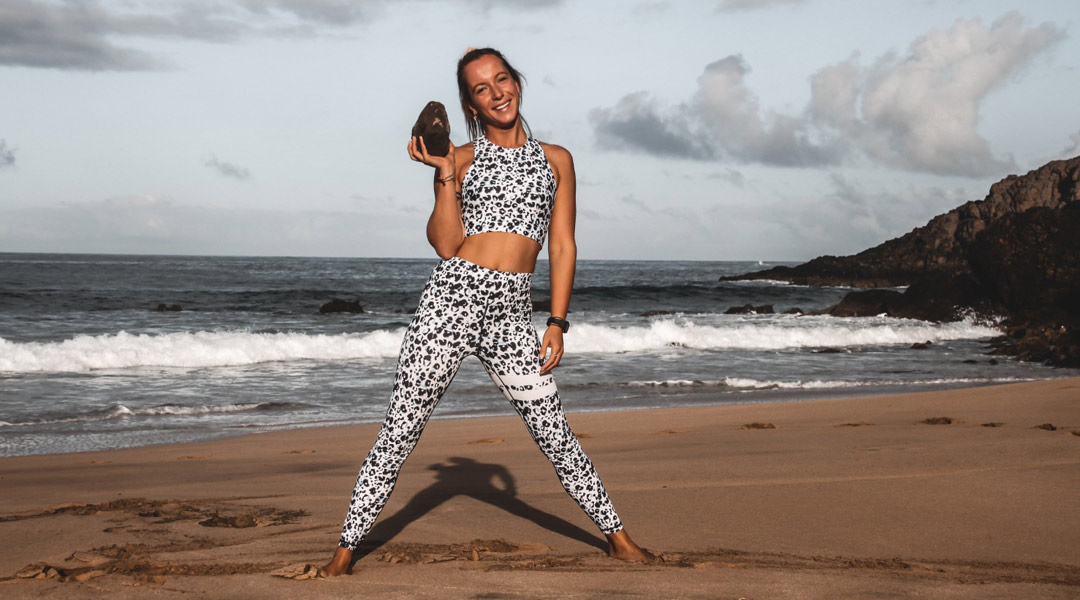
When surfing, it’s not about lifting as much weight as possible. What’s much more important is a stable core and enough strength to paddle in a controlled manner for several hours, execute the takeoff, and steer your board safely.
That’s why you should focus on functional exercises that work multiple muscle groups at the same time.
Here’s how to prepare
Just 2–3 strength training sessions a week are enough.
Exercises such as the following are particularly helpful:
- Push-ups
- Pull-ups or rowing
- Planks
- Squats
- Lunges
Train with proper form and control—quality is more important than doing as many repetitions as possible.
Our Tip
If you’re short on time, focus on bodyweight exercises. These will help you build the stability and core strength you’ll need later on the surfboard.
In a nutshell
Functional strength training improves your core stability, makes takeoffs easier, and helps you keep surfing with power even after several sessions.
💡 FreshSurf-Tipp
Du brauchst keine Mitgliedschaft im Fitnessstudio. Mit 20 bis 30 Minuten funktionellem Training zu Hause kannst du deinen Körper optimal auf den nächsten Surftrip vorbereiten.
Nicht maximale Kraft entscheidet über einen guten Surftag, sondern Ausdauer, Körperspannung und kontrollierte Bewegungen. Genau darauf sollte dein Krafttraining ausgerichtet sein.
5. Balance – Practice your balance before your vacation

Many people believe that surfing is primarily a matter of balance. In fact, your balance improves automatically with every surfing session. Still, you can prepare your body for it even before your vacation.
With simple balance exercises, you can improve your body control and react more calmly and confidently on the surfboard later on.
How to Prepare
Just 10 to 15 minutes of balance training several times a week is enough.
Suitable exercises include:
- Standing on one leg
- Squats on one leg
- Balance board
- Bosu ball
- Exercises with your eyes closed
The more varied your training is, the better your body will learn to react to small movements.
Our Tip
A balance board is a great addition—but it doesn’t replace surfing. Use it to improve your core strength and coordination, not to simulate surfing.
In a nutshell
Balance training improves your body control and helps you feel more confident on your surfboard more quickly.
💡 FreshSurf-Tip
You don’t have to train your balance to perfection. You’ll still get the best balance from surfing itself. Use training at home as a supplement—not a substitute.
Balance can be trained. Even just a few minutes of regular balance training improves body control and stability on the surfboard.
6. Skating & Surfskating – Improve Your Sense of Fluid Movement

Even though asphalt and waves don’t have much in common, there’s one skill that connects both sports: fluid movements.
A surfskate, in particular, helps you improve your body awareness, weight transfer, and coordination. As a result, many movements will feel much more natural on a surfboard later on.
How to Prepare
Even just one or two sessions a week can help improve your sense of movement.
Pay special attention to the following:
- a relaxed posture
- smooth turns
- weight transfer from the hips and
- shoulders
- clean movements rather than speed
Our Tip
You don’t need to know any tricks. Smooth carving motions will get you much further in surfing than spectacular jumps or ramps.
In a nutshell
Surfskating improves coordination, timing, and body awareness—skills that will also help you later on a surfboard.
💡 FreshSurf-Tip
Don’t have a surfskate? No problem. Even a regular longboard can help you improve your balance and body awareness. The key is to stay active on a regular basis.
Surfskating isn’t a substitute for a surfing session, but it’s one of the best ways to practice your movements and body awareness between surfing trips.
7. Fitness and Endurance Training – More Energy for Long Days of Surfing

A day of surfing can be pretty exhausting. Paddling for several hours, constantly heading back to the lineup, and paddling toward every wave with full concentration—that takes a lot of energy.
With regular endurance training, you can prepare your body for it and enjoy longer sessions without getting tired too soon.
How to Prepare
Just 2–3 running sessions per week are enough to improve your basic endurance.
Here are some tips:
- Run at a relaxed pace.
- Start with shorter distances.
- Consistency is more important than speed.
Alternatively, cycling, hiking, or other endurance sports are also good options.
Our Tip
Jogging is a good way to supplement your surf training—but it doesn’t replace swimming or surf-specific training. The best preparation is always a combination of endurance, strength, and flexibility.
In a nutshell
Good endurance helps you stay focused while surfing for longer, recover faster, and enjoy more time in the water.
💡 FreshSurf-Tipp
Du musst keine zehn Kilometer laufen. Schon regelmäßige, lockere Laufeinheiten verbessern deine Kondition und helfen dir dabei, mehrere Surfsessions hintereinander entspannter zu meistern.
Ausdauertraining verbessert deine Kondition und sorgt dafür, dass du auch nach mehreren Stunden im Wasser noch genügend Energie für die nächste Welle hast.
8. Slacklining – Improve Your Balance Through Play

Balance is important when surfing—and that’s exactly where a slackline can help. It challenges your core strength, coordination, and reaction time, and it’s a lot of fun, too.
Of course, it’s no substitute for time in the water, but it’s a great way to add variety to your surf training.
Here’s how to prepare
Just 10 to 15 minutes on the slackline is enough.
Start by trying to:
- stand still
- walk slowly
- make small changes in direction
- stay relaxed
With a little practice, your body awareness will improve almost on its own.
Our Tip
Everyone wobbles at first. Don’t focus on running as far as possible; instead, focus on staying calm and in control. It’s exactly this body awareness that will help you later on the surfboard.
In a nutshell
Slacklining improves balance, core strength, and coordination—an ideal addition to your surf training.
💡 FreshSurf-Tip
No slackline? No problem. Even simple balance exercises on one leg or a balance board will improve your body awareness and prepare you for surfing.
Slacklining trains balance, coordination, and core strength—skills that will also benefit you on the surfboard.
9. Surfing Tutorials – Learn Before Your First Day on the Water

You don’t have to wait until you’re at the beach to start learning. Good surfing tutorials can help you get familiar with the most important techniques even before your vacation.
If you’re already familiar with terms like “take-off,” “line-up,” or “paddling technique,” you’ll be able to focus on what matters most in your surfing class—surfing itself.
Here’s what you should look for
Look for tutorials that are explained simply and are easy to follow.
Videos on the following topics are especially helpful:
- Take-off
- Paddling technique
- Water safety
- Behavior in the lineup
- Understanding waves
It’s better to watch a few videos carefully than to try to take in as much content as possible all at once.
Our Tip
Videos aren’t a substitute for time in the water—but they do help you better understand movement patterns and techniques. This makes it easier for many surfers to put what they’ve learned into practice more quickly later on.
In a nutshell
Surfing tutorials teach you the essentials and help you start your first surfing lesson feeling more relaxed and better prepared.
💡 FreshSurf-Tip
After each tutorial, try practicing the movement without water. That way, not only will your mind understand the technique—your body will also begin to internalize it.
Surfing tutorials help you familiarize yourself with the movements and technical terms even before your vacation. This makes it easier to get started and gives you more confidence during your first surfing lesson.
10. Arrive Well-Prepared—Here’s How to Start Your Surf Trip on a Relaxed Note

The best preparation doesn’t end with training. If you arrive well-rested, well-organized, and stress-free, you’ll often start your first few days of surfing feeling more relaxed.
So be sure to allow plenty of time for your trip and take care of everything you’ll need once you’re there well in advance—from accommodations to the right surfing gear.
Before you leave, remember to
- get plenty of sleep before your flight
- pack comfortable clothes for the trip
- bring sunscreen and a water bottle
- book your surf gear or surf lesson in advance
- do a quick stretching routine after you arrive
The more relaxed you are when you arrive, the easier it will be for your body to adjust to your first sessions in the water.
Our Tip
Don’t spend your first day doing a marathon surfing session. Get used to the conditions gradually, drink plenty of water, and give your body time to adjust to the sun, the ocean, and the physical exertion.
In a nutshell
Good travel preparation helps you arrive feeling relaxed and enjoy your surfing vacation from day one.
💡 FreshSurf-Tip
The first few days often set the tone for the entire surf trip. It’s better to start off relaxed and with plenty of energy, rather than pushing yourself too hard on the very first day.
If you start your surf vacation well-organized and well-rested, you’ll be able to focus better on surfing from day one and enjoy your time in the water even more.
You can find the ultimate packing list for your surf vacation here!
11. Technique Training – Practice Movement Sequences at Home

You don’t have to learn everything in the water. You can practice many of the movements on dry land before your surfing vacation. This will give you confidence and help you focus on the essentials more quickly during your surfing lessons.
The take-off, in particular, is something you can practice very well at home.
Here’s what you can practice:
- the take-off
- your lying position on the board
- the paddling motion
- a stable body posture
- fluid movements
Even just a few minutes of regular practice will help you master these movements.
Our Tip
Quality is more important than speed. Perform each movement slowly and with good form. This will help your body develop a feel for the correct technique—and that’s exactly what will help you later in the water.
In a nutshell
If you practice the most important movements before your surfing vacation, you’ll get off to a more confident start and often learn faster in the water.
💡 FreshSurf-Tip
Just five minutes of take-off practice a day is often more effective than an hour right before you leave. Consistency beats intensity.
Practicing technique at home helps you internalize the movements and ensures that you can focus more quickly on the waves and timing during your surf lesson.
12. Nutrition – Give Your Body the Right Energy

Good preparation doesn’t end with training. Your diet also affects how fit and energetic you feel during your surfing vacation.
Make sure to eat a balanced diet even before your trip, drink plenty of water, and give your body everything it needs for active days in the water.
Here’s what you should keep in mind:
- Drink plenty of fluids
- Fresh fruits and vegetables
- High-quality carbohydrates
- Healthy fats
- Enough protein for recovery
Small changes in your daily routine are often enough to help you feel fitter and more resilient during your surf trip.
Our Tip
Avoid eating very heavy meals before long surfing sessions. A light, balanced meal will give you energy without making you feel sluggish.
In a nutshell
A balanced diet and plenty of fluids will give you the best foundation for long, energetic days of surfing.
💡 FreshSurf-Tip
Always bring a water bottle with you to the beach. Especially on sunny days in Fuerteventura, many surfers underestimate how much fluid they lose during a session.
A balanced diet and adequate hydration support recovery, endurance, and concentration—key factors for a successful surfing vacation.
You don’t have to be perfectly prepared to start your surfing vacation. Even small changes in the weeks leading up to your trip can make a big difference. Every swim, every yoga session, and every technique workout brings you a step closer to your goal: more waves, more confidence, and, above all, more fun in the water.
We wish you an unforgettable surfing vacation—and maybe we’ll see you soon in Fuerteventura.