
A cheap surf trip doesn’t start with the cheapest flight or the cheapest bed. What matters is what the whole trip costs in the end.
Cheap accommodation can get expensive if you need a rental car every day to get anywhere. Bringing your own surfboard saves the rental fee but may cost extra on the flight. And a surf camp may look more expensive at first, even though the surf course, equipment or transfers may already be included.
So always calculate the whole surf trip – not individual prices.

Image: AI-generated
Here’s How to Break Down Your Surf Trip Budget
Three cost categories will help you plan:
|
Cost Type |
Typical Costs |
Potential Savings |
|
Basic Costs |
Travel to and from the destination, lodging, meals |
limited |
|
Surf trip costs |
Getting around, surf course, board, wetsuit |
high, depending on the trip |
|
Extras |
Restaurants, Activities, Amenities |
mostly high |
The lines are blurred. If you can’t reach a suitable surf spot without a car, the rental car is not an extra but a necessary expense.
5 Steps to a Realistic Surf Trip Budget
1. Set your total budget
Start with the total amount you can spend on the entire trip. Factor in the following from the very beginning:
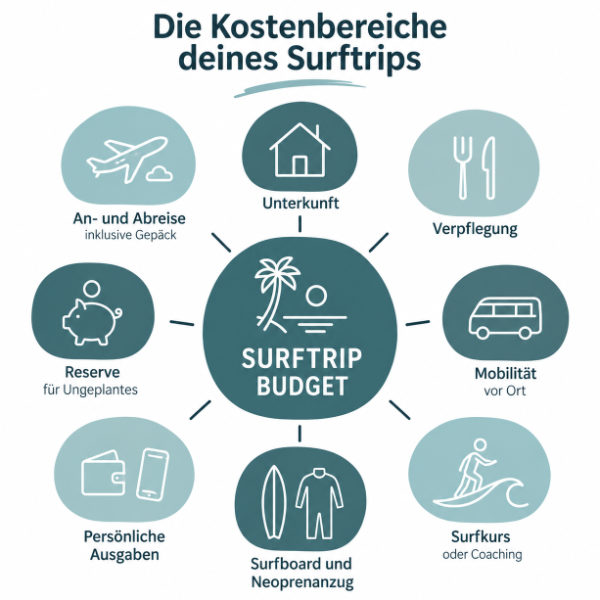
The Cost Categories of Your Surf Trip
- Travel there and back, including luggage
- Accommodation
- Food
- Getting around locally
- Surf course or coaching
- Surfboard and wetsuit
- Personal expenses
- A reserve for the unexpected
That way, you’ll know early on just how much leeway you really have.
2. Deduct the necessary expenses

Image: AI-generated
First add up everything your trip can’t work without: travel, accommodation and food, plus a rental car or transfers if needed.
Whatever is left over is available for your surf course, equipment and extras.
This prevents a typical planning mistake: flight and accommodation are booked – and only then do you realise what the actual surfing will cost.
3. Figure out your internet costs
Now it’s time to plan your individual trip.

Do you need a surf course? Check whether a board, wetsuit or transfers are included.
Do you have your own board? Compare the transport costs with renting on site.
How do you get to a suitable surf spot? Accommodation right by the sea doesn’t help much if the conditions on your doorstep don’t suit your surf level.
Only with these answers does a holiday budget become a realistic surf trip budget.
4. Compare complete travel packages
Instead of comparing individual prices, compare two or three complete packages:
|
Budget DIY |
Well-located DIY |
Surf camp |
|
Affordable lodging |
Conveniently located lodging |
Camping accommodations |
|
additional mobility |
Little or no additional mobility |
Transfers depending on the offer |
|
Surf course separate |
Surf course separate |
included depending on the offer |
|
Rental sold separately |
Rental sold separately |
Included depending on the offer |
For each option, add up everything you actually need.
The cheapest individual offers don’t automatically add up to the most affordable surfing trip.

5. Save money in the right places
If your budget is tight, start by cutting out things that won’t make your surf trip any worse or less safe.
A simpler room? That’s fine. Fewer restaurant visits? Also fine.
On the other hand, cutting corners on unsuitable gear, a poor-quality leash, or necessary instruction is not a good idea.
Cut back on comfort and extras first—not on safety.
Flights: It’s the Total Price That Counts
Rigid rules like “always book on this day of the week” aren’t very helpful. Airfares depend on factors such as the route, travel dates, demand, fare class, and airline.

Flexibility gets you more:
- compare different travel days
- check alternative departure airports
- factor in the luggage you need
- check sports luggage conditions
- factor in getting to the airport
Especially with your own surfboard, a cheap flight can quickly lose its price advantage. So check the current sports luggage conditions directly with the airline before booking.

Your own surfboard or a rental?

To compare prices, a simple calculation is enough to start with:
Board transport for the outbound and return journey
versus rental price x surf days.
After that, the practical side counts. With a rental you travel lighter and, depending on the provider, may be able to use different boards. Your own board, on the other hand, you already know and always have available.
For a short surf trip or as a beginner, renting can therefore be especially easy. If you book a surf course, first check whether a board and wetsuit are included anyway.
Accommodations and transportation go hand in hand
The room rate alone says little about how affordable a place to stay really is.

Image: AI-generated
Check before booking:
- Can you reach suitable surf spots without a car?
- Do you need a rental car?
- Are transfers included in your surf package?
- Can you get to shops and other important places without a car?
Slightly more expensive accommodation in the right location can work out cheaper overall than a remote bargain plus rental car, fuel and daily drives. On Fuerteventura, a look at the surf spots on Fuerteventura helps you judge the location of your accommodation better.
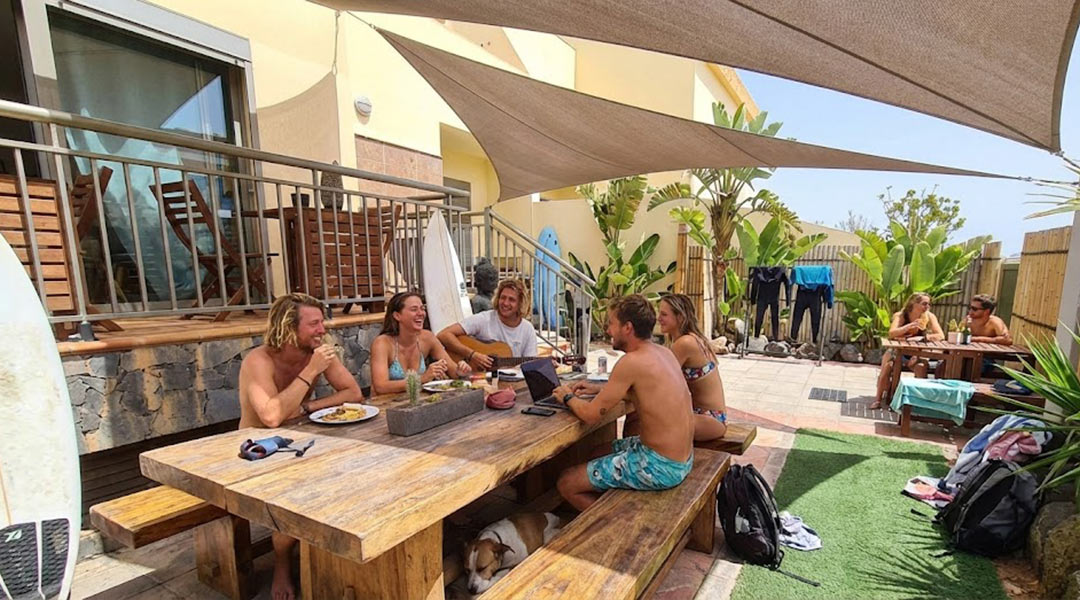
That’s exactly why it can pay off not just to look for the cheapest bed.
At our FreshSurf Surfhouse you stay right in El Cotillo and can do a lot in town on foot. Restaurants, supermarkets, cafés and the beach are close by – so you don’t automatically need to budget for a rental car every single day of your holiday.
Individual booking or surf camp?
Here too, the total is what counts. Compare:
Accommodation + surf course + rental + necessary transfers
with
Camp price + any additional services you need

Image: AI-generated
If you need the course, gear and other included services anyway, a surf camp can be financially attractive. If you mainly want to surf independently, an individually organised trip may suit you better.
You can see which services are actually included in each offer. You’ll find an overview at the FreshSurf surf camps.

By the way, a surf camp doesn’t have to mean that every day is fully planned. At FreshSurf you can combine your stay at the Surfhouse with exactly the number of surf days that suits your holiday and your budget.
Three days of surf course and four free days? No problem. That way you get the surf camp feeling, breakfast and surf lessons, but still have plenty of time to explore Fuerteventura on your own.
What does a week of surf camp at FreshSurf cost?
A simple example from our Surfhouse in El Cotillo shows that a surf camp and a small budget can go together.

Image: AI-generated
If you travel alone, a week in a single room costs €525. Add, for example, three days of surf course for €180. That brings you to:
7 nights at the Surfhouse in a single room: €525
3 days of surf course: €180
Total: €705
Breakfast from Monday through Friday is already included. You’ll also need to pay for your flight, meals other than breakfast, and transportation on the island.
For that you stay right in the middle of El Cotillo, meet other surfers and have three days of surf course firmly planned. The remaining days are yours: for more sessions, the beach, excursions or simply a pretty relaxed day in town.
And if you travel as a pair, the numbers can look different again. So here too, our most important budget tip from this article applies: don’t just compare individual prices, but look at what your complete surf trip costs in the end.
More on the topic: Triathlon training on Fuerteventura: swimming, cycling and running between the Atlantic and volcanic landscapes
Fancy a week of surfing in El Cotillo?
Small Expenses: Packing and Sharing Costs
A packing list doesn’t just prevent you from forgetting small items. It also helps you decide what really needs to go in your luggage and what you can rent once you’re there.

If you’re traveling with friends, you can also split the costs of lodging, rental cars, gas, or group purchases.
Be sure to check the price per person. Booking as a group or for a larger party doesn’t automatically mean it’s cheaper.
Where can you save the most effectively?
Start with the major variable costs: lodging, transportation, flights, and surfing gear. Making a good decision in these areas usually pays off more than taking many small steps to save money.

Also avoid paying twice. If a board and wetsuit are already included in the surf course, you don’t need an extra rental. If transfers cover your most important journeys, a rental car may be unnecessary.
There is one point where you shouldn’t go for the lowest price, though: safety. Suitable gear, a reliable leash, conditions that match your ability and the necessary guidance are all part of a good surf trip.
If you’re just starting out, you’ll find more guidance under Learning to surf.
Your Budget Checklist Before Booking
Before you book, you should be able to answer these questions:

Image: AI-generated
- What is my maximum total budget?
- How much does a round-trip ticket cost, including luggage?
- How much does the lodging cost for the entire stay?
- How much should I budget for food and daily expenses?
- Do I need a rental car or a transfer?
- Do I need a surf course?
- Are a board and wetsuit already included?
- Which is cheaper: transporting your board or renting one?
- Am I paying for any services twice?
- Where can I save money without compromising on security or my browsing experience?
- Do I have a reserve for unexpected expenses?
Once you know these details, you’ll no longer have just a rough estimate for your vacation—you’ll have a budget you can actually use to plan.
Frequently Asked Questions About Surfing on a Budget
What are the biggest expenses on a surfing trip?
Typical larger cost blocks are travel, accommodation, getting around, and the surf course and equipment. Which of these weigh most for you depends on your destination and type of trip.
Is a surf camp cheaper than a self-organised surf trip?
Not necessarily. Compare the price of the camp—including the services it covers—with the total cost of a customized trip. The key factor is which services you actually need.
Is it worth bringing your own surfboard?
Compare the cost of round-trip transportation with the rental cost for your surfing days. Also consider the hassle of traveling and the advantage of surfing on your own familiar board.
Do I need a rental car for an affordable surfing trip?
Not necessarily. What matters is whether you can reach suitable surf spots and important places from your accommodation without a car, and which transfers are already included.
What should I not skimp on during a surfing trip?
Not when it comes to safety. The right equipment, a leash that works, conditions that match your skill level, and the necessary professional instruction should not be areas where you cut corners.
Small Budget, Great Waves
Surfing on a budget doesn’t mean choosing the cheapest option everywhere. It means spending your money where it really makes your surf trip better.
Add up the costs of lodging and transportation, compare board shipping with rentals, and check package deals carefully to see exactly what’s included.
That way, you’ll have more of your budget left for the reason you’re going in the first place: time in the water.
Your surf trip to Fuerteventura
You don’t just want to crunch numbers but start planning? At the FreshSurf Surfhouse in El Cotillo you can put together accommodation and a surf course to suit your holiday – whether you want to surf every day or leave some time for Fuerteventura in between.