




Onshore and offshore: which wind direction is best for surfing?
You’re standing on the beach and the waves look promising. But suddenly the wind picks up. The surface of the water gets choppier, waves break earlier or are harder to paddle into.
In this article
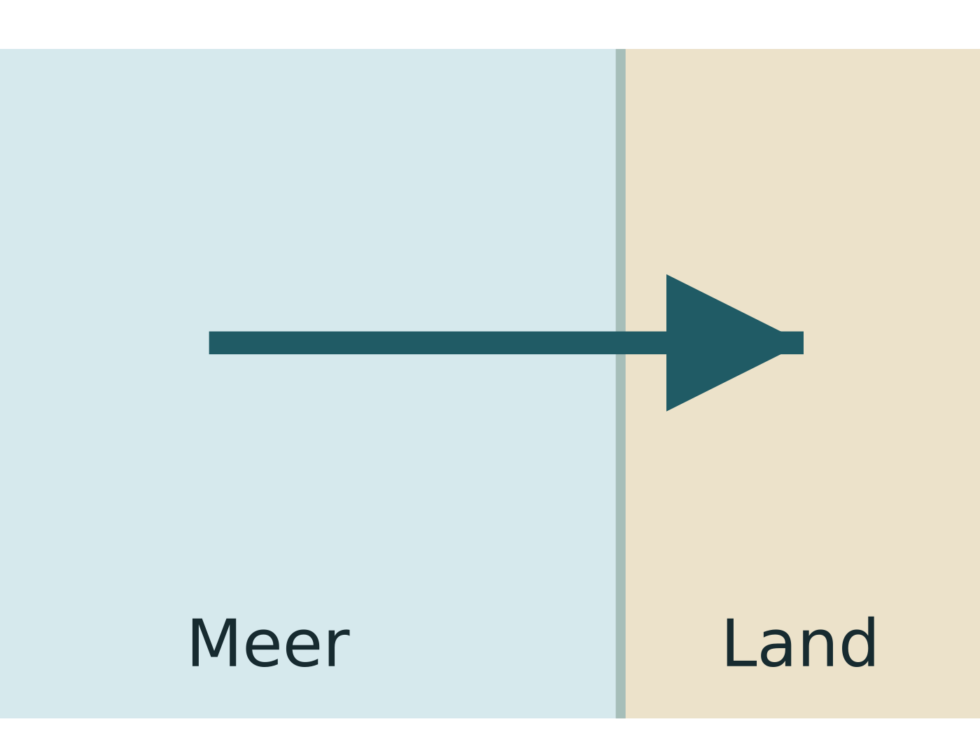
Onshore
From the sea to the land
Offshore
From the land out to sea
Sideshore
Parallel to the coast
The wind has a big influence on wave quality. What matters is not only how strong it blows, but also from which direction it hits the coast.
The three most important terms for this are onshore, offshore and sideshore.
What do Onshore, offshore and Sideshore?
Simplified top view: the arrows show where the wind blows in relation to the coast.
|
Wind direction |
Meaning |
Typical effect |
|---|---|---|
|
Onshore |
From the sea to the land |
Often choppier waves |
|
Offshore |
From the land to the sea |
Often cleaner waves in light wind |
|
Sideshore |
Parallel to the coast |
Side wind affecting waves and paddling |
Important: the wind direction always depends on which way the beach faces. The same wind can be offshore at one surf spot and onshore at the next.


Fuerteventura: wind and waves on the ground

Piedra Playa

El Cotillo in the water

Surf in front of the village
Original photos from our media library. The wind direction can’t be reliably determined from a photo alone.
Onshore wind: when the wind comes from the sea
Onshore wind blows from the sea towards the land.
It can stir up the surface of the water and make waves break more irregularly.
Strong onshore wind in particular often creates short, choppy waves. This makes it harder to find a clean wave face and ride it with control.
Is Onshore always bad for surfing?
No.
In light onshore wind, the waves can still be perfectly surfable. At some beach breaks, suitable conditions still develop.
For beginners, whitewater that isn’t too powerful can also be useful for practising.
What matters is how strong the wind blows and how the waves actually break.

AI-generated

AI-generated
Offshore wind: when the wind comes from the land
Offshore wind blows from the land out to sea.
It works against the direction in which the waves move towards the coast.
In light to moderate offshore wind, the surface of the water can become smoother. The waves often stay open longer and break more cleanly.
That’s why many surfers are happy about offshore conditions.
Under the right conditions, steep, hollow waves can also form. Whether a barrel forms, however, also depends on the swell and the sea floor.
Why can strong offshore wind be dangerous?
Offshore isn’t automatically ideal.
Strong offshore wind can:
- make paddling into waves harder because it pushes against you and your board,
- make the take-off more difficult,
- carry you away from the beach if you can’t hold your position.
This can be dangerous, especially for beginners and tired surfers.
Remember: light offshore wind can bring beautiful waves. Strong offshore wind is a warning sign.

AI-generated

AI-generated
Sideshore wind: when the wind blows from the side
Sideshore wind blows roughly parallel to the coast.
It hits the waves from the side and can make their surface choppy. In stronger wind it can also make paddling harder and push you sideways.
But light sideshore wind doesn’t automatically mean bad conditions.
If the wind blows at an angle to the coast, surfers often talk about:
- Cross-onshore: at an angle from the sea to the land.
- Cross-offshore: at an angle from the land out to sea.
With cross-offshore in particular, don’t underestimate the offshore component of the wind.

AI-generated
How do you recognise Onshore and offshore in the wind forecast?
A wind forecast usually shows wind direction and wind speed.
Keep in mind: the meteorological wind direction describes where the wind comes from – not where it blows to.
So a north wind comes from the north and blows to the south.
Example: you’re surfing at a west-facing beach
Imagine a beach facing west. The sea is to the west, the land to the east.
Then:
- West wind: onshore
- East wind: offshore
- North or south wind: sideshore
At an east-facing beach it would be exactly the other way round.
A small exercise: what’s the wind direction at your beach?
Simplified model for a straight coastline
The wind direction describes where the wind comes from. Here, the beach orientation points from the land to the sea.
All combinations for reference
| Sea lies to the | North wind | East wind | South wind | West wind |
|---|---|---|---|---|
| north | Onshore | Sideshore | Offshore | Sideshore |
| east | Sideshore | Onshore | Sideshore | Offshore |
| south | Offshore | Sideshore | Onshore | Sideshore |
| west | Sideshore | Offshore | Sideshore | Onshore |
Onshore: from the sea to the land. Offshore: from the land out to sea. Sideshore: parallel to the coast.
The model only classifies the wind direction. Wind strength, gusts, waves and local features are not assessed. Headlands, bays and terrain can change the wind direction at the spot.
Headlands, bays and landforms can change the actual wind direction at the spot.
For planning your surf, you can use Windfinder or Surfline, for example.
Besides the wind direction, also check the wind strength and gusts. And always compare the forecast with the actual conditions on the beach.
Why does the wind direction change during the day?
Wind is created by differences in air pressure. Large-scale weather patterns, temperature differences and terrain influence which direction it blows from and how strongly.
Two influences are particularly interesting for surfers.
Large-scale weather patterns: high and low pressure systems and weather fronts can make the wind turn or strengthen within a short time.
Local sea and land breezes: on some coasts the land warms up faster than the sea during the day. Under the right conditions this creates a sea breeze from the sea to the land. At night the direction can reverse.
However, this isn’t a fixed daily rhythm. Weather patterns, season and terrain can change or override these wind systems.
That’s why it’s worth checking the wind forecast not just for when you paddle out, but for your whole session.
Sea breeze during the day

Near the ground from the sea to the land.
Land breeze at night

Near the ground from the land to the sea.
Simplified possible pattern, not a fixed daily schedule. Large-scale wind and terrain can change it. Technical basis: NOAA: Sea and land breezes

AI-generated

AI-generated
Which wind direction is best for surfing?
At many surf spots: light to moderate offshore wind often brings particularly clean waves.
But that’s no guarantee of good surf conditions.
|
wind |
Common conditions |
What to watch out for |
|---|---|---|
|
Light offshore |
Clean, orderly waves |
Wave height and surf level |
|
Strong offshore |
Difficult take-off, drift possible |
Increased safety risk |
|
Light onshore |
Often still surfable waves |
Actual wave shape |
|
Strong onshore |
Choppy, disorderly waves |
Harder board control |
|
Sideshore |
Sideways influence on waves and paddling |
Wind strength and drift |
A spot with light onshore wind can be better suited to beginners than a spot with perfect offshore wind and waves that are far too big.
So always judge the interplay of wind, swell, tides and your ability.
Frequently asked questions about Onshore and offshore
Is offshore wind always good for surfing?
No. Light offshore wind can smooth out waves. Strong offshore wind can make paddling harder and carry you away from the beach.
Can you surf in onshore wind?
Yes. In light onshore wind, waves can still be very surfable. In stronger wind they often become choppier and harder to read.
What's the difference between sideshore and cross-offshore?
Sideshore blows roughly parallel to the coast. Cross-offshore comes at an angle from the land and has both a sideways and an offshore component.
Is there always less wind in the morning than in the afternoon?
No. On some coasts a stronger sea breeze develops during the day. Whether and when this happens depends on the weather pattern and local conditions.

AI-generated
Understand the wind and find better waves
If you can tell onshore, offshore and sideshore apart, you understand an important part of surf theory.
You’ll be better able to interpret wind forecasts and quicker to see why the waves change at a surf spot.
So before your next session, don’t just look at the wave height. Also check where the wind is coming from, how strong it is and which way the beach faces.
If you’d like to learn these connections right in the water, we’ll be happy to guide you in our surf course for intermediates.
Because if you understand wind and waves better, you can decide more consciously when and where a surf session is worth it.

AI-generated
Publisher: FreshSurf Cotillo S.L.
El Cotillo, Fuerteventura
Questions or comments about this article: office@freshsurf.de
Related articles
FreshSurf newsletter
More surf knowledge straight to your inbox
New spot guides, surf tips and offers from our surf camp in El Cotillo. Free and you can unsubscribe at any time.