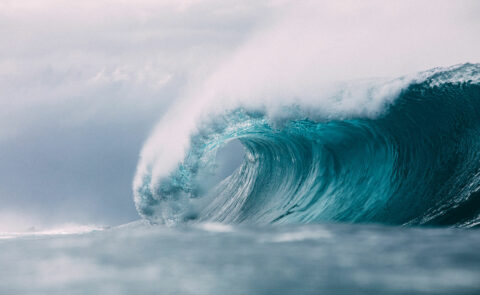

Dangers of surfing: recognise risks and surf more safely
You are standing on the beach, the waves look good and your surfboard is ready. You would love to jump straight into the water. But before paddling out, it is worth taking a close look at the ocean.
In this article
At a glance
Waves
Size, breaking pattern, sets
Currents
Drifting and rip currents
Seabed
Sand, rocks, reef
Other surfers
Surfing lines and distance
As much fun as surfing is, waves, currents, other surfers and even your own surfboard can become hazards.
The good news: suitable conditions, good preparation and a few basic safety rules can significantly reduce many risks.
Is surfing dangerous?
Surfing is a water sport with risks. How dangerous a session becomes depends mainly on the waves, the surf spot, your experience and your physical condition.
Small, gently breaking waves at a clear, open sandy beach are different from powerful waves over a shallow reef.
Typical surfing injuries include cuts, bruises and muscle problems. Serious accidents can result from collisions, strong currents or impacts with the seabed.
What matters is not whether surfing is dangerous in general, but whether the conditions suit your ability.

The main dangers of surfing at a glance
|
Hazard |
Possible consequences |
How to protect yourself |
|---|---|---|
|
Powerful waves |
Wipeouts, loss of control, exhaustion |
Choose suitable waves |
|
Currents |
Drifting, exhaustion, risk of drowning |
Recognise currents; do not fight them |
|
Collisions |
Head injuries, cuts |
Keep your distance and follow surfing rules |
|
Rocks and reefs |
Cuts, serious impact injuries |
Know the seabed and water depth |
|
Surfboard and leash |
Impacts, cuts, entanglement |
Check equipment and keep control of your board |
|
Sun and cold |
Sunburn, hypothermia |
Use sun protection and a suitable wetsuit |
|
Water quality |
Infections, gastrointestinal problems |
Observe warnings and swimming bans |
|
Marine animals |
Stings, cuts, rarely bites |
Know local hazards |
Not every hazard is equally relevant at every surf spot. Safe surfing therefore always starts with assessing local conditions.
1. Waves and wipeouts: the power of the ocean
Waves are why we surf. At the same time, they are among the biggest hazards in the water.
Particularly steep, fast-breaking waves and so-called closeouts, where a large section of the wave breaks at once, can be challenging.
When you fall off your board, surfers call it a wipeout.
You may be tumbled underwater, lose your bearings or collide with your board or the seabed.
How to reduce the risk:
- Choose waves you can manage safely.
- Protect your head with your arms during a fall if possible.
- Never deliberately dive headfirst into water when you do not know its depth.
- Get your bearings after surfacing before continuing to paddle.
And remember: you do not have to take every wave. Skipping a wave that is too big or steep is often the better decision.

2. Currents: when the water carries you away
Currents are hazards you may not recognise immediately.
Two types are particularly important when surfing:
Longshore currents run parallel to the beach. They can make you drift sideways unnoticed while waiting for waves.
Rip currents carry water from the beach out to sea. They may form between sandbanks, for example, and can occur where the water looks relatively calm.
Longshore current

Sideways water movement along the coast.
Rip current

A return current from the shore towards open water. Schematic only, not a map of a real surf spot.
What should you do if you get caught in a rip current?
- Stay calm. Try to control your breathing.
- Do not fight directly against the current. It wastes energy.
- Stay with your surfboard if possible. It provides buoyancy.
- Paddle parallel to the beach if you are able to, to leave the current channel.
- Then return to the beach by a safe route.
If you cannot get out, conserve your energy and attract attention by waving and calling for help.

A rip current does not normally pull you underwater. The main dangers are panic and exhaustion.
We explain in more detail how to recognise currents from the beach in our article about currents when surfing.
3. Collisions with other surfers and surfboards
Imagine paddling into the line-up when an uncontrolled surfboard suddenly comes towards you.
Situations like this arise particularly when surfers leave too little distance, ignore right-of-way rules or lose control of their boards during a fall.
Fins, board noses and hard rails in particular can cause injuries.
A few simple rules therefore apply in the water:
- Keep enough distance from other surfers.
- Respect right-of-way rules and do not drop in on anyone.
- Avoid paddling through the area where others are riding their waves.
- Do not deliberately let go of your board if this endangers others.
- Look around before paddling for a wave.
Especially at crowded surf spots, consideration for others matters more than the next wave.
If you do not know the rules yet, you can find out more here about the rules of surfing.
Collisions in the line-up

Do not block the path of people riding waves.
4. The seabed, rocks and reefs
Wave height is not the only factor that determines how dangerous a surf spot is. The seabed also plays a major role.
Sandy seabed: sandy beaches are often more beginner-friendly than reef breaks. However, powerful waves in shallow water can still cause dangerous impacts.
Rocks and reefs: falls can cause cuts, bruises and serious injuries. Shallow areas where waves break directly over the reef are particularly critical.
Coral reefs: sharp coral can cause wounds that may become infected.
Find out about the seabed and tides before entering the water.
A surf spot that works well at a higher water level may become much more dangerous at low tide.
5. Surfboard, fins and leash
Your surfboard helps you surf, but it can also cause injuries during a fall.
Hard boards and sharp fins can cause cuts. Softboards with softer surfaces and suitable fins therefore often make sense for beginners.
The leash connecting your board to your ankle also deserves attention.
It prevents your board from drifting far away after a fall. At the same time, it can wrap around body parts or obstacles. A board springing back towards you can also be dangerous.
Check your leash regularly for damage and learn how to release it in an emergency.
Important: even a softboard and leash do not make collisions harmless.


6. Drowning and exhaustion
Even experienced surfers can find themselves in life-threatening situations in the water.
Strong currents, continuous breaking waves, injuries or unconsciousness after a collision can leave someone unable to get ashore independently.
A surfboard provides buoyancy, but does not replace confident swimming skills.
You should therefore:
- only surf if you can swim confidently,
- avoid entering unfamiliar spots alone if possible,
- pay attention to warning flags and lifeguards,
- end your session before you are completely exhausted.
Especially when learning to surf, it makes sense to spend your first sessions under expert guidance.
7. Sun, cold and physical strain
Sometimes problems develop not through a spectacular wipeout, but almost unnoticed.
Sun and UV radiation
When surfing, you are often exposed to the sun for a long time. The water surface also reflects some UV radiation.
Protect yourself with water-resistant, high-SPF sunscreen, UV-protective clothing and regular breaks in the shade.
Do not forget your ears, neck and the backs of your hands.

Hypothermia
Even in relatively warm regions, you can become cold during long sessions.
A suitable wetsuit helps maintain your body temperature.
If you feel very cold, shiver or lose coordination, you should leave the water. Severe confusion or impaired consciousness are medical emergencies.
Overuse
Long periods of paddling put particular strain on your shoulders, back and core.
Typical problems include muscle strains, shoulder problems and back pain.
Good paddling technique, appropriate exertion and enough recovery help prevent overuse problems.
Drink enough and take breaks before your strength noticeably declines.
8. Water quality and marine animals
Not every ocean hazard is connected with waves.
Small details count too
Polluted water
Contaminated water can enter the ocean, particularly after heavy rainfall.
This can increase the risk of skin infections, wound infections and gastrointestinal illnesses.
Observe local warnings and swimming bans. Clear water does not automatically mean that water quality is safe.

Marine animals
Depending on the surfing region, jellyfish, sea urchins, stingrays and other marine animals can cause injuries.
Sharks are also among the possible hazards. Attacks are rare, but can have serious consequences.
Find out about local advice and do not touch unfamiliar marine animals.
If you experience breathing difficulties, severe allergic reactions or circulatory problems after contact with an animal, you need immediate medical help.
What injuries are typical in surfing?
Not every surfing injury results from a major fall. Repeated movements and smaller collisions can also cause problems.
|
Injury |
Common cause |
|---|---|
|
Cuts and lacerations |
Fins, reefs, board rails |
|
Bruises and sprains |
Falls, collisions |
|
Shoulder problems |
Repeated paddling, overuse |
|
Back problems |
Long periods of paddling, unfamiliar exertion |
|
Knee and ankle injuries |
Awkward landings, twisting movements |
|
Head injuries |
Collisions with a board or the seabed |
|
Ear problems |
Repeated exposure to water, cold and wind |
Head and spinal injuries should be taken particularly seriously.
If you suspect a concussion, you must end the session and get a medical examination.
Severe neck pain after an impact, signs of paralysis, numbness or sudden bladder problems are warning signs requiring immediate medical help.
Deep or heavily contaminated cuts should also receive medical treatment.
Surf safely: your check before every session
You do not have to memorise every hazard. It is much more important to ask the right questions before entering the water.
Your safety check
If you cannot confidently answer a question, find out locally or ask an experienced surf instructor or lifeguard.
If there are dangerous currents, waves that are too big or no safe exit, stay on land.
What should you do after an accident in the water?
Accidents can happen despite good preparation.
If you are injured or someone else needs help:
- Alert the rescue services. In Spain and many other European countries, the emergency number is 112.
- Unconsciousness or breathing difficulties: get help immediately. Begin resuscitation if the person can be reached safely, is not breathing normally and you are able to do so.
- Head or neck injuries: avoid unnecessary movement and have the person receive medical care.
- Heavy bleeding: apply direct pressure to the wound if possible and get medical help.
- Current hazards: do not put yourself in danger through an unprotected rescue attempt.
If lifeguards are present, inform them immediately.
Frequently asked questions about the dangers of surfing
Is surfing dangerous for beginners?
You can learn to surf as a beginner with a manageable level of risk if conditions are suitable. Small, gently breaking waves, appropriate equipment and expert guidance reduce many hazards.
What is the biggest danger in surfing?
Drowning accidents, strong currents, collisions and head or spinal injuries can have particularly serious consequences. Which hazard is greatest depends on the surf spot and conditions.
Is surfing more dangerous at low or high tide?
That depends on the surf spot. At low tide, rocks or reefs may be closer to the surface. Tides also affect currents, water depth and how waves behave.
Should I go surfing alone as a beginner?
Especially at the beginning, avoid surfing alone if possible. A surf course or accompanying experienced people helps you assess conditions better and get support if problems arise.
Do I need a helmet for surfing?
Not as a general rule. In certain conditions, such as shallow reef breaks or an increased collision risk, a suitable surf helmet can provide additional protection. However, it does not prevent every head injury.
Surfing safely means understanding the ocean
Surfing always involves some risk. But that does not mean you have to be constantly afraid of the water.
The better you understand waves, currents, surfing rules and your own limits, the easier it becomes to assess situations.
Especially at the beginning, the aim is not to surf the biggest possible waves or be particularly brave. It is to become safer step by step.
If you would like to try surfing under expert guidance, we would be happy to welcome you to our surf courses on Fuerteventura.
The best surf sessions are not necessarily those with the biggest waves, but those that bring you back to the beach with a broad grin and a good feeling.
Publisher: FreshSurf Cotillo S.L.
El Cotillo, Fuerteventura
Questions or comments about this article: office@freshsurf.de