



Surf theory and surf history
Deepen your knowledge.
Understanding surfing.
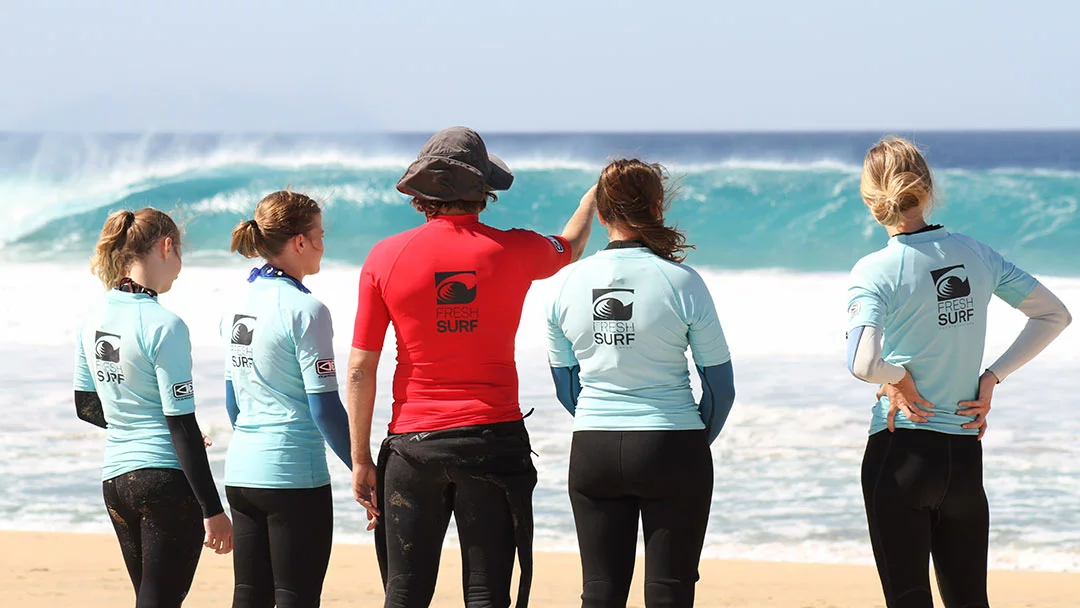
Surf theory and surf history
Understanding surfing better
Surfing often looks easy from the outside.
A board.
A wave.
A moment.
But there is much more to it than that: movement, timing, water, observation and a feeling for things that cannot be controlled.
If you want to understand why surfing works the way it does, you’ve come to the right place.
THEORY &
HISTORY





Surf theory means understanding surfing

What is surf theory?
Surf theory includes everything that helps you to better understand surfing and the sea.
These include, for example:
- How waves are created
- Why waves break
- How timing works
- how to behave correctly in the water

Why is this important?
If you only copy movements, you will eventually reach a point where nothing really fits together anymore.
Those who understand what happens in the water, on the other hand, become calmer, safer and learn more sustainably.
This is precisely why theory is not a side issue, but part of surfing.
Why surfing often seems more difficult than it looks
It looks light from the outside.
Someone paddles on.
The wave lifts the board.
A short impulse.
Then the person stands.
It feels different in the water.
The wave is coming faster.
The timing isn’t right.
Your body isn’t doing what you want yet.
And that’s where the real learning begins.
How waves are created

Wave generation
Most surfable waves are created by wind that blows over large areas of water and transfers energy to the sea surface.
This energy travels long distances through the ocean.
As soon as the wave hits shallower water, it changes:
- she slows down
- it becomes steeper
- it begins to break
It is precisely this moment that makes surfing possible at all.

Wind
Wind is often the starting point. It sets energy in motion.

Swell
The energy travels across the ocean as a swell, often far away from its source.

Breaking wave
Only in shallower water does the wave straighten up and become surfable.
Why waves break

Why does a wave break?
A wave moves relatively evenly in deep water.
In shallower water, the lower part of the wave is slowed down by the seabed, while the upper part continues.
This makes the shaft steeper, tilts forward and breaks.
Why does every wave look different?
Because every coast is different.
Sandbanks, reefs, wind, tides and currents all influence how a wave looks and feels. That’s why no two sessions are exactly the same.
Timing, movement and take-off
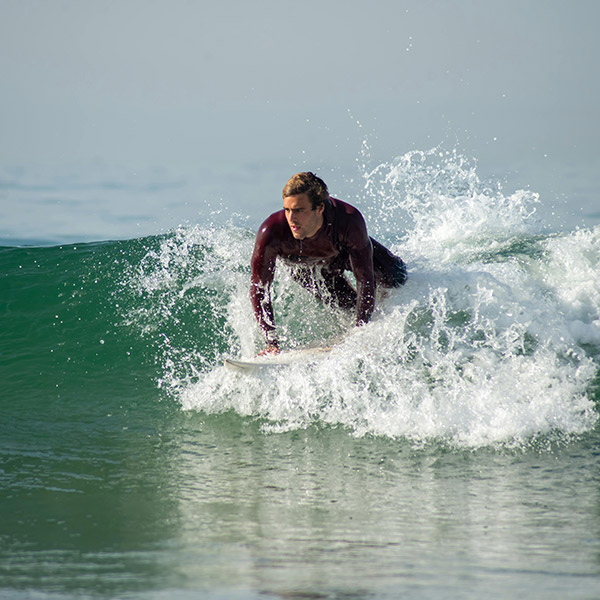
Why timing is more important than strength in surfing
Many beginners initially think they have to paddle harder or stand up faster.
Of course, strength helps.
But something else is usually decisive:
Recognize the right moment
Read the wave early
Execute the movement at the right moment
A good take-off is therefore not just a question of technique, but also a question of timing.
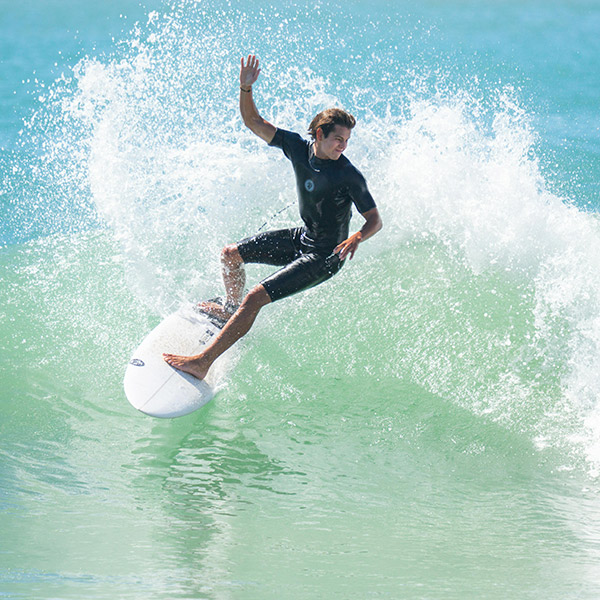
What often doesn’t work
- Getting up too early.
- Paddling too late.
- Be too hectic.
What comes together at some point
Observation.
Rhythm.
A feeling for the moment.
Behavior in the water

Why rules are important in the water
Surfing is not a sport that you do on your own.
As soon as there are several people in the water, consideration, attention and clear rules are required.

Behavior at a surf spot
What’s the best way to behave at a new surf spot and what should you look out for there?
If you are a stranger, these tips could definitely help you:
Brief history of surfing

Where surfing comes from
Surfing has its roots in Polynesia and has been practiced and passed on in Hawaii for many generations.
There it was not just a leisure activity, but part of culture, everyday life and social life.
Later, surfing became internationally known and developed further – technically, athletically and culturally.
Nevertheless, much has remained the same:
The connection to the sea.
The search for the right moment.
And that special feeling when everything comes together for a moment.
Why theory helps with learning
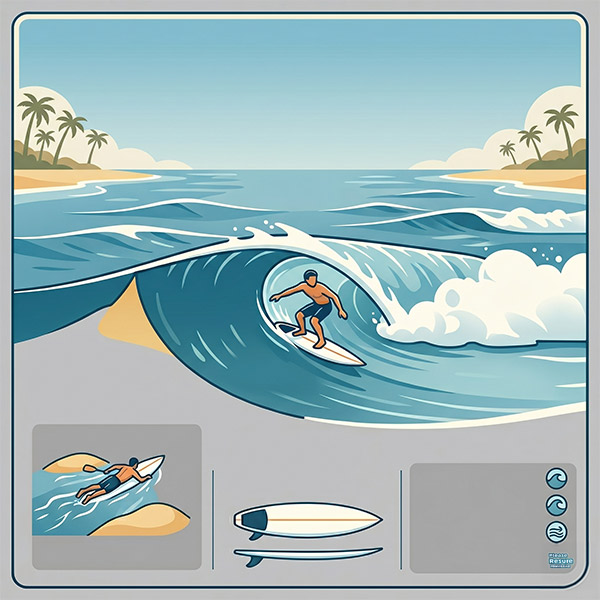
Theory is no substitute for practice
You don’t learn to surf just by reading about it.
The feeling for the water, the balance and the timing come from doing.
But theory makes practice clearer
When you understand what is happening underneath you, things become calmer.
You observe differently.
You react differently.
And you recognize more quickly why something works or doesn’t work.
FreshSurf X Surf Theory
If you want to go deeper!


Frequently asked questions about surf theory
Why do waves break?
Because the wave is slowed down at the bottom in shallower water, while the upper part continues to run and tilts forward.
Do you need theory to learn to surf?
Theory alone is not enough, but it helps you to better understand the water and your movements.
Why is timing so important when surfing?
Because you don’t just execute a movement, you have to connect it with the wave at the right moment.
Are rules in the water really part of it?
Yes, consideration, priority and behavior in the line-up are an important part of surfing.
If you don’t just want to understand surfing, but experience it
Then the next step is the water.
With a good surf course, theory becomes movement, observation becomes experience and uncertainty slowly turns into a feeling for the wave.