



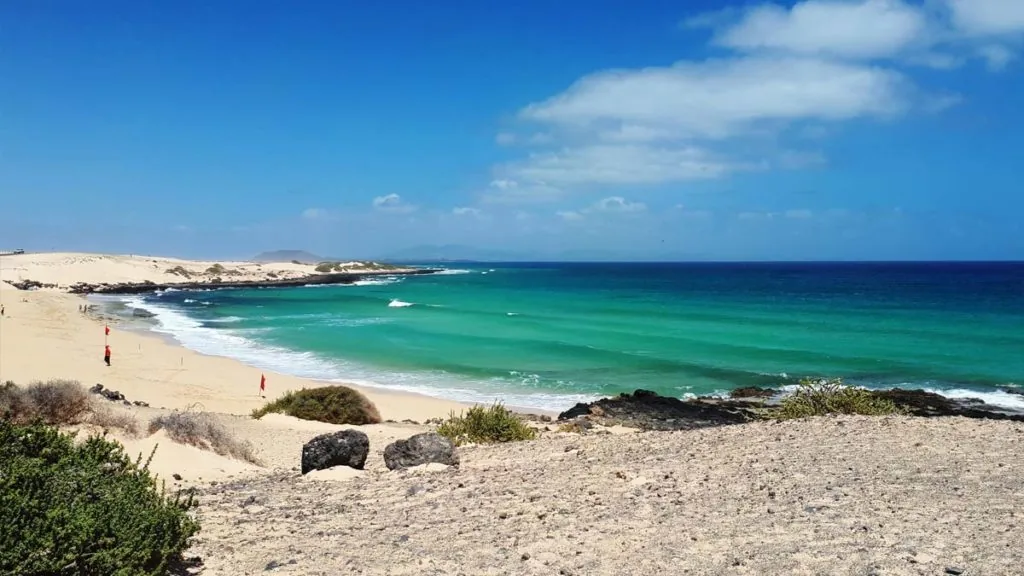
Fuerteventura Beaches
Which beach is right for you?
Compare 19 Fuerteventura beaches, from sheltered family bays to open surf beaches and remote stretches of Atlantic coast. Use the beach finder to pick a spot for your day.
Turquoise water, broad sandy shores and cliffs are never far apart here. In suitable conditions, the more sheltered bays can be good for a swim. Along much of the open west coast, the best views are from land.
Fuerteventura · Beach guide
All beaches on one map
Select a number to jump to the beach profile. The map shows 19 profiles and 20 beach locations.
Show all beach names
- Playa de la Concha · El Cotillo
- Piedra Playa
- Playa de la Escalera
- Playa de Esquinzo · northwest
- Grandes Playas de Corralejo
- Playa de la Concha · Los Lobos
- Popcorn Beach · Playa del Bajo de la Burra
- Playa de Majanicho
- Playa del Castillo · Caleta de Fuste
- Playa de Tarajalejo
- Playa de Costa Calma
- Playa de Sotavento
- Playa de Esquinzo-Butihondo
- Playa de Mal Nombre
- Playa del Matorral
- Playa del Viejo Rey
- Playa de Cofete
- Playa de Barlovento de Jandía
- Playa de Ajuy
- Playa de Garcey
Island outline: ISTAC · Gobierno de Canarias, simplified.
Which Fuerteventura beach is right for you?
- Family beach day
- Playa del Castillo · Playa de la Concha near El Cotillo
- Pale sand and dunes
- Grandes Playas de Corralejo
- Long beach with facilities
- Playa del Matorral · Costa Calma
- Windsurfing or kitesurfing
- Sotavento
- Surfing
- Piedra Playa · La Pared
- Wild coastal scenery
- Cofete · Barlovento de Jandía
- Dark sand
- Ajuy · Tarajalejo
- Remote coves
- Playa de la Escalera · Northwest Esquinzo · Garcey
Before entering the water: Atlantic safety
The exposed west coast can have heavy surf and dangerous rip currents.
- Follow beach flags: stay out of the water when the flag is red. Follow lifeguard instructions.
- Currents can develop even in shallow water or sheltered bays.
- Remote beaches often have no lifeguards and help may take longer to arrive.
- Check the tide. Small coves can shrink quickly as the tide comes in.
- Keep children within close reach, even in calm water.
When in doubt, stay on land or choose a lifeguarded section with suitable conditions.
North and northwest
El Cotillo is a good place to see how quickly Fuerteventura beaches change. The lagoons lie to the north, while Piedra Playa, La Escalera and Esquinzo face the open Atlantic to the south. At Corralejo you can combine dunes and beach time. For the other Playa de la Concha, take the ferry to Lobos.
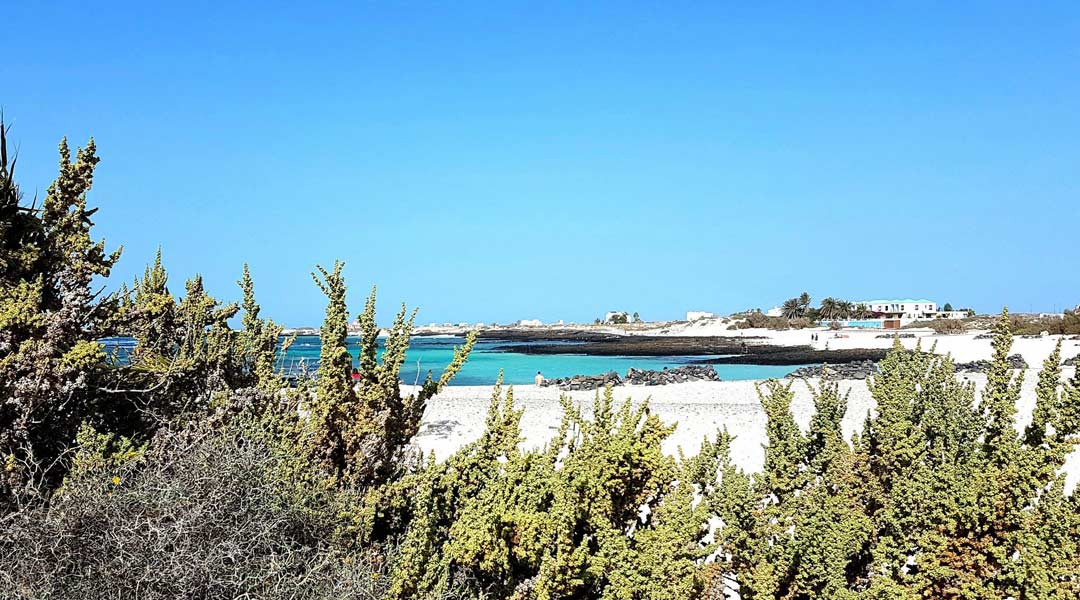
1. Playa de la Concha near El Cotillo: A sheltered sandy bay
North of El Cotillo, reefs and rocky formations partly shelter several pale-sand bays from the Atlantic swell. Playa de la Concha is the best known. In suitable conditions its water can be calmer than at the open surf beaches south of the village.
Best for: A relaxed beach day and swimming in suitable conditions.
Swimming safety: Waves and currents can still develop. Check conditions and keep children within close reach.
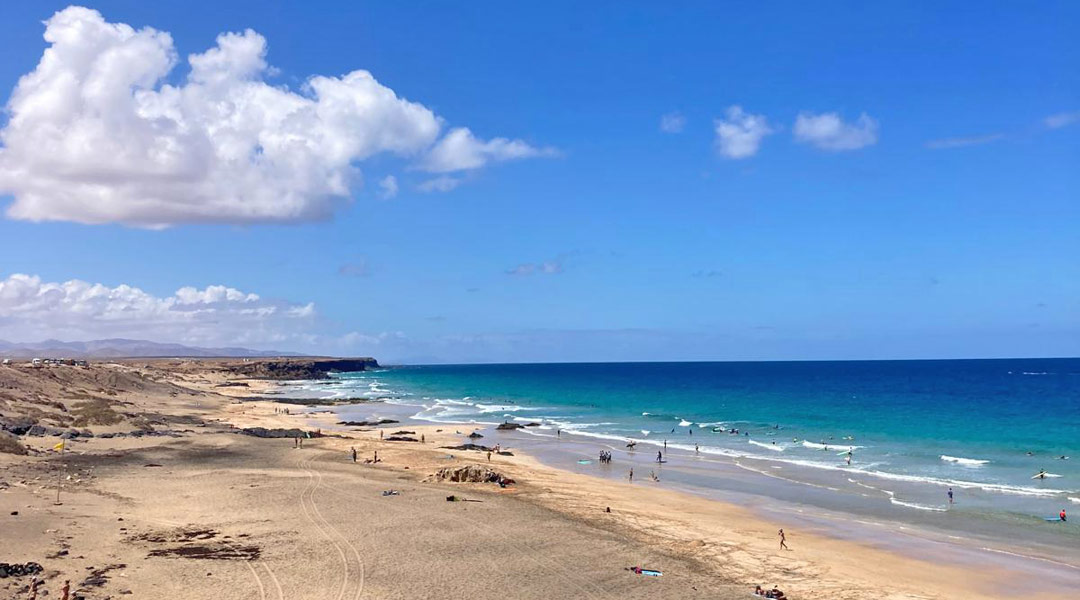
2. Piedra Playa near El Cotillo: A wide surf beach
Piedra Playa, also called Aljibe de la Cueva, lies south of El Cotillo. The long sandy beach sits below cliffs on the exposed Atlantic coast. It draws surfers and is a good place to walk and watch the waves from shore.
Best for: Surfing in suitable conditions and long beach walks.
Swimming safety: Strong surf and currents are possible. Pick conditions that suit your ability and do not assume the beach is suitable for swimming.

3. Playa de la Escalera: A cove beneath the cliffs
Also known as Playa del Águila, this beach lies south of El Cotillo. A steep staircase leads down from the clifftop. At high tide or in heavy swell, there is less room on the sand. Check that both the descent and the way back are clear before going down.
Best for: Coastal scenery and a visit in suitable tidal conditions.
Swimming safety: The exposed cove has surf, currents and steep access. It is unsuitable for a family swim. Stay on top if the descent looks unsafe.

4. Playa de Esquinzo in the northwest: A remote natural cove
This Esquinzo lies at the mouth of a ravine south of El Cotillo. Golden sand, dark stones and cliffs characterise the cove. Unpaved tracks lead to the area, followed by a descent. Esquinzo-Butihondo in Jandía is a different beach area.
Best for: Exploring remote coastal scenery.
Swimming safety: The swell, isolated location and access make it unsuitable as a swimming destination.
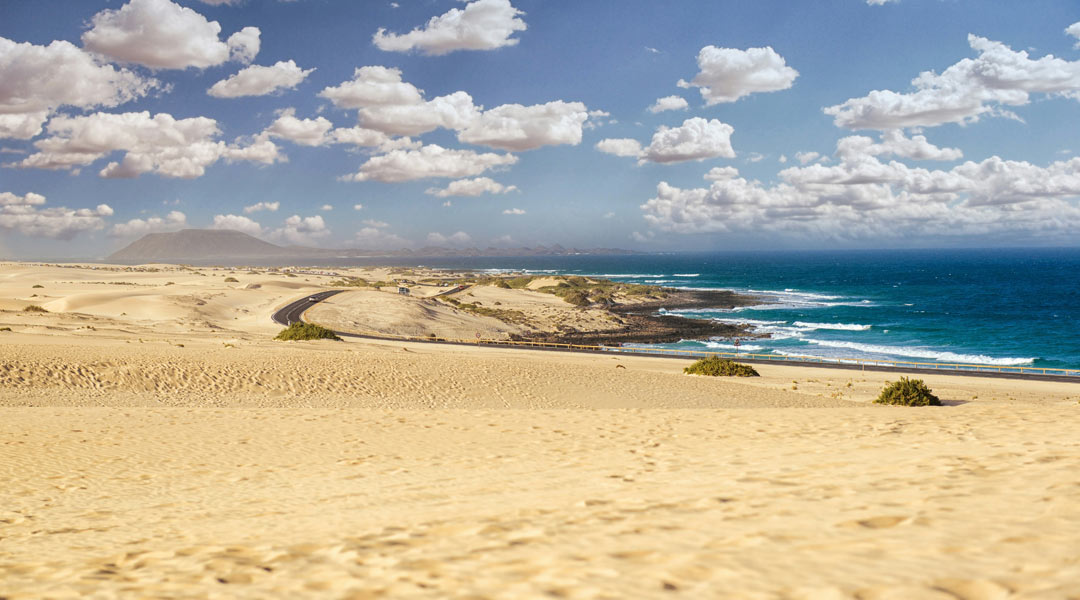
5. Grandes Playas de Corralejo: Dunes and turquoise water
Long sandy beaches stretch south of Corralejo along the dune park. Pale sand, turquoise water and views of Lobos are the draw. The character varies from lively water-sports areas to quieter sections.
Best for: Dune scenery, walking and a beach day.
Swimming safety: Conditions vary along the coast. Choose a lifeguarded section where possible and follow local flags.
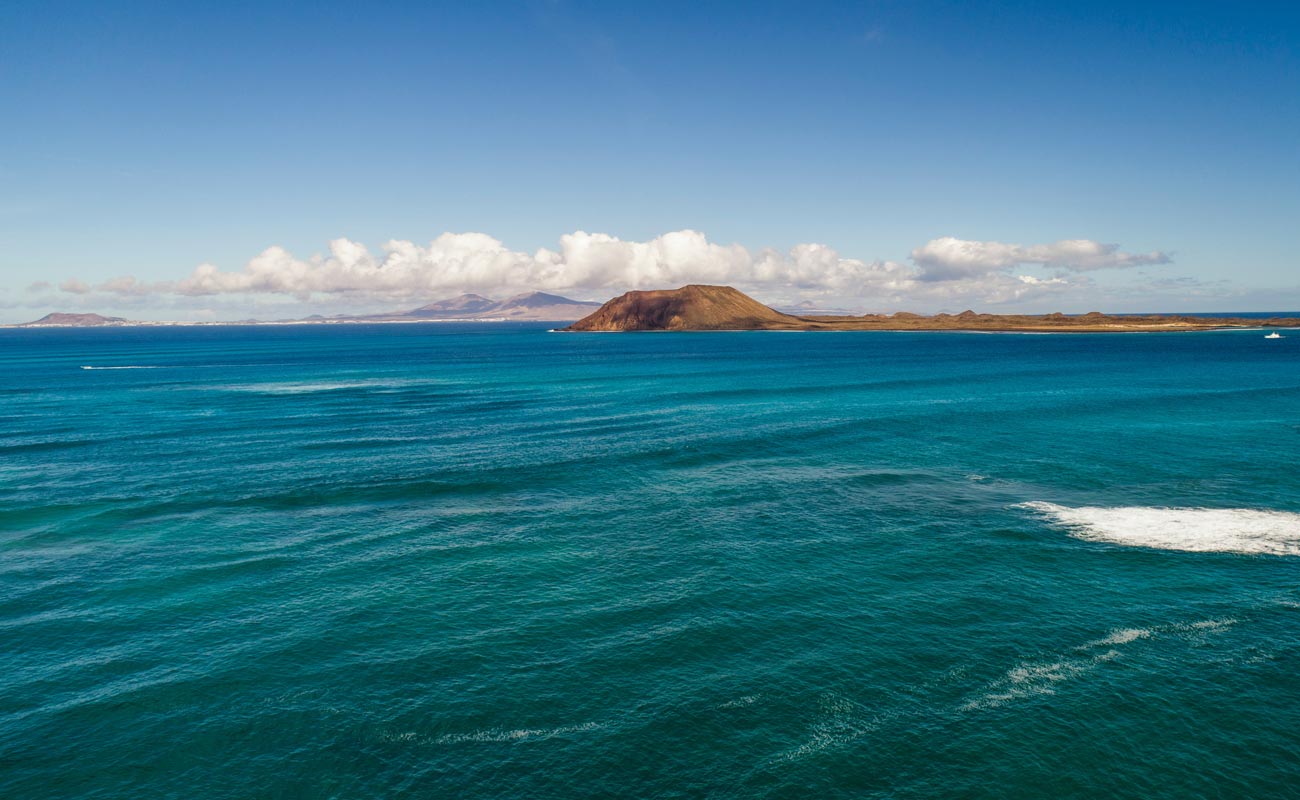
6. Playa de la Concha on Lobos: An island beach
The small island of Lobos lies off Corralejo. Its Playa de la Concha, also called Playa de la Calera, is in a relatively sheltered bay. The pale sand and clear water sit against a volcanic backdrop. Before travelling, check visitor permits, access rules and ferries from Corralejo.
Best for: An island outing with a beach break.
Swimming safety: Swimming may be possible in calm conditions. Check the wind, currents and sea state.

7. Popcorn Beach: White rhodoliths on a lava shore
At Playa del Bajo de la Burra, west of Corralejo, white carbonate nodules lie among dark lava rocks. This rocky stretch of the north coast is worth a short walk and a few photos. Leave the rhodoliths where they lie.
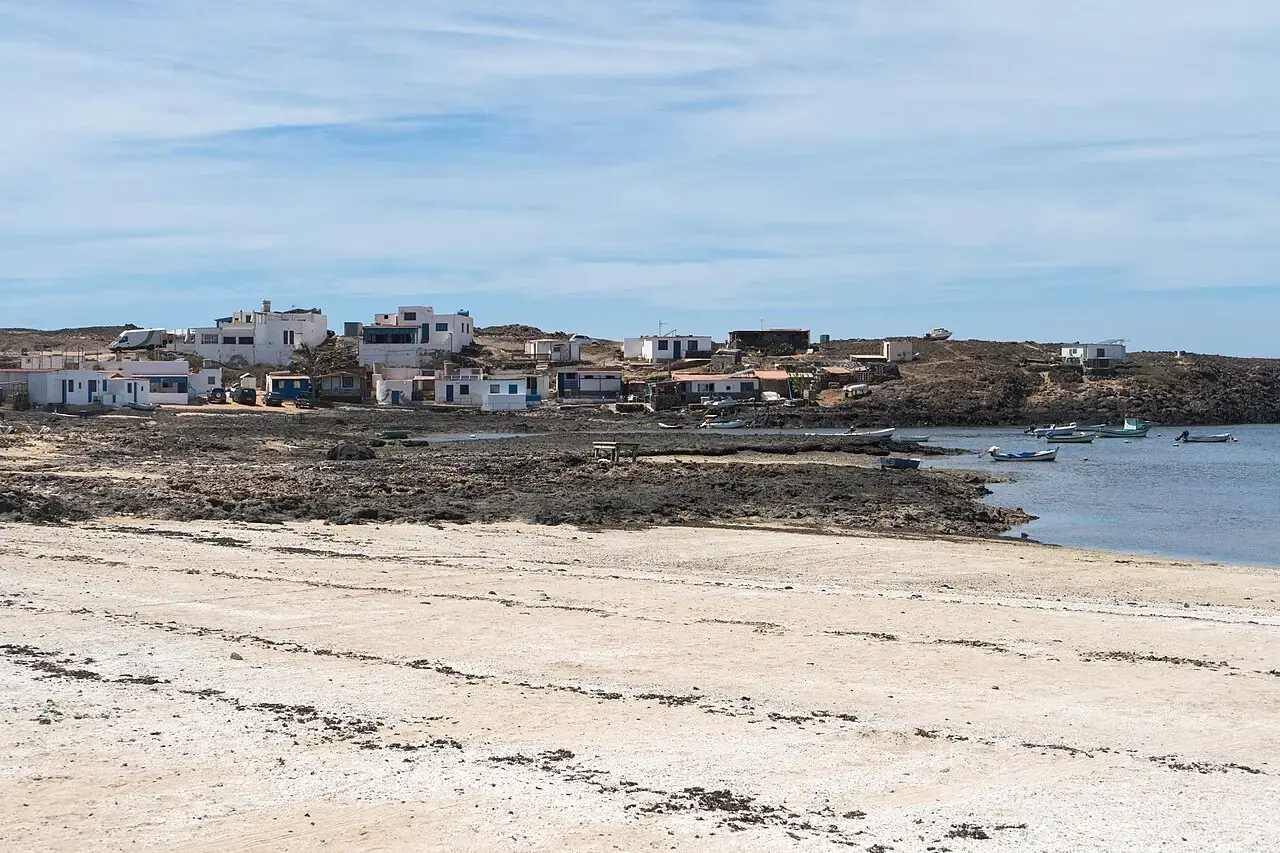
8. Majanicho: A small bay beside a fishing village
White houses sit right on the rocky bay at Majanicho. Come for a short walk along the shore and watch the waves on Fuerteventura’s north coast.
Best for: Coastal scenery, photography and watching the surf.
Water safety: Conditions in the bay differ from those on the outer reef. Check waves and tides on arrival and stay back from the rocks when surf is breaking.
East coast
Start with the village beaches for short walks between the shore and services. Playa del Castillo sits in the Caleta de Fuste bay. Farther south, Tarajalejo suits a seafront stroll. Caleta de Fuste has light sand, while Tarajalejo has dark sand and pebbles.
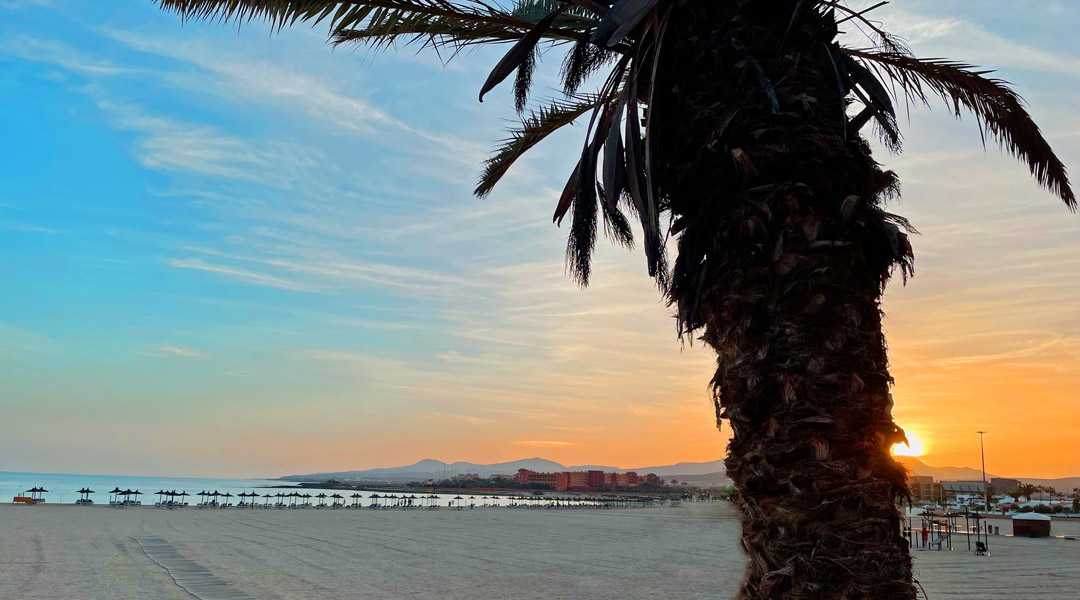
9. Playa del Castillo: A family option in Caleta de Fuste
The curving bay in Caleta de Fuste is more sheltered than many Atlantic beaches. The gently shelving shore and nearby restaurants and accommodation make it a practical option for families.
Best for: A straightforward family beach day.
Swimming safety: Conditions can still change. Follow beach flags and supervise children closely.

10. Playa de Tarajalejo: Dark sand by a quiet village
Tarajalejo has a dark sand and pebble beach beside the village. The seafront is a good place to stretch your legs or pause by the water.
Best for: A quiet village visit and a seafront walk.
Swimming safety: The bay can be calmer than the open west coast. Check waves, footing and signs locally.
South and Jandía
The Fuerteventura beaches in the south vary by coast. Costa Calma, Sotavento and Morro Jable are on the eastern side. La Pared, Cofete and Barlovento face the open Atlantic. Allow more time for reaching the remote coast and getting back.

11. Playa de Costa Calma: Easy access and services
This pale sandy beach fronts the resort of the same name. Several access points and nearby hotels and restaurants make it a practical choice for a classic beach day.
Best for: Combining time on the sand with nearby facilities.
Swimming safety: It can suit families in calm conditions. Keep an eye on wind, waves and currents.
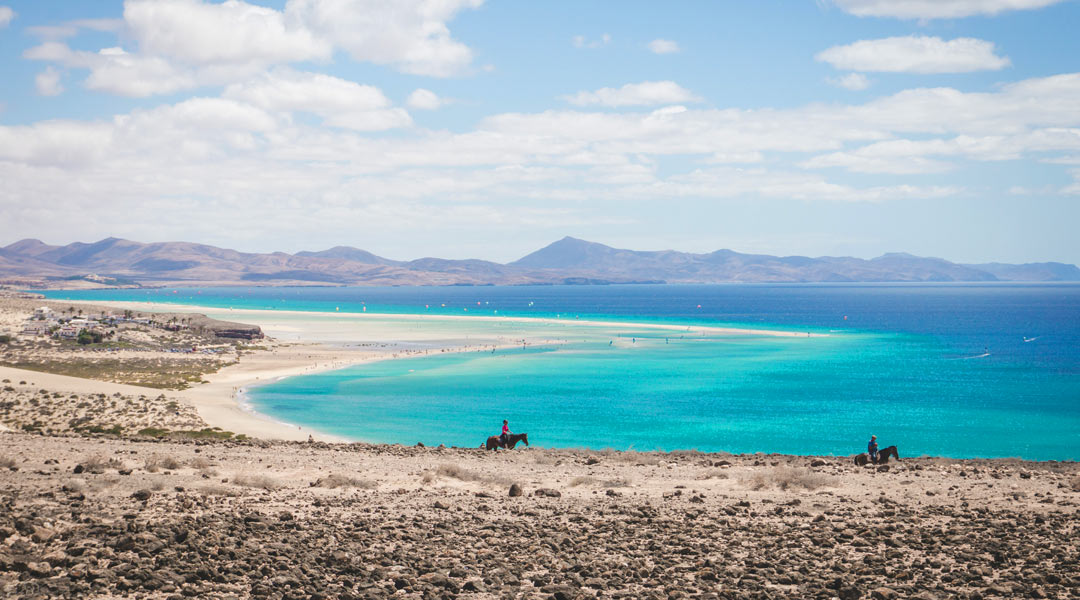
12. Playa de Sotavento: Tidal lagoons and water sports
Sotavento is known for pale sand, turquoise water and tidal lagoons. At suitable tides, shallow stretches of water form between the sandbanks and change shape as the tide turns. The coast is well known for windsurfing and kitesurfing.
Best for: Lagoon scenery, walks and organised water sports.
Swimming safety: Wind, currents, tides and water-sports activity vary by section. Shallow water does not guarantee safe swimming.

13. Esquinzo-Butihondo and Mal Nombre: Long sandy beaches
Between Costa Calma and Morro Jable, the coast has several long beaches. Esquinzo-Butihondo is near hotels and facilities vary by section. Mal Nombre is quieter and less developed in places. Both suit longer walks away from the busiest stretches.
Best for: Sand, long walks and time outdoors.
Swimming safety: Check the individual section. Lifeguards and suitable conditions for families cannot be assumed.

14. Playa del Matorral: A long beach by Morro Jable
The lighthouse is the landmark of this broad southern beach. Behind it lies the protected Saladar de Jandía. The coast offers long walks, several access points and services nearby.
Best for: Beach walks and a day with facilities close at hand.
Swimming safety: Choose a lifeguarded section with suitable conditions for swimming. Keep to marked paths in the protected area.

15. Playa del Viejo Rey at La Pared: Surf and cliffs
Playa del Viejo Rey sits on the exposed west coast at La Pared. Cliffs, rocks and powerful waves shape the scene. It is known among surfers, and the coastal light is especially striking late in the day.
Best for: Coastal scenery, sunsets and experienced surfing in suitable conditions.
Swimming safety: Strong surf and currents can be dangerous. The beach is not a family swimming spot.

16. Playa de Cofete: Jandía’s wild Atlantic coast
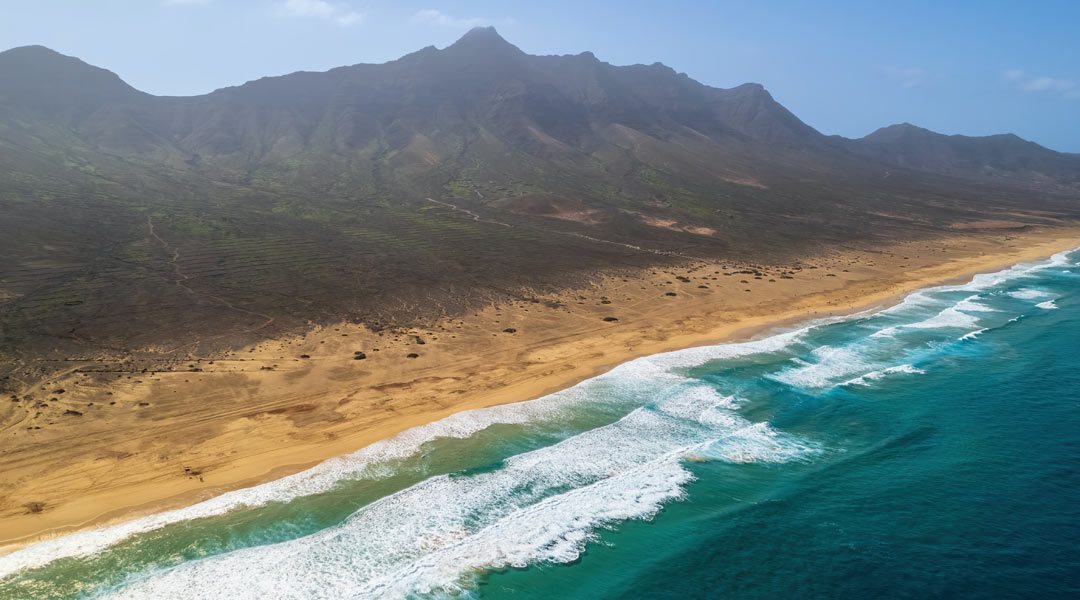
Cofete is a broad, remote beach on the northwest side of Jandía, framed by the mountains and the open Atlantic. The unpaved mountain road from Morro Jable takes planning. Check its condition, rental-car terms and organised or public transport options before you go.
Best for: Scenery, photography and walks on land.
Swimming safety: Swimming is inadvisable because of heavy surf, dangerous currents and the lack of lifeguards.
17. Playa de Barlovento: A remote stretch of the west coast
This entry refers to the remote stretch north of Cofete. Barlovento de Jandía also names a wider group of beaches. Sand, cliffs and open Atlantic surf define the coast, with little development and no facilities you should rely on.
Best for: Quiet coastal scenery and a nature outing.
Swimming safety: Plan to stay on land. Check tides and weather before travelling.
West coast
Ajuy and Garcey are two Fuerteventura beaches to enjoy from land. At Ajuy the village, beach and start of the cave path are close together. Garcey is more remote. Check the route and bring water and sun protection.
18. Playa de Ajuy: Black sand and sea caves
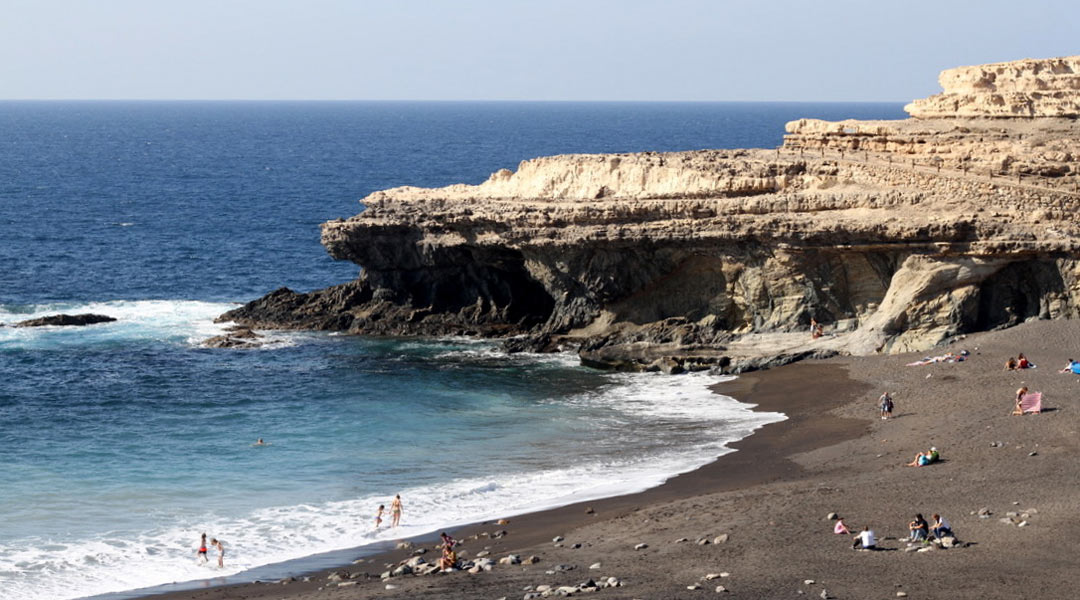
Ajuy’s black-sand beach sits beside the small village. A coastal path heads towards nearby sea caves, with rock formations and Atlantic views along the way.
Best for: Black sand, coastal walks and geology.
Swimming safety: Strong waves and currents can make swimming unsafe. Wind, wet ground or heavy swell can also make the cave path hazardous.

19. Playa de Garcey: A wild coast with a shipwreck story
Garcey lies on a little-developed stretch of the west coast. The American Star ran aground here in 1994 and its wreck was a landmark for years. The main wreck is no longer visible. Today the coast itself is the reason to visit.
Best for: Remote scenery and the history of the American Star.
Swimming safety: Open surf, currents and isolation make swimming inadvisable. Check the route and access before leaving.
Fuerteventura beaches on the map
Choose a coast to find a map link for each beach. For remote coves, check the approach, footpath and local notices separately.
North and northwest
East coast
South and Jandía
West coast
Compare Fuerteventura beaches by coast
- North and northwest
- Sheltered bays near El Cotillo, open surf beaches and Corralejo’s dunes.
- East coast
- Village beaches and sheltered bays such as Caleta de Fuste.
- South and Jandía
- Long sandy beaches and water-sports areas. Jandía’s Atlantic side is rougher.
- West coast
- Cliffs, powerful Atlantic surf and remote beaches.
For swimming, look for a sheltered, serviced section with suitable conditions. The open west coast is better suited to coastal walks and watching the waves from shore.
Planning a beach day on Fuerteventura
1. Check wind and waves
The island is known for wind. How exposed a beach is depends on the wind direction and the coast it faces.
Check the weather and marine forecast before setting out. Beach flags, closures and lifeguard instructions take priority once you arrive.
2. Check the tide
Tides matter most in small coves below cliffs. At beaches such as La Escalera, there is considerably less room at high tide. Plan the visit and return accordingly.
3. Check what facilities are available
Busy beaches often have restaurants, toilets or loungers. Remote beaches may have none. Bring water, sun protection and suitable shoes. Check your rental agreement before using unpaved roads.
4. Pick a route with two nearby stops
For a first visit, start with two Fuerteventura beaches in the same area. In the north, you can pair the sheltered lagoons of El Cotillo with a look at the Atlantic surf from the Castillo. Around Corralejo, pick a section of the Grandes Playas and leave time for a walk beside the dunes, using the marked paths. Both routes let you see more of the coast with fewer drives.
5. Agree on a fallback before you leave
If people in your group want different things, choose one main stop and one fallback. A beach with a short, level approach is easier to manage with children or beach gear. Save both locations from the map section, including the access point, and check the distance from your accommodation. If the waves are running too far up the sand when you arrive, keep the walk on higher ground or head to your second stop.
Frequently asked questions about Fuerteventura beaches
Which is the most beautiful beach in Fuerteventura?
It depends on the day you want. Cofete stands out for its wild scenery, Sotavento for its tidal lagoons, and Grandes Playas for dunes and pale sand. The bays around El Cotillo or Caleta de Fuste may suit a quieter day.
Which beaches in Fuerteventura suit families?
Playa del Castillo in Caleta de Fuste and the more sheltered bays near El Cotillo are good starting points. Check the sea and flags, and supervise children closely.
Where can you surf in Fuerteventura?
El Cotillo and La Pared have well-known surf spots. The right beach depends on wind, swell, tide and ability. Beginners can take a lesson at a spot chosen by their instructor.
Can you swim at Playa de Cofete?
Swimming is inadvisable. This exposed west-coast beach has strong surf and dangerous currents. Visit for the landscape and walks on land.
Are there black-sand beaches in Fuerteventura?
Yes. Playa de Ajuy is a well-known black-sand beach, and Tarajalejo also has dark sand. Sand colour tells you nothing about swimming safety.
Where is it least windy in Fuerteventura?
Wind direction and weather change. A sheltered bay can be more comfortable than an exposed beach. Check the local forecast on the day.
Explore Fuerteventura’s coast at your own pace
From the lagoons at El Cotillo to the open Atlantic at Cofete, choose the beach that suits your plans and the conditions that day.
Find more coastal and inland ideas in our Fuerteventura guide and our Fuerteventura day-trip guide.
Official sources for your beach day
- AEMET · Weather and sea conditions
- Puertos del Estado · Wave forecasts
- Visit Fuerteventura · Official beach directory
FreshSurf Team · El Cotillo
Reviewed 7 November 2026. Lifeguard cover, roads and access can change. Follow signs and instructions on site.