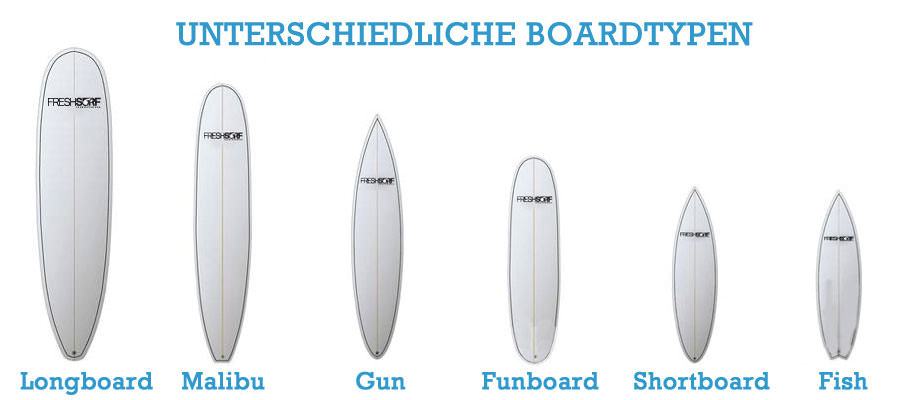

Maybe you’ve been there: You’re standing in a surf shop or scrolling through different surfboards—and everywhere you look, you see numbers like 38, 52, or 75 liters.
But what do these numbers actually mean?
The volume of your surfboard affects how much buoyancy it has. This, in turn, determines how easily you paddle, how stable the board is in the water, and how much time you have for the takeoff.
Especially when you’re just starting out in surfing, the right volume can make all the difference: between a session where you’re mostly struggling with your board and one filled with real learning opportunities.

The good news: You don’t have to understand any complicated formulas. What matters is what the number of liters in the water means to you.

The volume of a surfboard describes how much space the board takes up.
It is measured in liters.
The greater the volume, the more water the board displaces—and the more buoyancy it provides.
A board with a lot of volume floats higher in the water. A board with less volume sits lower and usually responds more directly to your movements.
For you, more buoyancy usually means:
- easier paddling
- earlier takeoff
- greater stability
- more time during takeoff
- greater fault tolerance
However, volume alone does not determine how a surfboard feels. Length, width, thickness, outline, rocker, and the distribution of volume also play an important role.
Two boards with the same volume can therefore ride completely differently.
Note: Volume is an important factor—but it should never be the only number you use to choose your board.
Why More Volume Helps When Starting to Surf

A small board looks sporty. In the water, however, it requires much more precision from you.
With enough volume, your board will be more stable and start gliding sooner. This gives you a little more time for many maneuvers.
More time when starting to paddle. More time when standing up. More time to coordinate your line of sight, body tension, and foot position.
It’s precisely these extra fractions of a second that help you learn movement sequences properly, rather than just reacting to the next balance issue.
That is why large softboards are often used in surfing lessons.
Note: Larger surfboards are more forgiving of mistakes and allow you to make more successful attempts. And it’s precisely these repetitions that help you improve.
How Volume Affects Your Surfing Experience

While paddling
A voluminous board keeps you higher in the water. This makes it easier to build speed and catch waves sooner.
However, it’s not just the volume that matters. Your position on the board and your paddling technique also affect how efficiently you move forward.

During takeoff
A board with enough buoyancy usually starts gliding sooner. This gives you more time to stand up in a controlled manner.
This is especially helpful if your takeoff isn’t fully automated yet.
Tips on how to improve your takeoffcan be found here!
When balancing
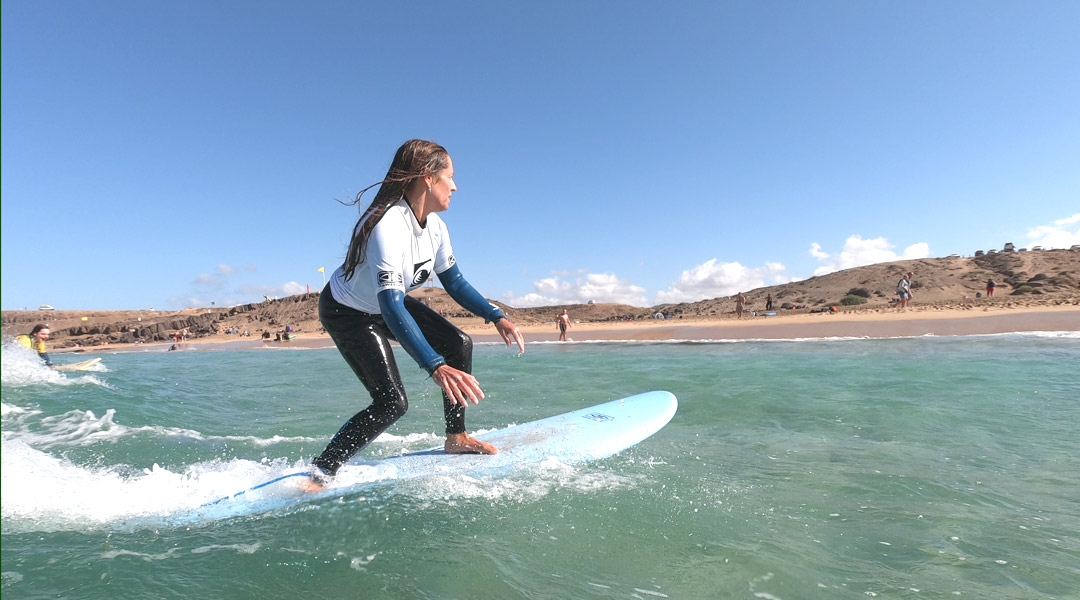
With beginner boards, more volume often goes hand in hand with greater width and a more stable shape.
The board reacts less erratically. This lets you focus more on your movements instead of constantly having to compensate for small tilts.
While turning
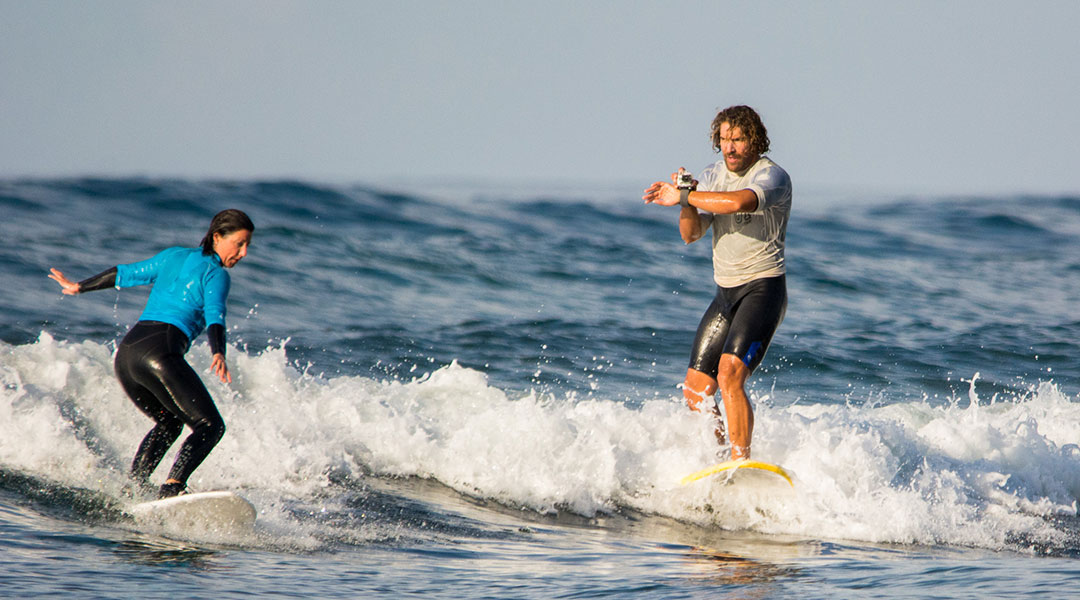
More lift doesn’t automatically mean that a board is hard to turn. Maneuverability always depends on the overall shape of the board.
However, a large, wide beginner’s board is usually less responsive than a shorter board with a narrower outline, thinner rails, and a more pronounced rocker.
As you gain more experience, a more maneuverable board may therefore be a good choice—as long as you can still catch enough waves with it.
How much volume do you need in a surfboard?

There is no set number of liters that works for every beginner.
The appropriate volume depends, among other things, on the following factors:
- Body weight
- Surf level
- Paddle Fitness
- Frequency of Your Sessions
- Wave Conditions
- Boardform
- personal learning goal
Your height can also play a role in choosing the right board size. However, your weight is usually a more reliable indicator of the buoyancy you need.
| Your Situation | Practical Guidance |
|---|---|
| It’s your first time surfing | A large, wide softboard with plenty of buoyancy |
| You have some experience with courses | You should also have a sturdy softboard or a suitable minimalibu |
| You regularly ride green waves | A moderate reduction in volume may be advisable |
| You want to start making your first controlled turns | Choose a more maneuverable board without sacrificing too much paddling comfort |
| You’re surfing small or weak waves | Prefer a little more volume and glide surface |
| You’ll ride more powerful, steeper waves | Prioritize board shape and control |

The most important question is not:
How small can I choose my next board to be?
But rather:
Which board will give me enough waves to reach my next learning goal?
The most common beginner’s mistake: switching to a small board too soon
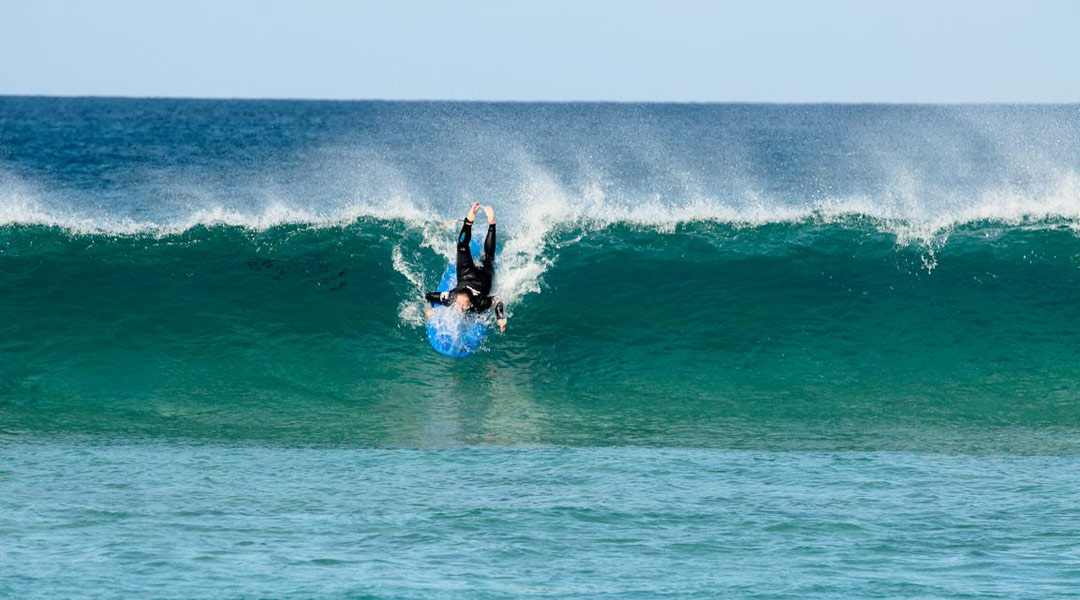
Many surfers want to switch to a short performance board as quickly as possible.
That makes sense. These boards feel dynamic and are often ridden by experienced surfers in more challenging waves.
The catch: A board that works great for an advanced surfer can significantly slow down your progress as a beginner.
1.
Suddenly, paddling becomes more difficult.
2.
The takeoff needs to be faster and more precise.
3.
Even the slightest errors in positioning are immediately penalized.
4.
You’ll get fewer waves—and therefore fewer opportunities to improve your technique.
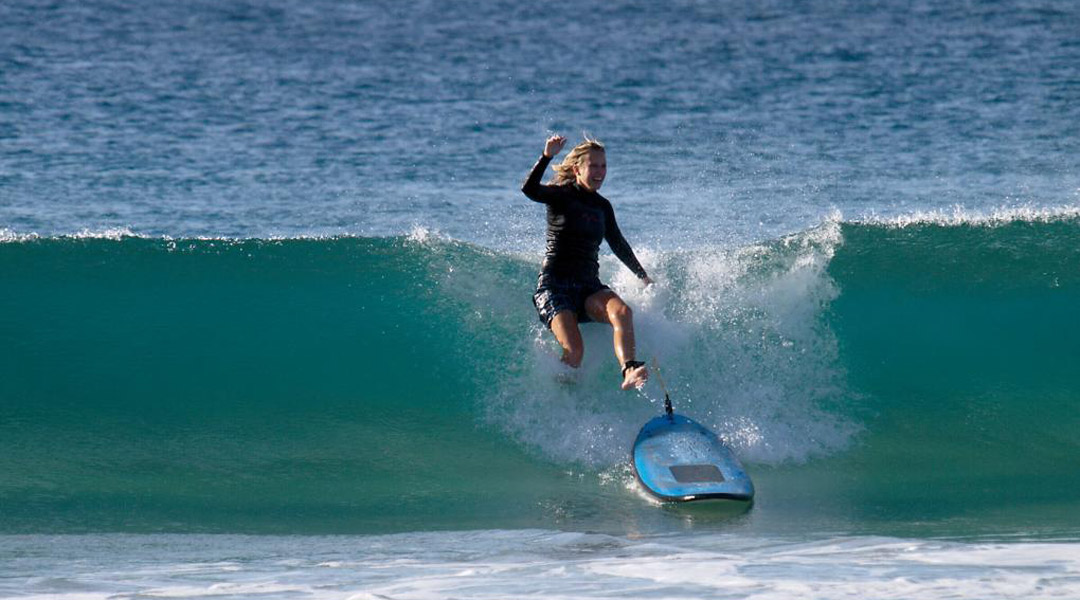
A board with more volume isn’t a step backward, then. As long as it suits your skill level and your learning goals, it’s often the fastest way to surf with confidence.
Coach’s Tip
If you’re torn between two suitable boards, the slightly larger and more stable option is usually the better choice when you’re just starting out.
After all, your progress in learning doesn’t come from having the most challenging board possible.
It comes from good practice.
Catching more waves gives you more opportunities to work on your takeoff, where you’re looking, and your first turns.
When should you reduce the volume of your surfboard?
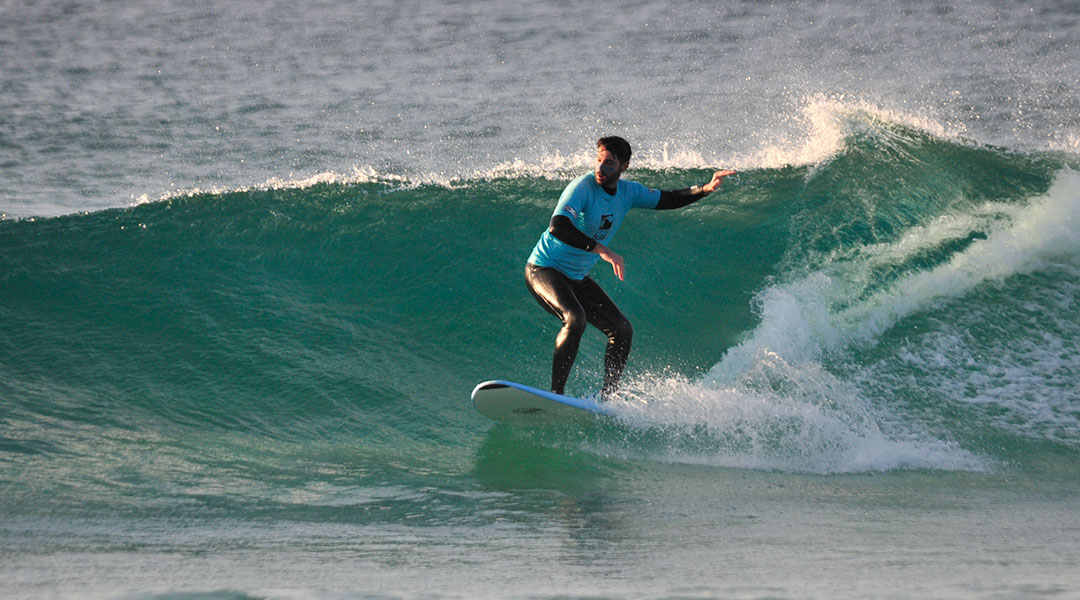
At some point, your first big softboard might start to feel sluggish.
You consistently paddle up green waves, your takeoff is solid, and you want to ride the wave with more power or turn with greater control.
In that case, a board with slightly less volume might be a good choice.
However, the decision to switch shouldn’t depend on how long you’ve been surfing. What matters is what you can reliably do on your current board.

Good signs that it’s time to take the next step include:
- You regularly catch green waves.
- Your takeoff remains controlled even under time pressure.
- You steer specifically to the right or left along the wave.
- You’re keeping a clean line instead of just driving straight ahead.
- You want to work on your turns, not just have a smaller board.
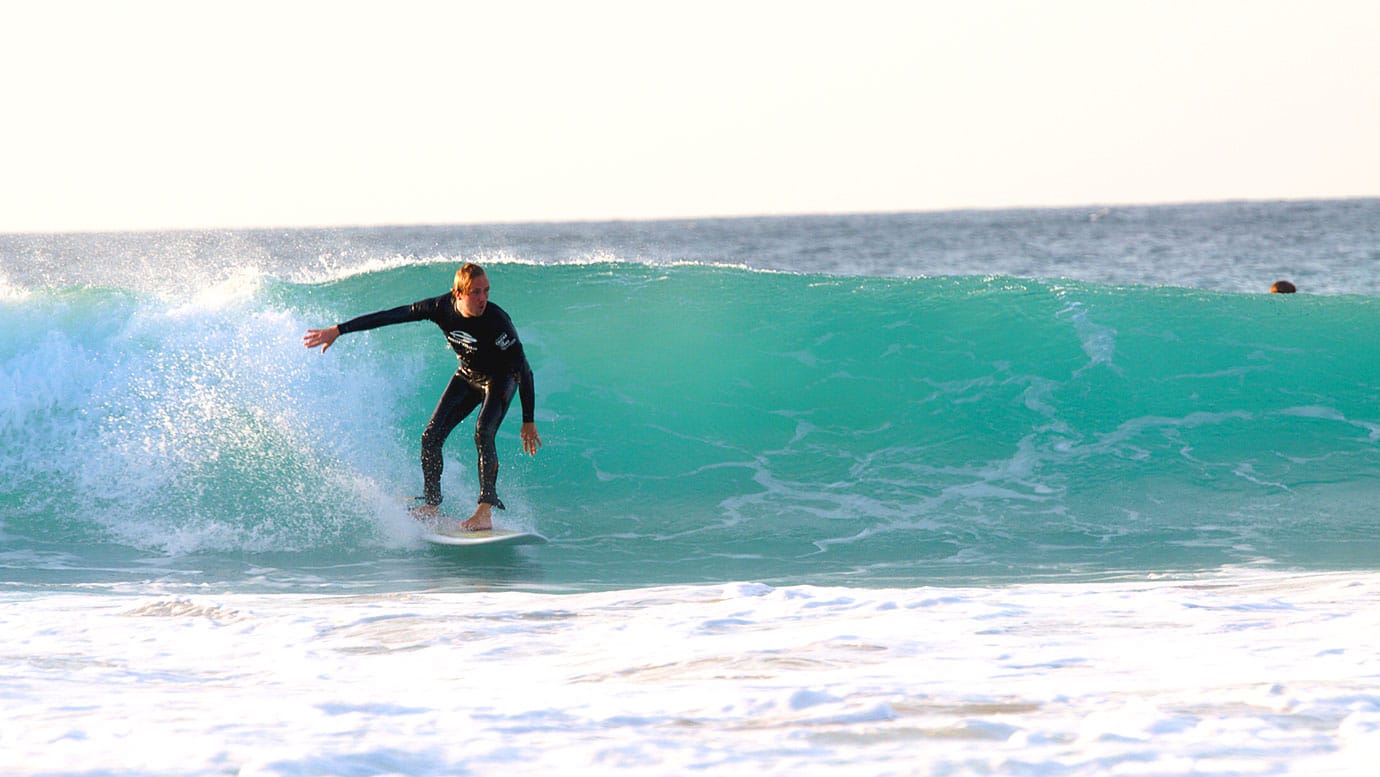
Then gradually reduce the volume.
If the jump is too big, you might end up catching significantly fewer waves and wasting a lot of energy on problems that your previous board had already solved.
A smart board change challenges you in just the right way—without cutting you off from the wave.
More liters don’t automatically mean less fun

“Big boards are only for beginners.”
This saying just won’t go away. But it’s still not true. Even experienced surfers use boards with a lot of volume—such as longboards or special shapes designed for small, weak waves.
After all, different conditions call for different characteristics.
In small summer waves, a voluminous longboard can catch the wave early and allow for long, relaxed rides. A small shortboard may require significantly more strength and precision under the same conditions.

“That’s why the best board isn’t necessarily the smallest one.”
It’s the board that matches your skill level, your goals, and the current conditions. You’ll hear this over and over again from our surf coaches.

Or even simpler:
The right surfboard will get you into the wave without holding you back as you take your next step in your progress.

Decision Guide: Which Surfboard Is Right for You?
| If you … | …then it often makes sense to… |
| surfing for the first time | a large softboard with plenty of buoyancy and stability |
| you’ve just finished a surfing course | a softboard you’re familiar with or a generously sized Minimalibu |
| surfing green waves safely | a slightly more maneuverable board with moderately reduced volume |
| want to learn your first turns | a board that responds more directly but still paddles well |
| surfs mostly small waves | a little more volume and glide surface |
| are still undecided about which one to choose | the better of the two suitable options |
A surfboard should challenge you. But it shouldn’t be so overwhelming that you can barely catch any waves. You can find more information about surfboards here:
Common Mistakes When Choosing Surfboard Volume
Choose a board mainly based on its appearance
A short performance board can look great. But what really matters isn’t how it looks under your arm, but how many good waves you catch with it.
Choose a board that matches your actual skill level.
Underestimating Body Weight
Your weight affects how much buoyancy you need.
Therefore, height alone is not enough to determine the right board.
Downsizing Too Early
Less volume does not automatically mean more progress.
If you catch significantly fewer waves with your new board, you’ll miss out on important practice opportunities.
Unfortunately, that often leads to frustration, and you end up enjoying surfing less.
Relying solely on the number of liters
Volume is important, but it doesn’t tell the whole story.
Length, width, thickness, rails, rocker, and outline all work together to determine how stable, fast, and maneuverable a board feels.
Ignore the wave conditions
A board can perform exceptionally well one day and feel completely unsuitable under different conditions.
So always keep in mind where and in what kind of waves you mostly surf.
Checklist: Is this surfboard right for you?
Before you decide on a surfboard, consider these questions:

FAQ
Is more surfboard volume always better?
No.
More volume usually makes paddling easier and improves buoyancy. However, a very large board can feel sluggish and less responsive.
The right amount depends on your skill level, your learning goal, the board shape, and the conditions.
Can a surfboard have too much volume?
Yes.
A very voluminous board can be harder to control or turn—especially in steeper, more powerful waves.
However, when taking the first steps in learning to ride, the advantages of buoyancy and stability usually outweigh other considerations when choosing the right beginner board.
How many liters should a beginner choose?
There is no reliable flat rate.
Body weight, surfing ability, fitness level, board shape, and intended use must all be considered together. An individualized recommendation or a test in the water is therefore more helpful than a single liter specification.
Is volume more important than length?
Both values serve different functions.
Among other things, length affects glide performance and smoothness. Volume describes the total internal volume of the board. Two boards of the same length can therefore provide different amounts of buoyancy and feel completely different.
Is surfing easier with more volume?
For many beginners, yes.
More buoyancy often makes paddling easier, helps you get up on the wave sooner, and gives you more stability. However, whether a board is truly easy to surf always depends on its overall shape.
Do I absolutely have to surf less to improve my turns?
Not necessarily.
Your foot position, line of sight, speed, rails, and the overall shape of the board also affect your turns. Less volume can make a board more responsive, but it’s no substitute for proper technique.

Bottom line: The right surfboard gives you more great learning experiences
A surfboard’s volume is much more than just a number on a spec sheet.
It affects how easily you paddle, how early your board starts to plane, and how stable it feels during the takeoff. Still, you should never consider the volume in liters in isolation. Only when you take into account the board’s shape, your body weight, your skill level, your learning goals, and the wave conditions can you make an informed decision.
A smaller board might seem more appealing at first glance. However, there’s another question that’s more important for your progress:
Which board will give you enough waves to really improve your skills?
So don’t choose your surfboard based on which model looks the most spectacular. Choose the board that will help you take your next step in your development.
Because in the end, it’s not the smallest liter size that matters. It’s the wave on which everything suddenly falls into place.
If you don’t want to choose your next surfboard based solely on specs, we’d be happy to advise you based on your skill level, your goals, and the conditions in which you mostly surf.
Do you have any more questions about surfboard volume?
If you’d like to learn more about surfboard volume, feel free to reach out. We’d be more than happy to help!