



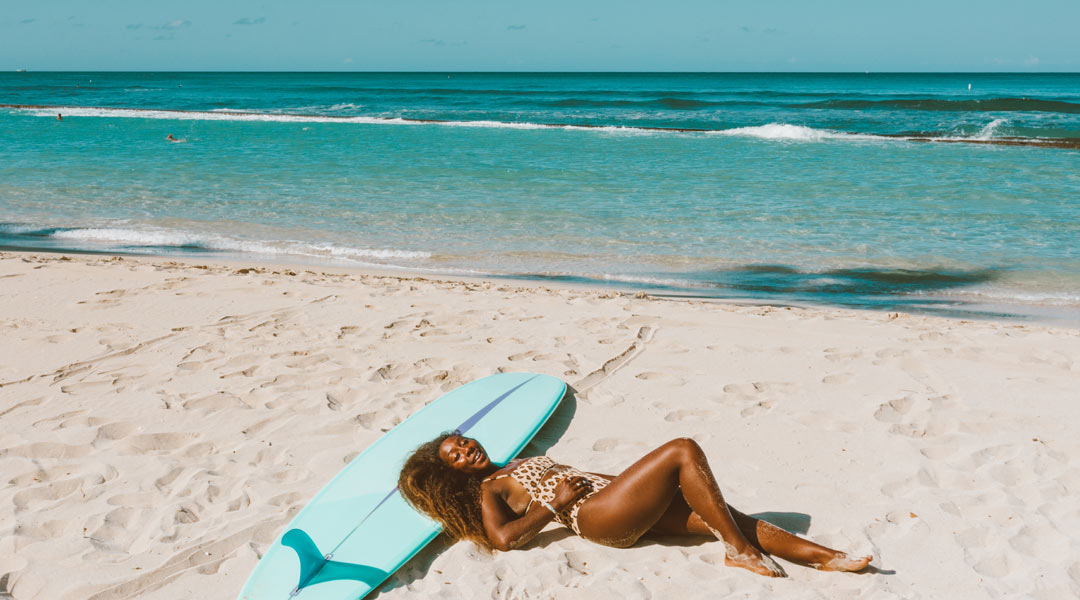
You have just finished your first surf course, you feel confident in the whitewater and now you want to head out into the waves on one of the many second hand surfboards? You are an intermediate surfer and need a new board, but money is tight right now? Or you simply fancy another surfboard for your collection? The easiest and cheapest solution: buy a used surfboard. Here is what you should look out for!
When should you buy second hand surfboards?
x1>
In mainstream shops you can easily pay more than €600 for a new surfboard. If it is a brand-name board, your wallet takes an even bigger hit. But for most surfers at our very human level, such a purchase hardly pays off, because you sometimes get the first dents and dings after just a few sessions. That is why it is worth looking at used boards – but not everything that looks good is worth its weight in gold!
Used second hand surfboards from the internet
We all know it: you are sitting at work, lost in thoughts of your next surf trip in front of the computer, and before you know it you type “buy surfboards” into Google. You find countless websites advertising low prices for used boards, usually with eBay Kleinanzeigen or Second Surf at the top. But how good is buying surfboards online?
Especially if you do not know much about the surfboard you actually need or are looking for, buying online is risky. Even if the seller advertises an “almost new surfboard” that is supposedly “perfect for learning to surf“, there are usually (especially with bargains) more dings and dents than you would like. That is why we advise against used online bargains – better buy boards that you can inspect in person beforehand.
What to look out for when buying:
x1>
Here we have summarised a few points to think about before buying a surfboard:
x3>
- x5>
- What waves do I want a new board for? What shape do I want?
- How well can I surf?
- What size and volume do I need?
- What material should my new old board be made of?
- How trustworthy is the seller?
- How much money do I want to spend?
- What still needs repairing on the board?
x7>
x9>
x11>
x13>
x15>
x17>
x19>

Board shape
If you have looked into surfboards a little, you know which different shapes exist and what they are suitable for. For a beginner, for example, a 9’4 longboard or a gun is not ideal. That is why you should not be dazzled by colour or design when buying a surfboard – make sure the board suits you instead. You can find more information about boards here!
Surf level
Do not overestimate yourself. The surfer lifestyle and the effortless cool that surfers with short boards radiate may be enviable, but they surf certainly have not been surfing for just a year. Surfing is hard and it takes a long time until you can ride a wave with some ease, but first and foremost it is about fun. And you have the most fun with the right surfboard size. If you have only just started, it is best to buy a board with more volume rather than a toothpick. Your paddle power improves the more time you spend in the water, and your surf skills also improve quickly with a suitable board. So be honest with yourselves, and if you are not sure which board suits your level, just ask at the nearest surf shop.
Material
Not only the shape can throw a spanner in the works – the material also plays a big role. Do you need a PU board that sits a little deeper in the water but also breaks more easily? Or would you prefer an epoxy board, which is nice and light and has a lot of buoyancy? Unfortunately, these take on water more quickly and are not as easy to fix yourself as PU boards. If you are a beginner, you may need a robust softboard. These are more forgiving of a crash or a reef, but are heavier and often quite unwieldy. When choosing the material, your surf skills once again play a big role.
Seller
You have found a supposedly suitable board in a shop nearby, on a sales platform or from a friend of a friend and want to take a look at it? Go for it! Here you can find used second hand surfboards, for example. Every board you look at brings you closer to your dream board. But the person behind the board also plays a big role: are they trustworthy? Can they surf?
Surfers often try to sell their old boards at the highest possible price, because they also want a new board at some point. As a non-pro, do not let yourself be ripped off. Look at everything carefully and feel free to ask every question that comes to mind. There is nothing wrong with asking about the shape or volume, pointing out dings or checking out the brand. If you like the board and the seller seems decent, it is time to negotiate the price!
Everything fits?
You like the surfboard, the shape seems made for you and the seller is not a jerk? Then comes the slightly awkward part of the purchase – negotiating the price. Depending on their condition, used boards cost between €100 and €600, and you have to distinguish between brands, material and size. If you are not quite sure how much the board is worth, look up the new prices online. For highly traded boards, the second hand market should give a discount of about 30–40%, for the other boards about 50–60%.
Of course, it also depends on what is included in the price. Leash? Fins? Boardbag? All of this can cost up to €250 new, so the purchase may be all the more worthwhile if everything is included in the price.
If your new dream board has a few flaws that you would like to fix before taking it into the water, push the price down. Find out how much a repair would cost and have it deducted from the sale price.