




When does it make sense to switch?
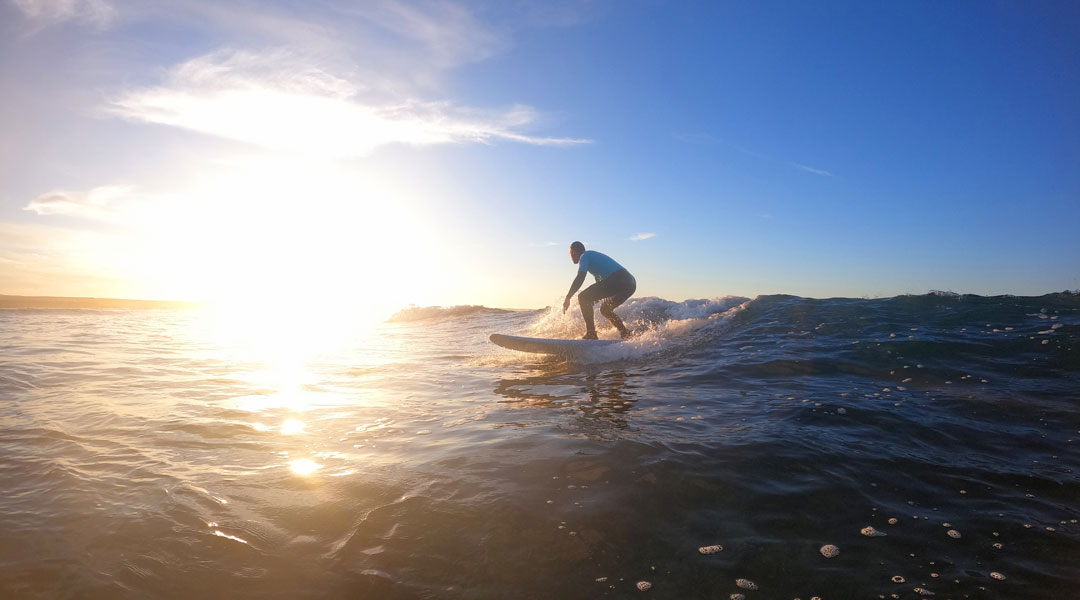
If you can surf unbroken waves with control, choose your direction and handle your board confidently, a suitable hardboard could be your next step.
You don’t need perfect turns. What matters is a solid foundation and a board that suits your level.
Which hardboard is right for the transition?
For your first hardboard, enough length, width and volume usually matter more than a performance-oriented shape.
These are the board types to consider:

Mini Malibu: An easy first step
A mini Malibu around 7 to 8 feet long usually offers a good balance of stability, float and manoeuvrability.
It’s a good fit if you can already surf your first unbroken waves with control and want to get used to a more responsive board gradually.

Funboard: Versatile and easy to control
A wide funboard with plenty of volume can work well if you already ride along the wave face and want to improve your turns.
Keep in mind: Some funboards are easier to surf than others. Look at the shape of the individual board.

Fish: Better as a later step
Fish boards are often shorter and wider. Depending on the shape, they can be fun in smaller waves.
They can be demanding as a first hardboard. A generous mini Malibu or funboard is often easier to start with.
Hybrids and boards with a soft deck over a firmer construction are also worth considering. The label alone tells you little about how easy a board will be to surf.
For a closer look at how the nose, rails and tail affect a board’s outline, see D’Arcy Surfboards’ guide to surfboard anatomy.
Explore more shapes in our guide to surfboard types.
How much volume should your first hardboard have?
A common mistake is choosing the shortest, sportiest-looking board you can find.
Enough volume makes it easier to catch waves and stay stable during the take-off.
The right volume in litres depends on your weight, surf level, fitness and the conditions you surf in.

Our tip: Avoid jumping straight to a much shorter board with substantially less volume. Compare width, length and where the volume sits as well as the total litres.
We explain how these factors work together in our guide to understanding surfboard volume.
When should you switch from softboard to hardboard?
Base your decision on what you can do in the water, regardless of how many hours you’ve surfed.
In whitewater, a wave that has already broken pushes you forward. To catch an unbroken wave, you need to time your paddle, adjust your take-off and control your direction once you’re riding.
Those are the skills that will help you make the switch.
Five skills to bring with you
- Reliable take-off: You get to your feet reliably in suitable waves and find your balance quickly.
- Good timing: You recognise when to start paddling and catch more unbroken waves.
- Control of direction: You ride along the wave face and can choose your line.
- First turns: You can shift your weight deliberately and initiate simple changes of direction.
- Board control and safety: You can handle your board when paddling and turning, know the priority rules and can judge your limits.
These skills take time to develop. If paddling and getting to your feet in whitewater still feel difficult, you’re likely to make more progress on your softboard for now.
Softboard vs hardboard: What changes?
Softboards, also called foamies, offer plenty of float, stability and a softer surface. That makes it easier to catch your first waves and reduces the risk of injury in a collision.
Hardboards have a rigid outer shell. Depending on the shape, they respond more directly to your movements and allow more precise turns.
 Softboard
 Hardboard
Stable and forgiving, with enough float to help you catch plenty of waves.
A more responsive feel and more scope for controlled manoeuvres.
How a board performs depends on its shape and how well it suits you. A board that’s too small can make paddling into waves and taking off much harder.
Remember: The best board for your progress is the one that lets you ride as many waves as possible with control.
How to make the switch to a hardboard
Once you’ve found a suitable board, give yourself time to get used to how it feels before working on your turns.
1. Choose forgiving conditions
Start in small, predictable waves with room around you. A familiar surf spot helps you focus on your board.
Avoid strong currents, crowded line-ups and conditions that already feel demanding on your softboard.

2. Find your timing on the new board
Paddle for a few waves and notice how your hardboard responds.
You may need to shift where you lie on the board or adjust your paddling. The take-off can feel unfamiliar at first too.
Give yourself time to get used to those differences.
3. Stick to the fundamentals
Focus on catching waves regularly, getting to your feet reliably and riding along the face with control.
Once you can do that consistently, start working on tighter turns.
If the conditions don’t suit your hardboard one day, take your softboard out again. Your foamie still has a place in your quiver.
Safety on your first hardboard
A hardboard has a much harder surface. In a collision, the nose and fins in particular can cause injuries.
Keep these rules in mind as you make the switch:
- Leave space: Give other surfers plenty of room, including space for a possible fall.
- Control your board: Keep hold of it when you can do so safely. If you lose control, do what you can to protect yourself and others.
- Protect your head and face: Cover your head with your arms if you fall. Avoid diving headfirst into shallow or unfamiliar water.
- Check your leash: Inspect it before each session and keep practising safe board handling.
- Know your limits: Even small waves can be dangerous when there are currents, a shallow bottom or lots of surfers.

If you’re unsure, ask a surf coach to show you how to take your board through the shorebreak safely and what to do when you fall.
You’ll find the main rules for sharing waves in our guide to surf etiquette.
FAQs about switching from softboard to hardboard
Can I go straight from a softboard to a shortboard?
You can, but many progressing beginners find it an awkward first step. Classic shortboards tend to be shorter, narrower and lower in volume. A generous mini Malibu or funboard often makes the transition easier.
Do I need to surf unbroken waves before switching to a hardboard?
For an independent switch, you should already be able to ride some unbroken waves with control. With guidance, you can try a suitable hardboard earlier.
Is a hardboard harder to surf than a softboard?
A long, wide hardboard with enough volume can be quite stable. How demanding it feels depends mainly on its shape, its volume and your ability.
How long should I surf a softboard?
There’s no fixed number of days or hours. Base the decision on whether you can get to your feet confidently, ride unbroken waves with control and handle your board reliably.
Should I keep my softboard after I switch?
Yes, if you can. A softboard is still great for relaxed sessions, certain wave conditions and working on the fundamentals.
Your surfing skills tell you when to switch
Switching from softboard to hardboard can open up new possibilities. The board responds more directly, so you can learn to steer more precisely and develop your technique.
Take the time you need.
If you surf unbroken waves with control, feel confident in the water and choose a board that suits you, you’re more likely to enjoy the transition.
If you’re still building those skills, enjoy your next waves on a softboard. Keep measuring your progress by what you can do in the water.
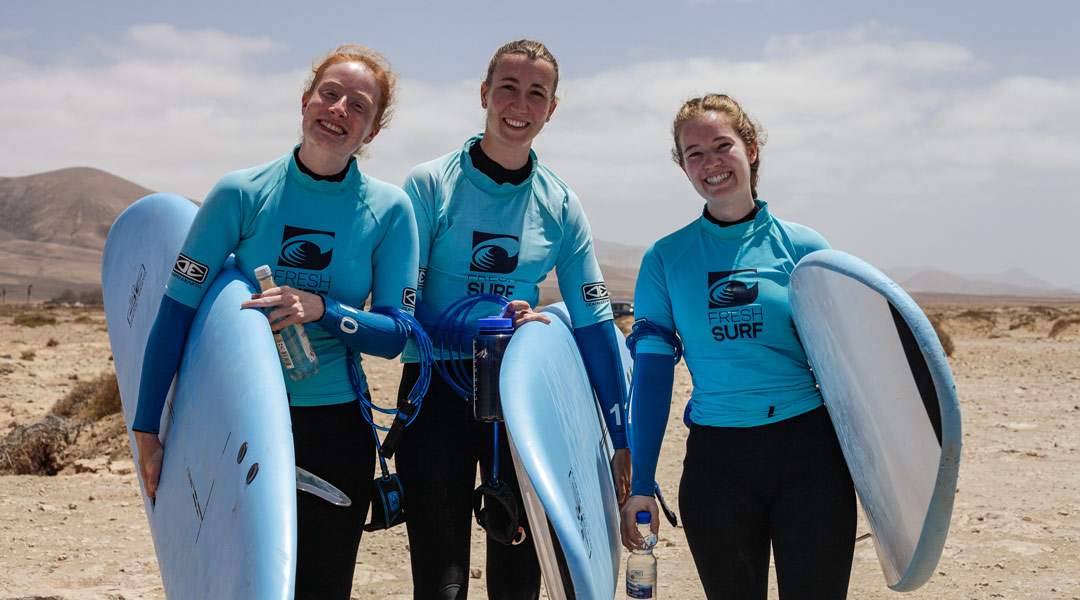
Want to try your first hardboard with a surf coach? In Fuerteventura, FreshSurf can help you find coaching to develop your technique and choose a board that fits your level.
Find out more about our surf lessons in Fuerteventura.
Enjoy your next session, whatever board you’re riding!