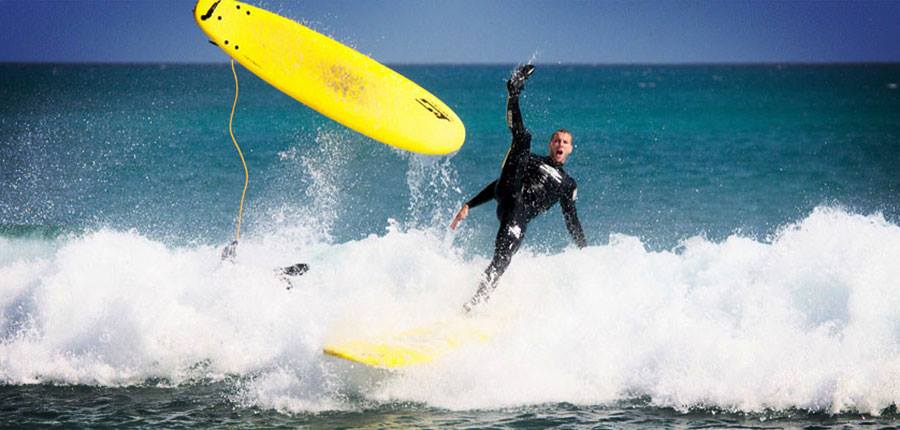
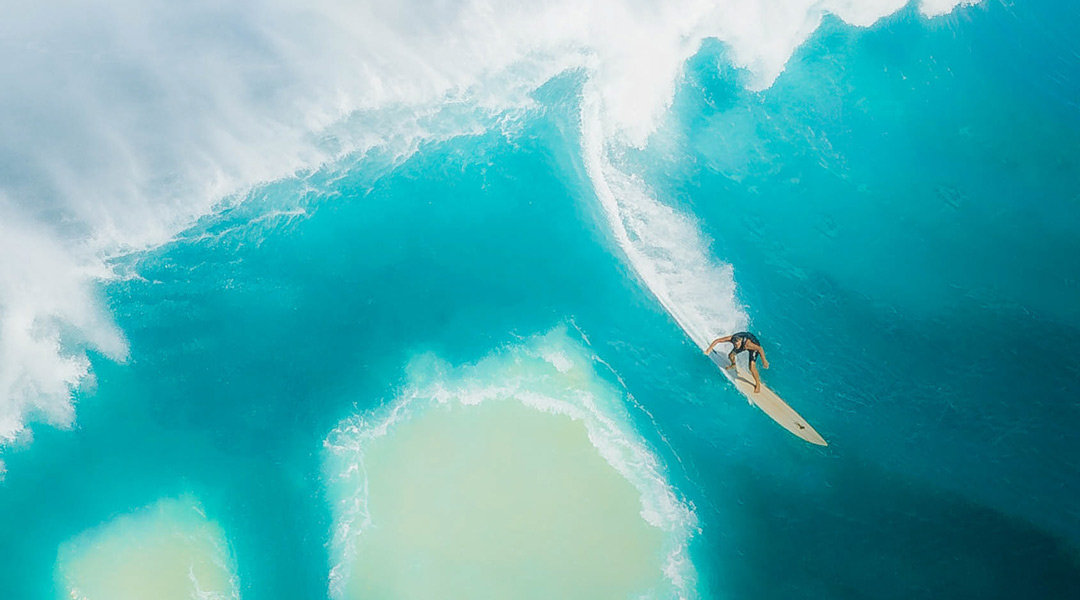
Big wave surfing. Many people can imagine what these words mean: riding a gigantic monster wave on a small surfboard. Sure, that’s not wrong at first. But the idea of a surfer being in the water and conquering the wave of their life doesn’t tell the whole story. Big wave surfing is more than just a wave—more than just a hobby. Extreme athletes train their entire lives for it. It’s a sport that comes with serious risks, while at the same time releasing adrenaline and endorphins. In this blog, you’ll learn more about big wave surfing and get a glimpse into the life of the current German world record holder in big wave surfing.
What is big wave surfing?
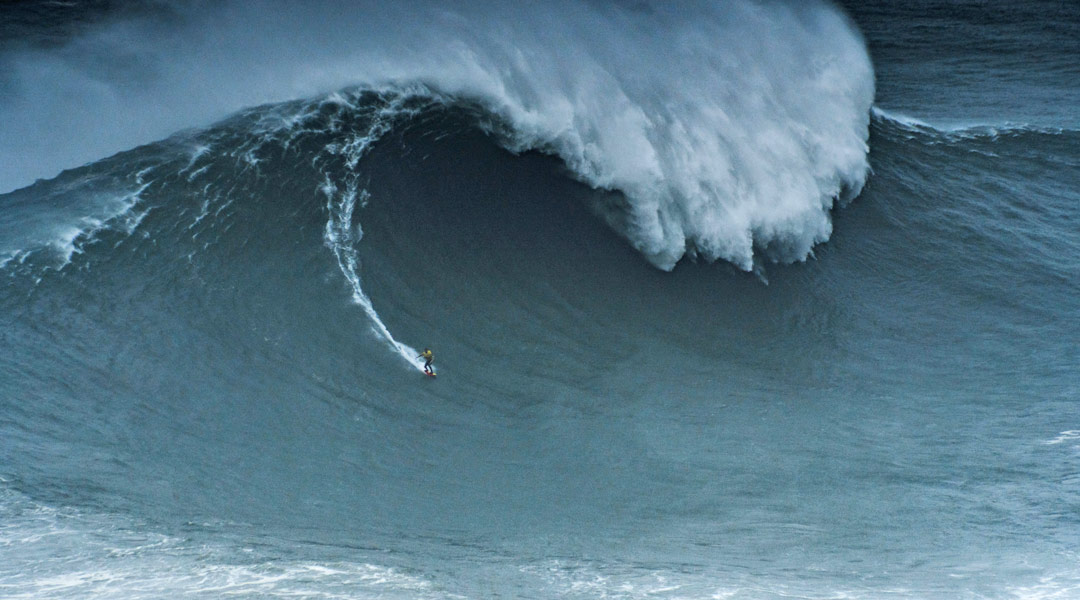
As the name suggests, big wave surfing involves riding waves that are far larger than “normal.” But what actually counts as big? Everyone perceives size differently, but in this sport there is a general benchmark: a wave is considered a big wave when it reaches at least 20 feet (about 6.2 meters). There is essentially no upper limit.
Weather conditions play a key role in creating waves of this size. When waves reach such heights, a technique known as tow-in surfing is often used. This method was developed by several surfers in the 1990s. In tow-in surfing, surfers are pulled into massive waves by a jet ski, allowing them to reach the necessary speed. Paddling alone is no longer sufficient in these conditions.
If you want to find out how big the largest wave ever surfed was, keep reading!
How and where do these monster waves form?
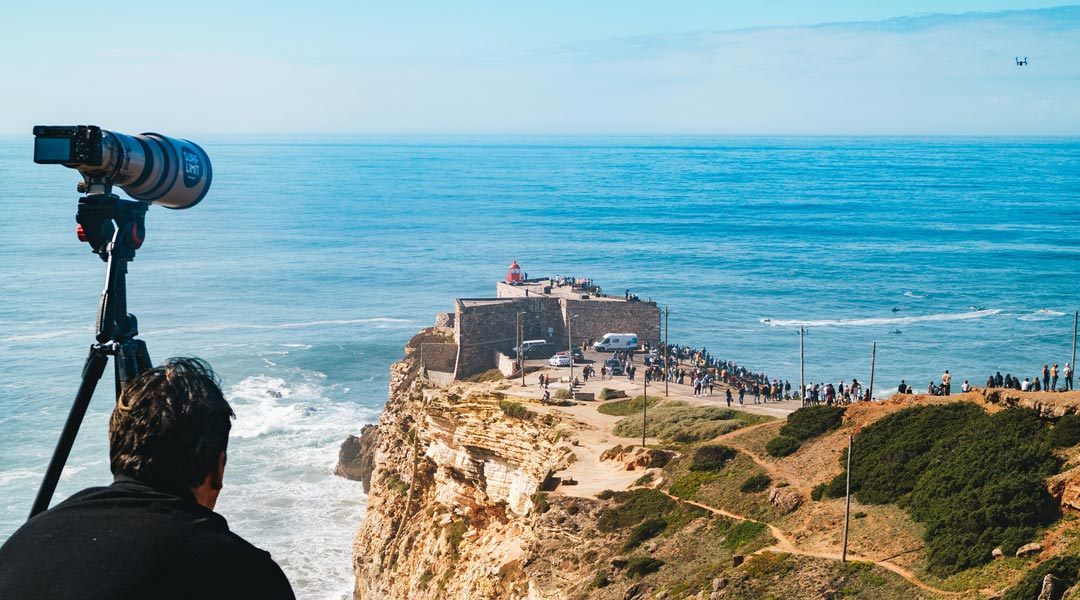
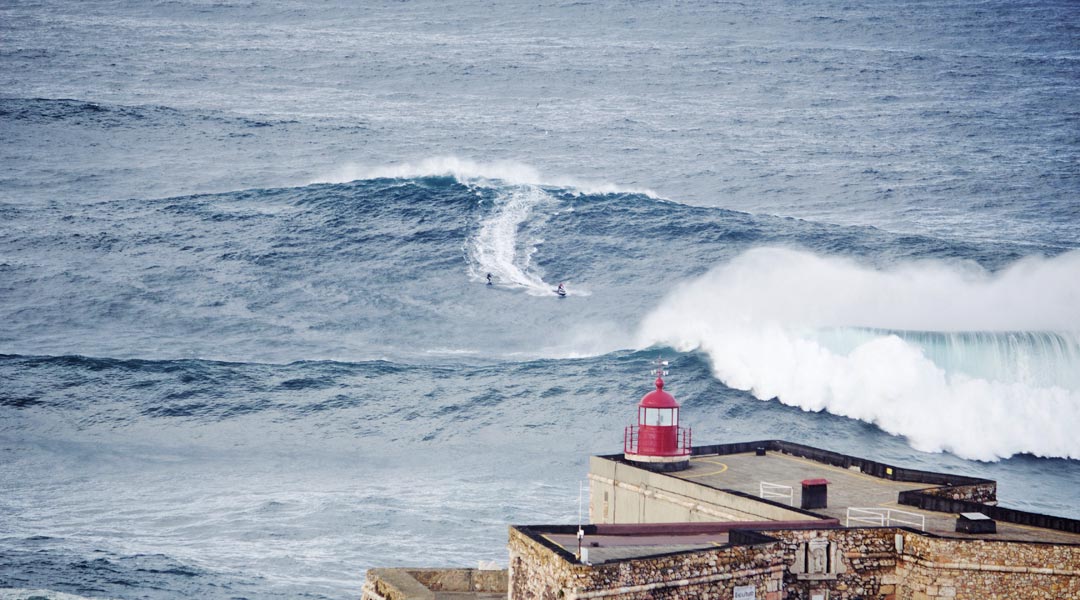
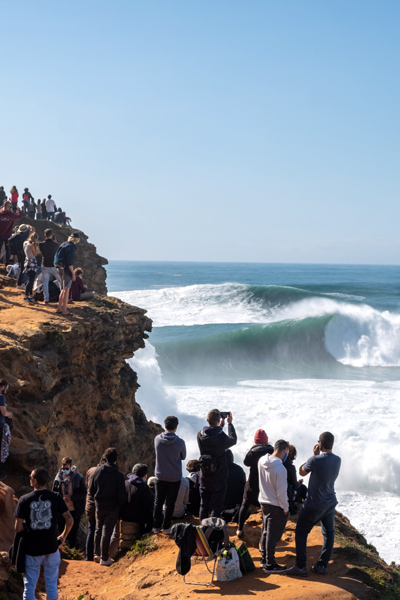
Nowhere else in the world are there bigger waves than in Portugal. About 100 kilometers north of Lisbon lies the favorite spot of the big wave scene. For a long time, Hawaii held this title, but Nazaré has rightfully claimed it.
The giant waves here are especially impressive during the winter months. The reason they grow so high is due to unique geological conditions. Off the coast of Nazaré lies a big underwater canyon. It stretches over 200 kilometers in length and reaches depths of up to 5 kilometers.
As the waves move closer to the shore, the ocean floor becomes increasingly shallow. Traveling at high speed from the deep areas, the wave suddenly encounters the shallower seabed and is abruptly slowed down. This resistance forces the wave’s energy upward, causing it to build into massive heights.
On only a few days each year, when wind conditions and ocean currents align perfectly, this unique natural spectacle occurs.
The right preparation and requirements for riding a big wave
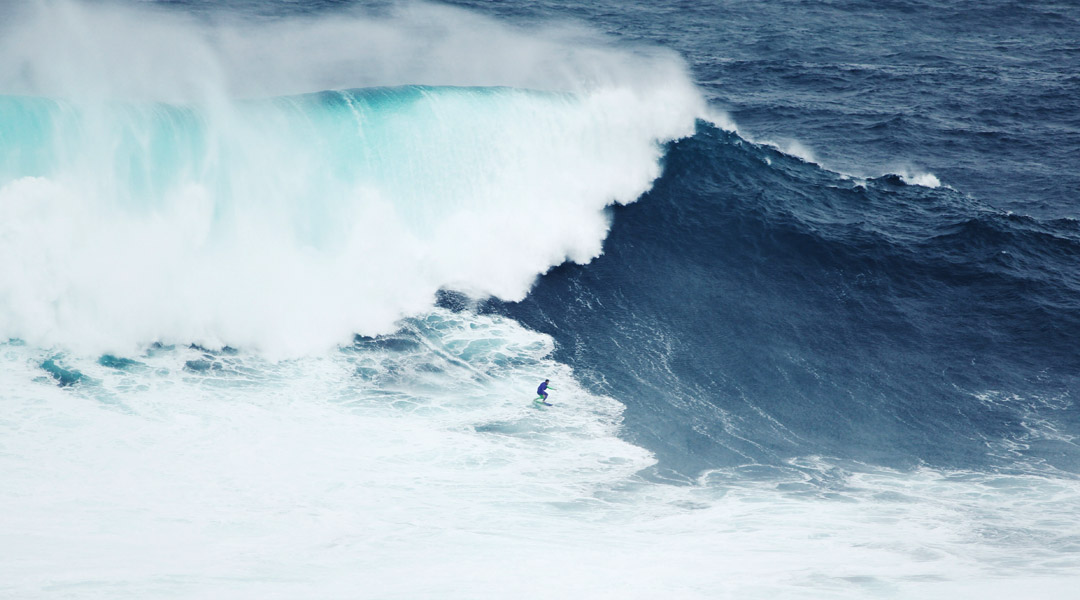
To conquer a big wave like that, years of experience are required. Not only physically, but also mentally, surfers must be prepared. Waves weighing over 5,000 tons and reaching speeds of around 80 km/h are definitely not to be taken lightly.
For this reason, breathing exercises are trained both on land and in the water. This is very important, as a surfer can be held underwater for several seconds, sometimes even minutes. The body is kept fit through regular gym training, and attention is also paid to nutrition.
In addition to the physical aspects, mental strength is extremely important. Big wave surfers must be able to act correctly in dangerous situations. With enough respect for the ocean and a calm, focused mindset, the ride can be successfully managed.
Equipment + Team
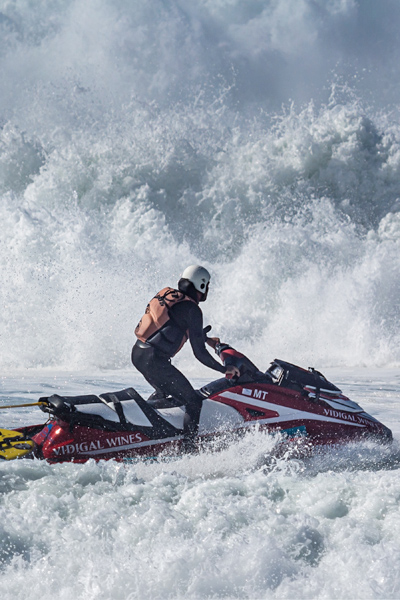
For safety, surfers are supported by a specialized team. They are also equipped with life-saving gear. The team includes jet ski drivers, spotters, and a first-aid crew on the beach.
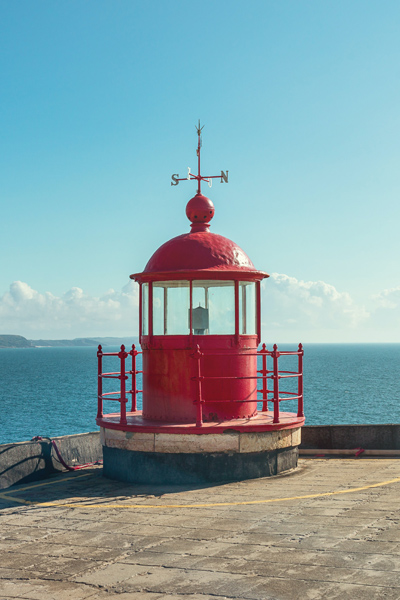
Spotters help the surfers maintain an overview of the ocean and identify the right moment to take off on a wave. In Portugal, these spotters are often positioned at the famous lighthouse in Nazaré, where they call out incoming waves and guide the surfers.
In addition, there are usually three jet skis involved. They are not only responsible for towing surfers into the wave, but are also the first responders in the water. If a surfer gets pulled underwater, the jet ski drivers act immediately to locate and rescue them as quickly as possible. In life-threatening situations, the rescue team is ready to provide emergency care and transport the surfer to the hospital.
To reduce risks in the first place, professional surfers wear inflatable vests that help them return to the surface more quickly after a wipeout. A specially adapted surfboard, often equipped with secure foot straps, is also crucial for control and safety.
More on this topic: 10 famous surf spots for pros – surf spots that push even pros to their limits!
World record holder in big wave surfing
Allow us to introduce: Sebastian Steudtner! The current Guinness World Record holder for the largest wave ever surfed in the world.
In October 2020, the German conquered an incredible wave measuring 26.21 meters in height. Sebastian is 27 years old and felt a strong connection to the ocean from an early age.
“Fear is not a bad thing! Respectful fear is the most important thing for us!”
“Learn more about the World Surf League and the Big Wave Award in the category for the largest and successfully ridden wave! Even in the Canary Islands there is a… international surf and bodyboard contest. This event is called the Quemao Class and takes place on Lanzarote.