

Dangers of surfing – what are they? Here you will find a summary of the dangers associated with surfing, making it one of the world’s extreme risk sports. We recommend that you are always very careful and take protective measures, especially when traveling and surfing in unknown waves. But you should also be careful at the usual spots, because some of the dangers of surfing are always present and constantly with us. Dangers in surfing are more common than you might think, because the sport itself already involves risks and situations in which we put our integrity and that of our equipment at risk.

As with any outdoor activity, there are several dangers that we must take into account when practicing our outdoor sessions. Surfing is a sport linked to the sea and the waves and involves situations that must be faced.
Although there is a certain risk of injury when surfing, there is clear evidence that these injuries can be prevented. If you would like a summary of the dangers of surfing, you can jump directly to it here.

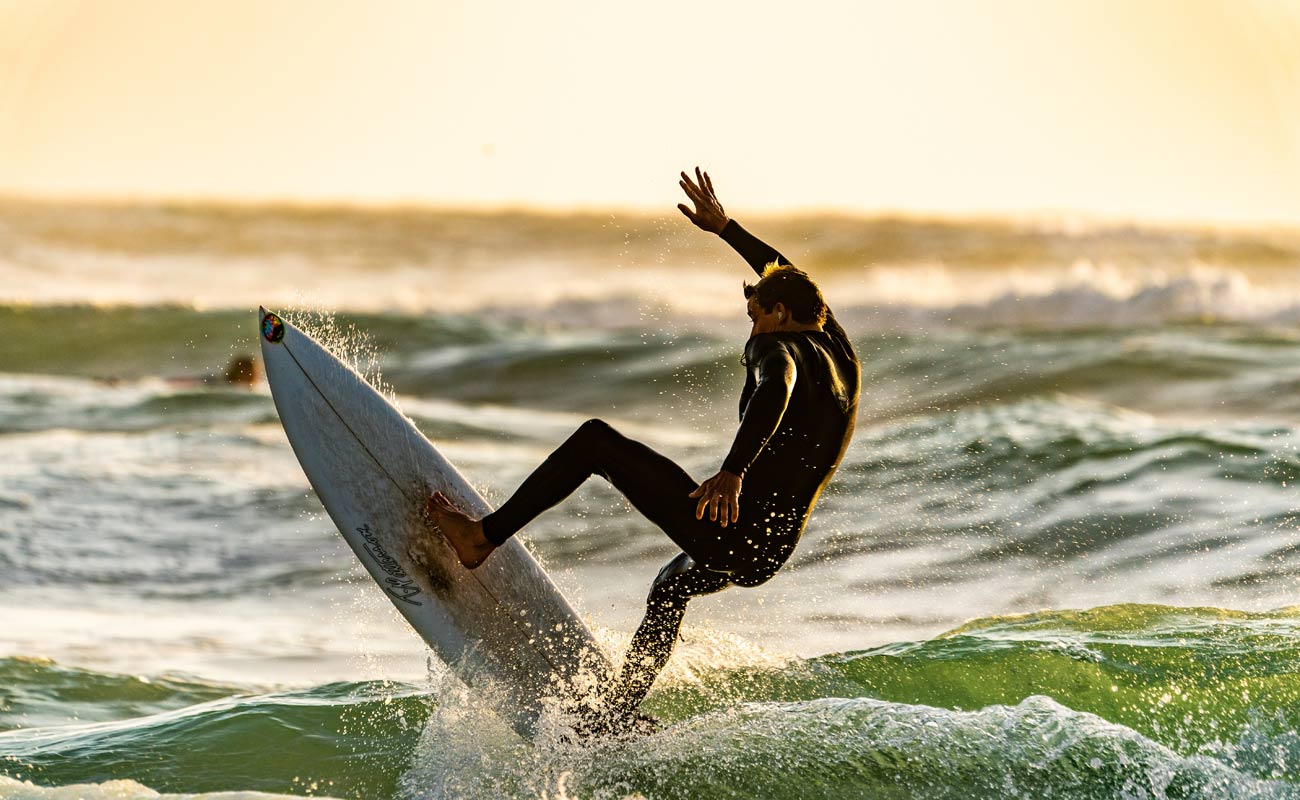
The injury rate for aerial surfers, who perform tricks with the surfboard in the air, is 1.35 injuries per 1,000 hours of surfing.
Source: https://activesafe.ca/wp-content/uploads/2018/04/Surfing.pdf
Drowning – one of the dangers of surfing
Why can you drown while surfing?

Anyone who goes into the sea runs the risk of drowning. Therefore, all surfers must be able to swim properly and stay afloat even in rough conditions. Even a mild summer day can end tragically if a surfer suffers a blackout in the water. It is always advisable to surf in the company of friends or other people who can pull you out of the water in the event of a faint or blackout.
If we fall off our board in a big wave or our board hits our head, we are always in danger. One way to avoid such a blow to the head is to wear a helmet to protect yourself. Never try to surf waves that are far beyond your perception of risk. You can find more information about surfing with a helmet in our blog here.
Collisions and crashes are a danger when surfing
Dangers when surfing through other surfers or with your own surfboard

Who in the line-up poses a threat when surfing?
The more surfers there are in the line-up, the more dangerous it becomes. Flying boards to the left and right, surfers, bodyboarders, maybe even swimmers. Add to that beginners who don’t know what they’re doing and disaster is inevitable.
What danger do beginners and rude surfers pose?
Novice surfers and reckless people can turn a dream session into a horrible nightmare. Novice surfers rarely know the rules of the surf and can quickly get in your way when casually surfing a perfect right-hand wave. The consequences can range from a broken surfboard to a more or less serious injury.
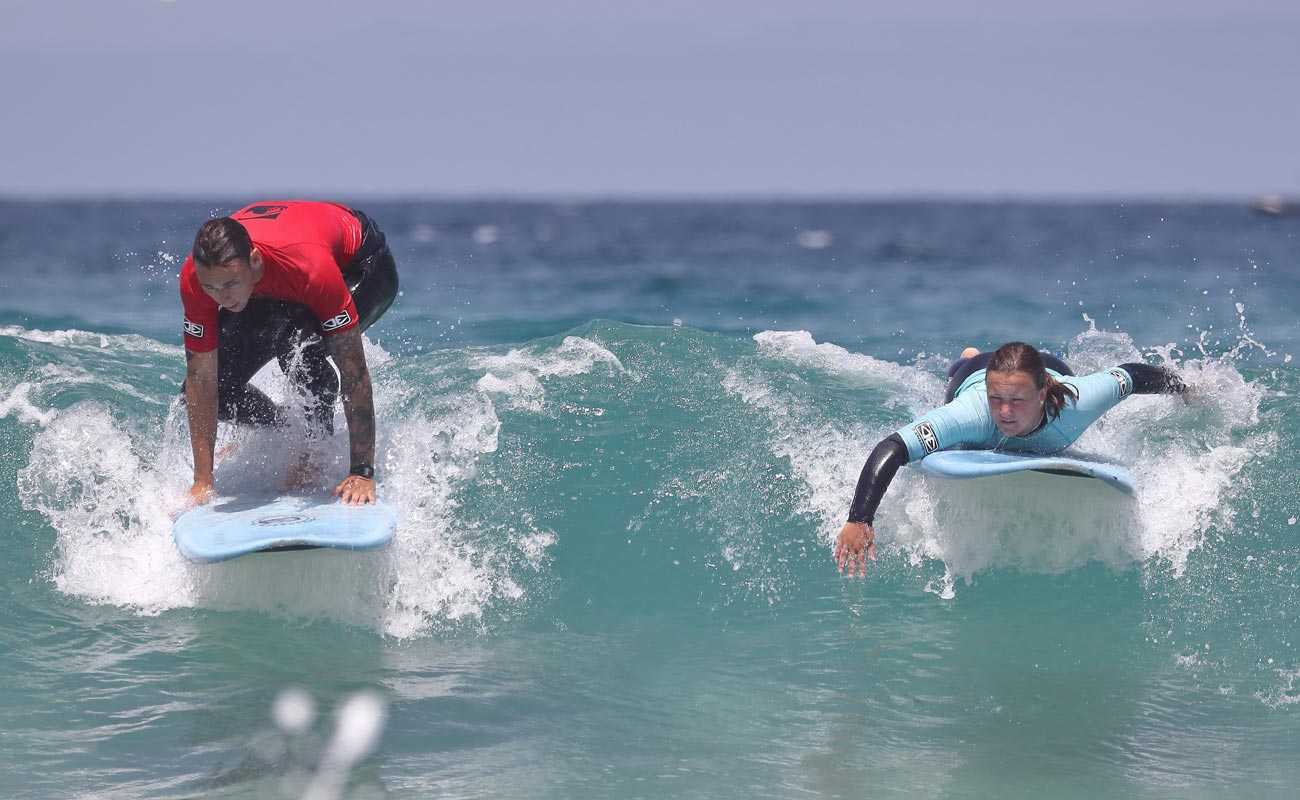
The same applies to fellow surfers who know the navigation rules but do not adhere to the so-called surfing etiquette. In the following picture you can see our surf instructor explaining the surfing rules. He simulates “dropping in” into the right-hand wave of our surfing student.
What dangers does my surfboard pose to me?
Another major danger comes from collisions with your own board and with other surfers in the line-up. This is the most common danger, as collisions with the board, rails and fins are sometimes unavoidable. In this case, it is advisable to follow the surfing rules and never drop other surfers into the wave. Always remember that hard plastic fins are often sharp-edged and more dangerous than rubberized fins. Respect other surfers and be respected yourself.
Dangers posed by nature when surfing
What do I need to watch out for when surfing?

Currents, undercurrents – rip tides, etc.
Every year, dozens of people die after getting caught in rip currents, undercurrents and raging tides. Although these strong ocean currents never pull swimmers and surfers underwater, they sap people’s energy until they eventually drown from exhaustion. For surfers, they are not so dangerous, because since we have a board to hold on to and a wetsuit to keep us warm, we should never lose our nerve.
It’s best not to fight the current and paddle out sideways with the current. The trick is to let them carry you further into the ocean than to fight them. Always paddle in the direction of a breaking wave that breaks to your left or right in the direction of the current. You can then let it carry you straight back to shore and return to the shore without too much effort. Tip: Find out about the current conditions on the respective beach.
If you ever get caught in a current, stay calm, don’t panic, ask for help if you need it and manage your energy well.
The seabed, reefs and corals can pose dangers when surfing
What dangers are posed by the ocean’s subsurface?

What dangers does sandy or rocky ground pose for surfers?
If it’s a sandy bottom, it will feel like concrete if the wave pushes you onto it with full force. A rock reef can feel exactly like concrete, although it is much more jagged and likely to cause more injury than normal smooth concrete. Be absolutely careful with coral. First it cuts you like a razor blade. Then tiny pieces are left behind that can become infected months later. Here’s a tip: never fall off your board. Yes, ok – that’s rather unlikely!
The seabed is one of our biggest “enemies”, because a blow to the seabed can cause serious wounds and injuries and even render us unconscious. The sandy seabed can be deadly, as on the famous beach of Supertubos in Portugal, near Peniche. However, the greatest danger is on coral reefs and lava reefs, which are as sharp as razor blades and cause deep wounds. It is always advisable to wear a helmet on such surfaces, as a blow to the head can be fatal. Waves like Pipeline, Tehaupoo, Cyclops and Ours are famous for their violent wipeouts.
Pollution of the oceans as a danger when surfing
Environmental pollution concerns us all, each of us can do something

What are the dangers of pollution in the sea when surfing?
Last but not least, we would like to point out this hidden danger in our oceans that fills the water with radioactivity, due to disasters such as Fukushima, the nuclear explosions in the Pacific atolls of the last century, the thousands of tons of tar that are thrown into the sea every year, the millions of tons of plastic waste floating in the water, the various toxic waste, the pollution of faeces in the estuaries, etc. This danger is invisible but present every time we enter the water. – This danger is invisible, but present every time we enter the water.
Every year, more than one surfer ends up in hospital with severe poisoning, requiring urgent stomach pumping. We recommend that you do not surf in contaminated areas, as the consequences can be very serious.
The dangers of surfing come from the sun
What is so “dangerous” about the fixed star around which the Earth orbits?

Surfers spend hundreds of hours a year under the sun’s harmful ultraviolet (UV) rays. Contrary to what is repeatedly claimed, tanning is not a good thing – it means damaged skin.
In fact, it’s an unhealthy and unsafe condition that can lead to premature skin ageing, sunburns and skin cancer. Surfers need to use highly effective, coral reef-safe sunscreen every time they put on a wetsuit. If you do get sunburnt, here are some tips for you.
Dangers posed by marine animals when surfing
What dangers do living beings or animals pose?

Sharks just have to be at the top of the list, don’t they? Big teeth, attacks without warning, all that screaming and bubbling red water. The danger posed by sharks is obvious, but the likelihood of being attacked by a shark is less than being killed by a coconut. There are other equally dangerous sea creatures to look out for. These include seals, snakes (sea snakes, of course), crocodiles, sea urchins, jellyfish and stingrays. They can all be potentially life-threatening.
Are there sharks on Fuerteventura?
Do we also have sharks on Fuerteventura? Yes, there are sharks, but none that would attack humans. You can find out all about sharks off the coast of Fuerteventura here in our blog!
Traveling by car also poses risks
What should I look out for when driving to the surf spot?

The danger with the most fatalities and the least impact is traffic accidents, which can occur when driving along the coast in search of waves. The roads are very dangerous, especially on stormy days in winter. It is very important that you drive carefully and keep your eyes on the road at all times. If you see a good peak out of the corner of your eye, pull over and stop before checking it out further. Always make sure that your car and especially the tires and brakes are in perfect condition.
Dangers posed by other people while surfing
Apart from other surfers, who else poses a risk when surfing?

What danger do locals pose?
The cute seagull in the photo above is supposed to represent locals and other “beachcombers” who could pose a threat to you while surfing.
Although localism has decreased significantly compared to the last century, there are still beaches and places where local surfers defend their favorite waves by any means necessary. It is important to always respect the locals and try to remain unnoticed in the water if you don’t know anyone. We also recommend entering the water one at a time, not jumping in with four friends at once, and always greeting the locals with a smile and showing them respect. Don’t paddle straight to the peak, but wait on the shoulder for a while first.
Are there beachcombers when surfing?
Yes, this is a real and increasing danger on our beaches as thieves know we are easy prey because we are in the water and leave all our belongings in the car or van. The target is usually our money, wallet and phone. Often the type of theft involves smashing a car window. To avoid this type of theft, it is best to install an alarm system in the car and try not to park in remote places.
We also recommend that you take your car key with you into the water or at least keep it in a safety lock. Hiding the key under a stone or in the wheel arch is not particularly advisable as you could be observed. Here are some more tips for storing your car key!
What are the dangers of surfboards, leashes and fins when surfing?
Why can surfing equipment also be dangerous?
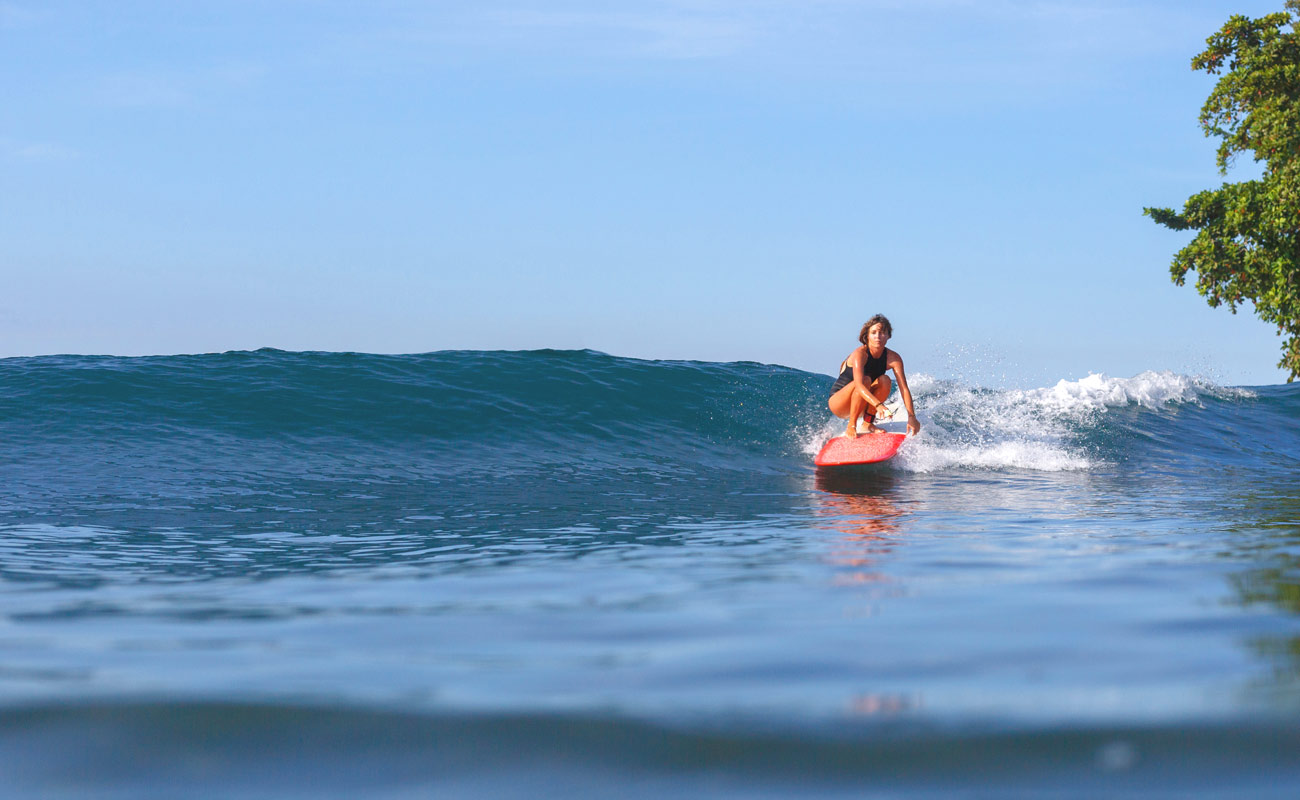
A surfboard with a leash is part of every surfer’s basic equipment. But surfboards can also cause damage. A wipeout, a spectacular jump out of the wave against the wind, a poorly executed duck dive, a closeout or an unattended board can quickly turn a surfer’s equipment into a powerful weapon.
Remember that a surfboard has a pointed nose and sharp fins that can easily cut into your skin, injure your ears and eyes and cause multiple fractures. The leash is also potentially dangerous. It can wrap around your neck or tear and hit you in the eyes.
Dangers of surfing for body and mind
What are the advantages and disadvantages of surfing?
We have already talked about the advantages and benefits of surfing for our health several times here. Surfing is undoubtedly a very fun sport in which we experience different sensations every day thanks to the changing conditions of the sea and the waves. But just as there are two sides to the coin, surfing also involves risks for those who practice it, despite being one of the safest sports to practice.
There are injuries that are more common among surfers due to the nature of surfing. Knowing these risks is the first step in preventing injuries or physical ailments that can affect those of us who surf regularly.
What kind of injuries can occur when surfing?
The most common surfing injuries are to the head, shoulder, arm, back and leg. The general surfing injury rate has fallen – from 3.5 in 2006 to 1.79 injuries per 1,000 hours of surfing in 2015.
The body parts affected by injuries are as follows:
Head injuries
Lacerations to the face and head and ruptured eardrums are common injuries among surfers. In addition, concussions, fractures of the cervical spine, fractures of the face, jaw and skull as well as eye injuries are not uncommon among surfers.
According to the book Conservative Management of Sports Injuries by Thomas E. Hyde and Marianne S. Gengenbach, the most common cause of acute surfing injuries is collision with the rails, fins and nose of the surfboard. Other common causes of injury are coral reefs, hard sand on the seabed and submerged rocks. Hyde and Gengenbach go on to say that common head and neck injuries include concussions, fractures of the cervical spine and fractures of the face, jaw, skull and teeth.
Prevention:
Many beginner surfers opt for soft-top surfboards to prevent head injuries. After reading the list of possible injuries, that sounds like a good idea, doesn’t it? More experienced surfers who attempt treacherous breaks often wear a helmet.
Shoulder injuries
Shoulder dislocations, sprains and strains as well as fractures are among the most common injuries when surfing. Inflammation and swelling of the rotator cuff (impingement) and tendinitis are common, which can lead to pain in the front of the shoulder. This chronic condition is most common in beginners due to poor paddling technique and in older surfers due to years of paddling.
The shoulder is the most susceptible to overuse. According to an article by Sean Fyfe in the Sports Injury Bulletin, this can lead to rotator cuff impingement and tendinitis, which causes pain in the anterior shoulder and deltoid area. A chronic condition like this is most common in beginners (poor paddling technique) and older surfers (years of paddling).
Prevention:
Although surfers generally don’t like to stretch, this simple precaution can save your body from injury and improve your performance. It’s hard to commit to stretching, but if you spend ten minutes watching the lineup and different surf spots, it will pay off. Not only will you avoid a painful belly landing, but you’ll also have a better idea of which spots work at your local break.
Poor
The arm can suffer fractures, sprains and strains as well as various lacerations, abrasions and bruises.
Wrist
The wrist and hand can suffer fractures, sprains and strains as well as various lacerations, abrasions and bruises.
Hull
Surfers can suffer lower back pain and, in rare cases, spinal cord injuries caused by hyperextension of the back (surfer’s myelopathy).
Ankle
Ankle sprains and strains are not uncommon among surfers, nor are lacerations to the leg, shin or calf and knee.
Hypothermia
When spending long periods of time in a cold environment such as the sea, there is a risk of hypothermia, even in summer. To avoid this, there is a wide range of wetsuits that protect you from this loss of body heat. But even if you are wearing a wetsuit, you should watch out for symptoms such as lack of coordination or cramps and leave the water if you notice them to avoid further problems.
Otitis media
A middle ear infection is an inflammation of the ear caused by the constant ingress of water. It can be prevented by wearing earplugs, especially if you plan to spend a lot of time in the water.
Hyperostosis
Hyperostosis is another ear problem and can also be prevented by using earplugs. This is a bone formation in the ear as a reaction of the ear to cold and water, which can only be remedied by surgery.
Chondritis
This is a postural injury in which the ribs become inflamed, especially if the rib cage rests on the board for a long time. Be careful, as this is a very painful injury.
Eye injuries
One of the worst injuries surfers can sustain is an eye injury from a stray surfboard tip. This can cause serious damage to the eye and lead to permanent eye damage and loss of vision.
Prevention:
The easiest way to avoid extreme damage to the eye or other parts of the face is to fit a soft nose guard to the tip of the surfboard. They are inexpensive and make any contact with the sharp tip of the surfboard much less damaging.
Lacerations and lacerations
Feet and hands are among the most common areas of injury. Our soft skin is no match for the sharp edges of a finely tuned surfboard fin or the razor-sharp coral reef that lurks beneath many of the world’s most famous waves. A single long cut can be stitched and lead to infection.
Prevention:
Beginner surfers sometimes choose to use softer fins on their surfboard. The difference in performance is only noticeable for technically proficient surfers, and the benefit of less risk of injury makes this a good option. A good way to reduce the risk of coral reef is to wear booties on your feet. It may look out of place, but you’d rather look like a madman and be plagued all day than wait on dry land for a doctor’s needle to cure your infection.
Here are some interesting facts about the risks of surfing
Is surfing a risky sport?
For a non-surfer, surfing may seem like a risk-free sport, but everything has its price. This also applies to surfing. As surfers continue to reach new levels of performance on bigger waves, it’s only natural that some common injuries occur. Some injuries or conditions are progressive, meaning they occur over long periods of time.
Some injuries occur spontaneously, through collisions or irregular body movements. Surfing is becoming increasingly popular as a high-risk sport, so here are a few more things to know:
- The risk of serious injury doubles for a surfer over 40 compared to a surfer younger than 20.
- The older, more advanced and braver (big waves) you are, the more likely it is that you will sustain a serious injury.
- Most injuries happen in smaller waves.
- Surfing in head waves increases the risk of impact injuries.
- Significant injuries are twice as likely to occur in overhead waves as in waist-high or smaller waves.
- Take off and tube riding are the maneuvers that most frequently lead to injuries.
Risk management when surfing
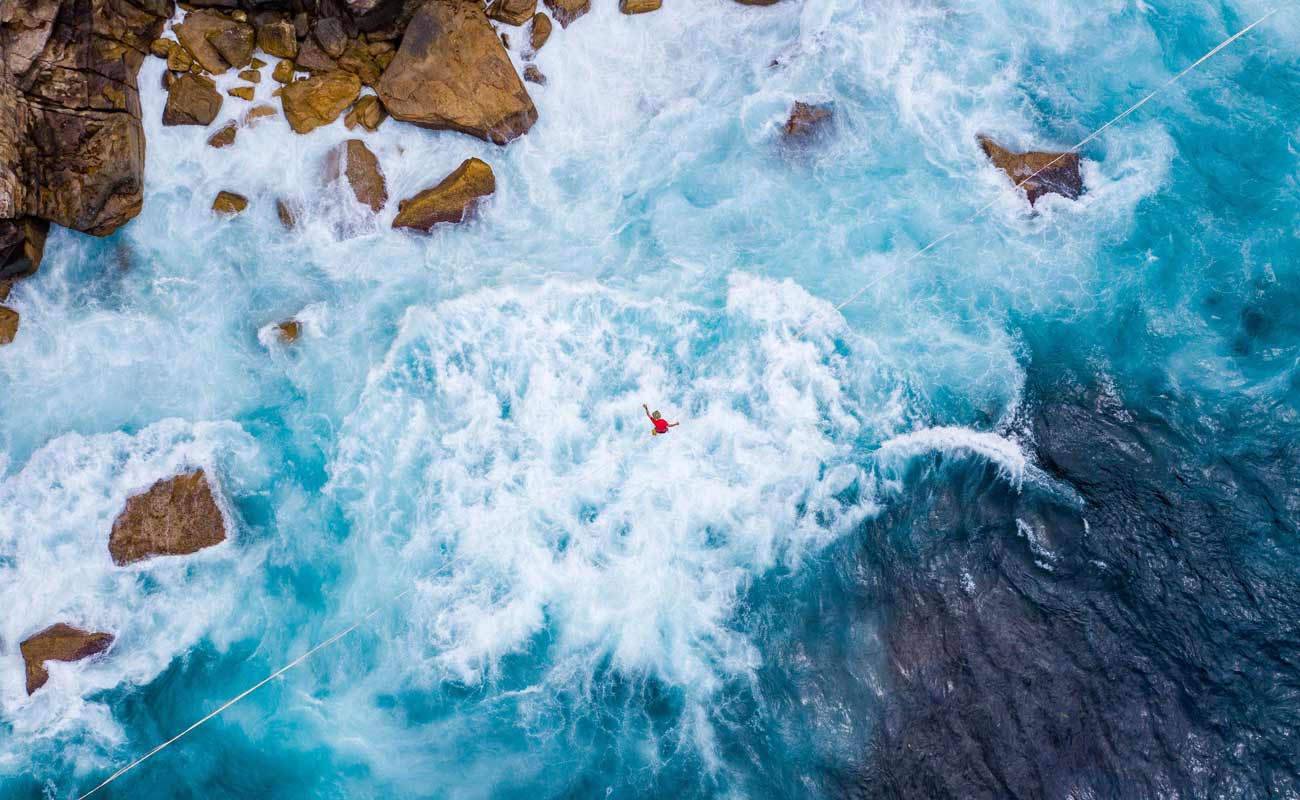
Summary of dangers when surfing
Here you can read a summary of the dangers of surfing. To make it clearer for you, we have divided them into different categories:

1. dangers when surfing – in the environment
The unpredictable nature of the ocean can put a surfer at risk of injury. This includes the type of wave, wave height and wave break, which are dependent on factors such as tides, wind speed and wind direction. The unknown gradient and nature of the seabed, including hard sand, coral reefs and submerged rocks, also affect the risk of injury to the surfer.

2. dangers when surfing – for surfers
A poor level of fitness can increase the risk of injury. Surfing requires you to keep your balance and lie on your stomach for long periods of time, so your back and core muscles should be well trained. Biceps and triceps, which are used when paddling on the water, are also at risk of injury if these muscles are weak.
A surfer’s surfing style is related to a surfer’s experience and can influence the risk of an ankle injury. Competitive surfers and surfers who perform maneuvers in the air have a higher risk of injury. Surfers, especially beginners, are at risk of injury if they lie on their stomach for long periods of time.
3. dangers when surfing – equipment & material
Contact with your own board or the board of another surfer is one of the main causes of injury. The rails, the fins, the leash and the nose of the surfboard can cause eye injuries and serious lacerations. The design of the surfboard has changed over the years to allow the surfer to maneuver more easily and perform better, but it can also cause more strain on ligaments and muscles.

4. dangers when surfing – technology
The movement of paddling and the prone position over a longer period of time pose a risk of injury for surfers. Paddling puts the surfer’s back in a hyperextended position, which can lead to injuries, especially for beginner surfers.
Is surfing dangerous – yes or no?
This assessment is without guarantee!
As a beginner, you are most likely to catch smaller waves with lighter boards, which reduces the risk of serious accidents. As an advanced surfer, you are chasing bigger waves and new challenges, so you are confronted with waves that often contain a lot of energy and break strongly. This also increases the risk of falling and getting injured.
Some of the dangers of surfing are injuries such as sprains, sprained ankles or wrists, hitting your head with the surfboard and sunburn from hours in the sun, as the reflection of the water intensifies the rays. To reduce the risk when surfing, you should warm up your muscles. An effective method is to start with light jogging until your heart rate increases, accompanied by stretching exercises. After the surf session, you should also stretch to allow your muscles to recover.
If a wetsuit does not protect you sufficiently from the cold on days with low temperatures, you may suffer from hypothermia.
Don’t forget sun protection and hydration in high temperatures.
Depending on the country you are surfing in, you should be aware of the presence of “dangerous” animals, such as in Australia or America.
If you are a beginner, you can find out in advance about the desired spot, its risks and the weather conditions. You can also learn a lot about surfing by sharing experiences with other surfers.
In the Canary Islands, especially in Fuerteventura, you will find beautiful places and paradisiacal beaches where you can catch the best waves. The warm climate that prevails most of the year allows you to surf in a unique environment with crystal clear waters and no dangerous animals.
We look forward to your visit to our surf school on Fuerteventura and our surf camp on Fuerteventura!