



Improve Your Surf Paddling Technique

You’re lying on your surfboard and paddling hard, but barely moving. Someone beside you seems to glide past without trying. Then a good wave finally comes and rolls right under your board.
Sound familiar?
Better board positioning, cleaner strokes and good timing help you move with less effort. Good surf paddling technique keeps the board gliding and helps you build enough speed for the wave to pick you up.
- Body position. The board glides steadily and stays on course.
- Paddle stroke. Your hands and forearms move water backwards to drive the board forwards.
- Paddling rhythm. You pace yourself and accelerate when you need to.
- Position relative to the wave. You wait where you can catch a suitable wave.
1. Find the right position on your surfboard
How easily you move depends partly on where you lie, even before your first stroke. Too far back and the nose sticks up, the tail sits lower, and the board is harder to accelerate. Too far forward and the nose may dip and slow you down. Look for a balanced position between the two.
How to find your balance
- Centre yourself. Align the middle of your body with the board’s centreline so it rocks as little as possible.
- Watch the nose. On many beginner boards it sits just above the surface in calm water. Board shape, volume and your weight all affect how it sits.
- Lift your chest slightly. Raise your head and chest enough to look ahead and move your arms freely. Keep your neck relaxed.
- Test your position. Slide a little forwards or back and see what happens when you take a few even strokes.
Keep your legs still and relaxed. If your feet hang deep in the water, they can drag and slow you down.
Three paddling positions compared

Too far backThe nose sits high and the tail sinks. The board takes more effort to accelerate. BalancedThe board sits steadily, tracks straight and glides between strokes. Too far forwardThe nose sits too low and can dip into the water. The board slows down or becomes unstable.
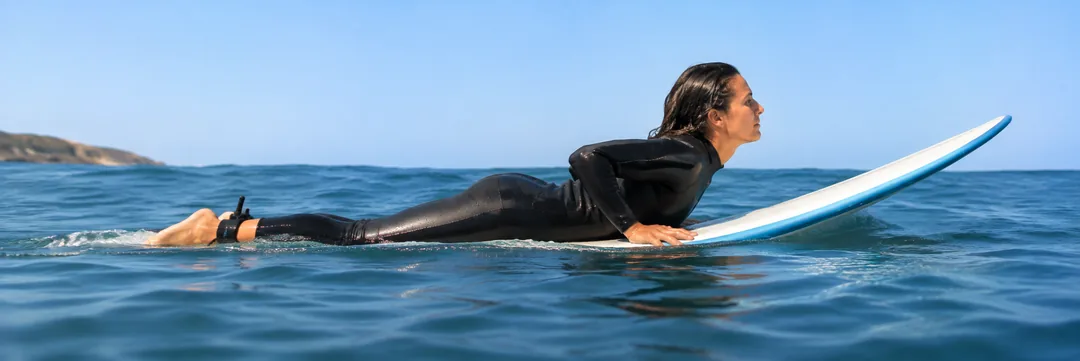
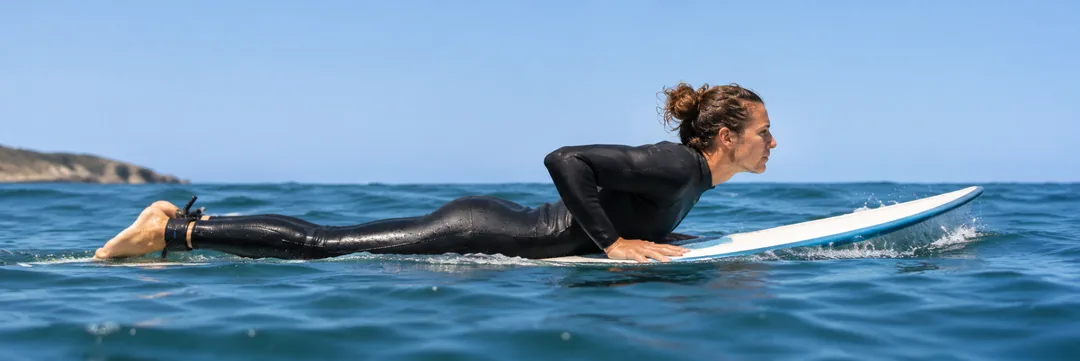
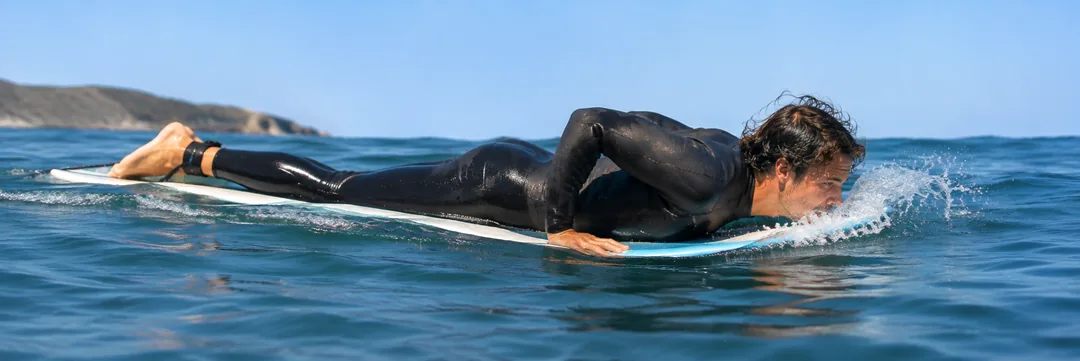
Comparison shown with AI-generated training images.
How do you know when the position is right?
Take a few even strokes. Notice whether the board stays steady, tracks straight and keeps gliding between strokes. If that happens on several attempts, you’ve found a good starting position.
Our tip. Find a reference point on your board, such as where your chest sits relative to the logo. That makes it easier to find the same position next time.
2. Surf paddling technique in four steps
Once you’re balanced on the board, focus on your arms. You move forwards by pushing water backwards with your hands and forearms. A stroke aimed mostly downwards or sideways creates less forward drive.
The four phases of a paddle stroke

Enter the water in front. Reach forwards and let your hand enter beside the board, roughly in line with your shoulder.

Move water backwards. Sweep your hand and forearm backwards under the surface. Keep a slight bend in your elbow and control the movement.

Finish around hip level. Let your hand leave the water as the pull ends. Your hip gives you a reference point for the stroke shown here.

Recover with a relaxed arm. Bring your arm forwards without tensing up. The other arm takes the next stroke.
Why a steady upper body helps
Alternate arms while keeping your torso and hips steady enough for the board to hold its course. A little natural movement is fine.
If the nose swings from side to side with each stroke, first check that your body is centred. Then look at where your hands enter. If you’re reaching across the centreline, try putting each hand in the water beside the board.
Ease off when your strokes get rushed and short. Pick up the pace once the board stays steady at a higher stroke rate.
3. Set a rhythm you can sustain
As you paddle towards the line-up, aim to save energy. When you paddle for a wave, you need more speed for a short burst.
- Paddling out
- Steady, even rhythm
- Pace yourself
- Controlled strokes
- Paddling for a wave
- Build speed deliberately
- Apply more power briefly
- Quicker strokes with good form

How to find your paddling rhythm
Choose a calm practice area for the conditions, clear of breaking waves, hazardous currents and other people in your path. Paddle two short, comparable distances on the same board. Paddle as usual first. On the second try, change only your rhythm.
Notice how steady the board feels, how well it glides between strokes and how much effort the distance takes. If your arms tire quickly, some extra training can help. Try our four exercises for better paddling power.
4. Plan your route out
Even good surf paddling technique can leave you tired if you spend the whole way battling breaking waves. Watch several sets from the beach. See where waves break, where you can enter and exit safely, and where other surfers are riding.
Pay particular attention to currents. A patch with little whitewater can still have a rip current pulling away from the beach. Follow local signs and ask a lifeguard or qualified surf coach when you’re unsure of the conditions. Stay onshore if you can’t judge whether it’s within your ability.
How do you get through oncoming waves?
Choose a technique based on your board, the wave and your skill level.
- Small whitewater. With a stable beginner board, you can often paddle straight through small broken waves in suitable conditions. Leave plenty of room around others.
- Turtle roll. With a large, buoyant board, a turtle roll is one way to get through whitewater under control.
- Duck dive. If your board is small enough to push under the surface, you can duck dive. Sink the board and go beneath the oncoming wave.
Ask a coach to show you both techniques and practise in controlled conditions first. Keep control of your board because someone could be behind you. See our guide to getting through waves with a surfboard.
Choose one goal for the paddle out
In his interview with BeachGrit, surf coach Brad Gerlach talks about how expectations and constant self-judgment can take the fun out of a session. Give yourself one manageable goal for the paddle out, such as a steady rhythm or leaving plenty of room for surfers riding waves. If conditions feel beyond your ability, end the attempt and choose an easier session or another day.
5. How to paddle for a wave
A good wave approaches. You turn the board and start paddling. For the wave to pick you up, you need to be in the right spot and moving by the time it reaches you.
Step 1 · Position yourself for the wave
Watch where the wave starts to steepen and where it breaks. If you’re too far out, it may roll underneath you. Too far in and it could break before you can get going under control. Practise in small, gently rising waves in a suitable beginner area. Watch for other surfers and follow the right-of-way rules.
Step 2 · Point the board early
Turn the board in the direction you intend to go. On gentle practice waves you can start by pointing roughly towards the beach if your path is clear. A slight angle along the face can make sense depending on the wave and your ability.
Step 3 · Start paddling early enough
Use even strokes while you still have time to build speed. If the wave is already steep behind you and you’re barely moving, you’ve left it too late. A larger beginner board often makes it easier to get moving early.

The wave approaches The board picks up speed 
The board glides
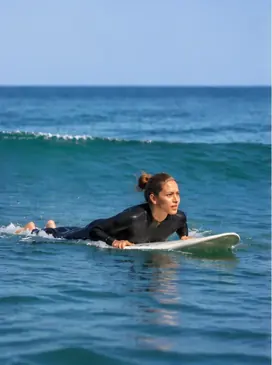
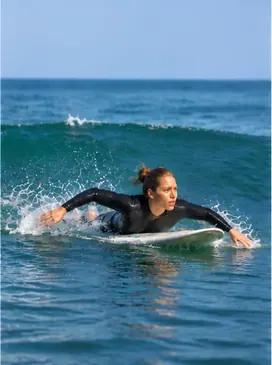
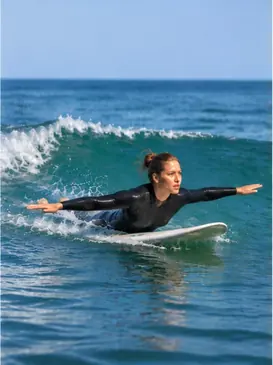
AI-generated training sequence.
Step 4 · Accelerate under control
Increase your stroke rate as the wave gets closer, as long as you can keep the board steady. Move water backwards with your hands and look where you want to go.
Step 5 · Feel when the wave picks you up
You can feel the wave carrying the board when it picks up speed and keeps moving between strokes. Once you’re gliding under control, prepare for the take-off. If you stand too early, you may still be moving too slowly. Too late and the wave may already be too steep. Our take-off guide shows you how to get to your feet under control.
Why does the wave pass under your board?
Often the board doesn’t have enough speed at the right moment. Your position relative to the wave and your paddling both play a role. On your next attempt, note where the wave steepens. If you’re in the right place and your path is clear, check whether you start paddling early enough. Our guide to catching more waves covers wave selection and where to start.
6. Surf paddling technique troubleshooting
Change one thing on your next attempt and see whether it helps. Each issue below comes with one test to try first.
- The board swings from side to side.
- Align the middle of your body with the board’s centreline.
- The nose sits well above calm water.
- Slide forwards slightly and see whether the board glides more easily.
- The nose keeps dipping during normal paddling.
- Slide back slightly and check how the board sits again.
- You take a lot of strokes but barely glide.
- Check whether your hand and forearm are moving water mostly backwards.
- Your arms tire quickly.
- Use a steadier rhythm for a short practice run.
- The wave rolls under you.
- Start by noting where it steepens relative to your position.
- The nose dives as you paddle for a wave.
- First check whether the wave was already too steep where you started.
Wind, currents, wave shape and the board itself can cause similar problems. Compare two similar attempts before drawing a conclusion about your technique.
Your next paddling drill
- Does the board stay steady or does the nose swing from side to side?
- Do I keep gliding between strokes or lose speed straight away?
- Do I start early enough or rush to accelerate at the last moment?
Pick the observation that best fits your situation. Try one change from the list on the next run.
Surf paddling technique FAQ
How should I lie on a surfboard?
Lie in the centre of the board and position yourself so the nose sits just above the surface without dipping repeatedly. Lift your chest slightly and relax your legs. Aim for a steady glide in a straight line.
How can I paddle faster when surfing?
Start with your body position and stroke. Use your hands and forearms to move water backwards in a controlled motion. When you’re stable and every stroke drives you forwards, increase your stroke rate.
Why am I barely moving when I paddle?
Your body position, arm movements or a board that rocks can slow you down. Wind, currents and board shape also play a role. First check whether the board keeps gliding between strokes.
When should I start paddling for a wave?
Start early enough to build speed before the wave reaches you. The right moment depends on where you are, the wave’s shape and your board.
Why do I miss waves even when I paddle hard?
Often your position and timing are out of sync. If you sit too far out or start paddling too late, the wave can roll under you even if you paddle hard.
Should I lift my feet while paddling?
Keep your legs as still and relaxed as possible. Feet hanging deep in the water can slow you down. Whether you rest them on the board or lift them slightly depends partly on your height and board length.
What to work on in your next session
You might benefit from lying slightly further forwards, taking a more controlled stroke or starting earlier. Pick one change and notice when the board starts to glide sooner.
If you’d like help, a surf coach in El Cotillo can watch your technique in the water and give you feedback on your position and when you build speed for the wave.