




Clear water, endless waves and the freedom that only surfing can give you – our love of the sea connects us all. But what we mustn’t forget is our impact on the environment and the oceans we all need and love. That’s why eco-conscious surfing should be a priority for all of us. Here we share a few practical tips on how we as surfers can not only find the best waves but also minimise our ecological footprint.


For destinations in France or Spain, you can travel overland. The most eco-friendly option is to go by train or by surf bus, which many surf camps offer. If you can’t avoid flying – for example because you’re heading to Fuerteventura, Bali or Sri Lanka – you can at least reduce your CO2 footprint by offsetting your flight. To do this, you donate a certain amount to a non-profit organisation that invests the money in sustainable projects. This is possible with atmosfair or myclimate, for example.
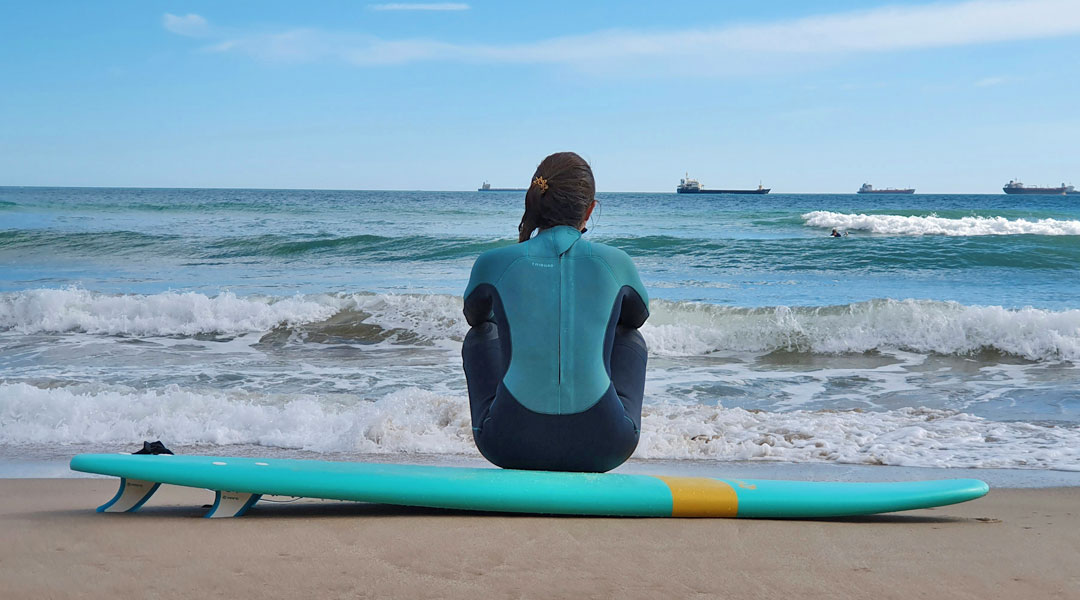
Eco-conscious surfing
Sustainable surf gear
For eco-conscious surfing, it’s essential to use sustainable surf gear too – from your surfboard to the wax and your wetsuit.
Surfboards
Conventional surfboards made of polyester resin and a polyurethane foam core have the advantage of being light, durable and easy to repair. Unfortunately, neither the production nor the material is sustainable: toxic fumes are released during manufacturing and recycling is hardly possible. That’s why more and more manufacturers are experimenting with greener materials such as wood, bamboo or cork, or are focusing on more ecological production.
If these sustainable options are too expensive for you, there’s always the option of buying a second-hand surfboard. Used surfboards can still work perfectly, you save money and no new resources had to be used
Your surf wax
The main ingredient of many surf waxes is paraffin, a by-product of oil refining that is not biodegradable. They also often contain other chemicals that are just as harmful to the environment.
That’s why some companies are now trying to make surf wax more eco-friendly and are using natural ingredients such as beeswax. It’s important that your eco-friendly surf wax contains no paraffin, palm or soy oil and is free of chemical and synthetic substances. Besides the ingredients, you should also look for fair production, recycled and environmentally friendly packaging, and short transport routes.
We can recommend the following surf waxes: “Waxzam”, “Greenfix”, Rob Machado’s Organik Blend surf wax and Matunas’ Organic Wax. The great thing is that these waxes are just as affordable and high-quality as conventional surf waxes.
Your wetsuit
Wetsuits are essential in many surf regions so you don’t get cold while surfing. However, they’re usually not sustainable: the plastic neoprene is made from fossil oil and the wetsuit is not biodegradable.
An eco-friendly alternative are wetsuits that do without neoprene and use natural and/or recycled materials instead. A pioneer here is Patagonia, which made the first wetsuits from the desert plant guayule while using hardly any oil.
Tip 1: Take good care of your wetsuit so it lasts longer. Always rinse out the salt water after surfing and don’t let it dry in direct sunlight.
Tip 2: Damaged wetsuits can be repaired. So you don’t need a new one straight away if you find a small hole in your wetsuit.

Eco-conscious surfing
Sustainable accommodation
When choosing your accommodation for your surf holiday, you can find out whether the surf camp or accommodation pays attention to sustainability. Check their website to see whether they mention it or present a sustainability concept. At FreshSurf, we’ve also given a lot of thought to how we can do our part for a more sustainable world. You can find our sustainability concept here.

Eco-conscious surfing
Sustainable sunscreen
Sun protection is essential to protect our skin from damage. However, we should also keep the environment in mind. Conventional chemical sunscreen often contains harmful substances such as oxybenzone and octinoxate. Even small amounts attack coral reefs and cause corals to die. To protect both our skin and nature, you should use a biodegradable sunscreen. The best option is a mineral sunscreen.

Eco-conscious surfing
Support beach clean-ups
An easy way to always help is to support beach clean-ups during your surf holiday. Maybe you’ll find an organisation near you that is planning the next beach clean-up. Otherwise, you can simply organise a beach clean-up at your favourite beach yourself – because once the ball gets rolling, there are always plenty of committed surfers who want to help keep our beaches clean.
At FreshSurf, we regularly organise beach clean-ups for the beaches near us with the help of the Clean Ocean Project. The great thing about beach clean-ups is that not only does the beach get clean again, it’s also fun to help out together!

Eco-conscious surfing
Support the local economy
By shopping with local providers instead of international chains and big investors, you can strengthen the local economy and contribute to the sustainable development of the region. That covers everything from accommodation and restaurants to surf shops and tour guides.
Eco-conscious surfing
Shop and eat sustainably
Eco-conscious surfing also means shopping and eating sustainably during your surf holiday. You can buy regional and organic food, avoid environmentally harmful products and reduce your meat consumption.

Eco-conscious surfing
Less plastic/zero waste
Eco-conscious surfing also means behaving sustainably away from surfing. In your everyday surf life you can avoid single-use plastic and opt for “zero waste” alternatives instead: reusable water bottles, cloth bags, food containers and reusable cutlery. The less plastic we use, the less ends up in the ocean and the better marine life is protected from plastic waste.

Eco-conscious surfing
Sustainable clothing & co
When choosing clothes for your everyday life or swimwear, you can look for sustainable materials and fair production conditions. There are many (surf) brands that use eco-friendly fabrics and produce ethically. With long-lasting clothes you don’t have to keep buying new things, which reduces resource consumption.

Eco-conscious surfing
Sustainable care products
Eco-friendly care products are another important aspect of eco-conscious surfing. Make sure to buy products without microplastics, made from natural ingredients and in eco-friendly packaging. They’re not only kind to your skin but also to marine ecosystems, as they release fewer pollutants into the environment.

Eco-conscious surfing
Respect for nature
As everywhere else, eco-conscious surfing means respecting nature. It’s best to always stay on signposted paths, observe signs and closures and leave no rubbish behind. This is especially important in dunes, to preserve the natural coastline and protect the habitat of numerous plant and animal species. Make sure not to pull out or trample plants, so the dunes stay stable.

Eco-conscious surfing
Reduce water consumption
Using water efficiently on your surf holiday helps to reduce environmental impact and preserve water resources. You can cut your water consumption by taking short showers and only turning on the tap when you really need water. You can also be mindful of water in general, for example when washing clothes or cleaning your gear.

Eco-conscious surfing
Sustainable ways of getting around
Once you’re there, you can use public transport and explore the area on foot or by bike instead of driving. To reach the more remote surf spots, however, a car is usually necessary. In that case, maybe you can team up with others and share a car.

Conclusion: you can surf eco-consciously too!
Eco-conscious surfing combines our passion for the waves with protecting the environment. It’s not about living and surfing perfectly sustainably. But we can all do our part to protect nature and the oceans and take responsibility for our actions – including when we surf.