



How to Do a Cutback in Surfing
The shoulder is flattening out. A cutback takes you back towards the breaking part of the wave so you can find more speed for your next line.
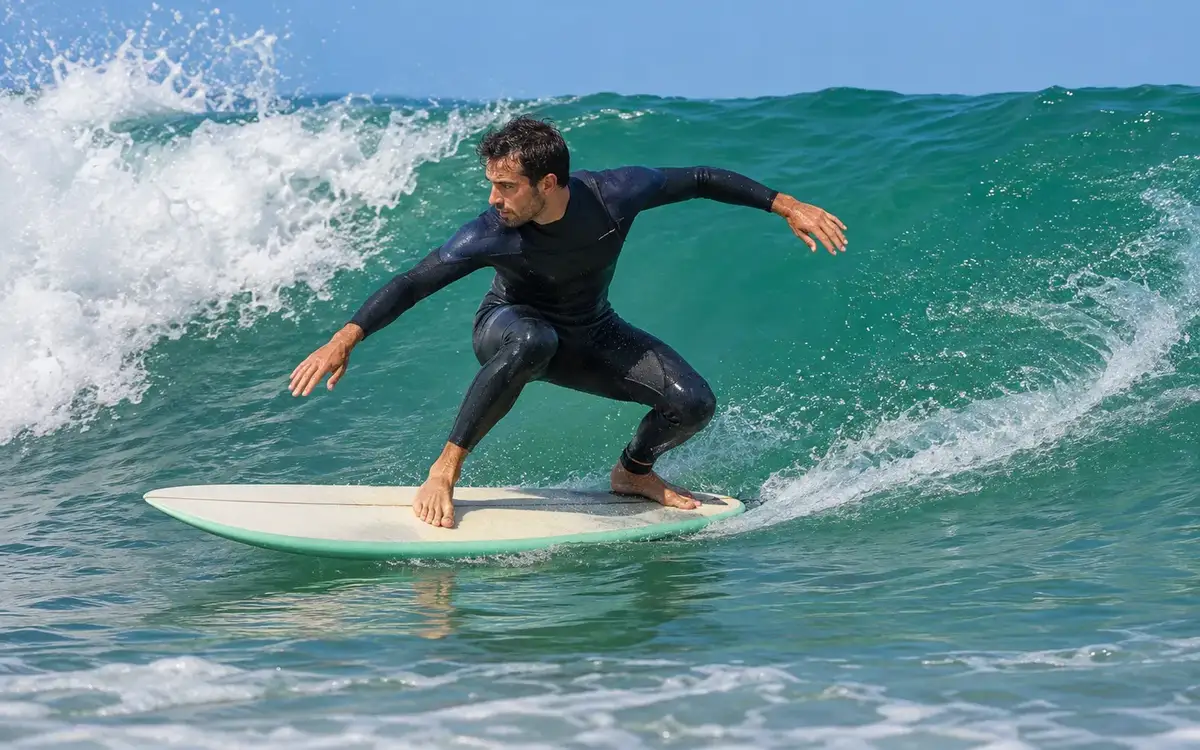
What is a cutback in surfing?
A cutback is a turn from the open shoulder back towards the breaking part of the wave. This brings you closer to the pocket, the steeper, more powerful section beside the whitewater. Once you reach it, redirect down the line and keep riding.
When should you do a cutback? When you have ridden ahead of the breaking section onto a flatter shoulder and still have enough speed to turn. If a fast section is catching up with you, use the open face ahead first.
The bottom turn takes you from the base up the wave face. The top turn redirects you down from the upper face. A cutback brings you back from the shoulder towards the pocket.
The cutback in four photo steps
The whitewater is on the left in this sequence. The board’s nose points right towards the shoulder, then left towards the pocket, then right again.

Carry speed onto the shoulder
Ride onto the open shoulder and notice where the face starts to flatten. Begin your turn while the board is still gliding well.

Start the arc
Look back at the boundary between green face and foam. Bend your knees, let your shoulders follow your gaze and engage the rail for the turn.

Ride back towards the pocket
Maintain even pressure through the rail until the nose points towards the breaking section. Look back towards the open face as soon as your exit comes into view.

Continue towards the shoulder
Change back onto the other rail and guide the board into your original direction. You can complete this second turn before reaching the foam.
AI-generated teaching images illustrating the changes of direction.
Frontside and backside

Frontside
Your chest faces the wave as you ride towards the shoulder. Engage your heel rail to turn back. Look behind you early so your head and shoulders lead the change of direction.

Backside
Your back faces the wave as you ride towards the shoulder. Start the return turn on your toe rail. Keep your knees mobile and rotate your upper body into the arc.
AI-generated teaching images showing the two approaches.
Three common cutback mistakes
| What happens? | What you can change |
|---|---|
| You lose speed on the shoulder. | Begin your turn earlier, while the wave is still carrying the board. On a small wave, a shorter return arc is enough. |
| The nose keeps pointing towards the shoulder. | Look towards the foam before you start turning. Let your upper body follow and stay on the turning rail a little longer. |
| You get stuck in the whitewater. | Look towards the open face before reaching the foam. Practise the second change of direction on the green face beside the whitewater first. |
How to practise the cutback in the water

Three waves, one goal
- Ride the first wave as you normally would. Notice the moment when the shoulder starts flattening out.
- On your next suitable wave, start a small return arc a little earlier. Aim for a visible point beside the foam.
- Repeat the line. As you ride back, look towards the open face early and resume your original direction.

How to tell you’ve made a good cutback
You get closer to the breaking section, then carry enough speed to keep riding along the green face. In a clip filmed from shore, watch the board’s nose. It points towards the shoulder, back towards the foam, then towards the shoulder again.
If you lose speed in the first arc, start it a little earlier on your next wave. Change just one thing per attempt.
Finding a suitable wave in El Cotillo
Watch several sets from the beach. For your first cutback, choose a small green wave with an open shoulder beside the breaking section. Check that there is room between the shoulder and the foam for your return arc. If the wave breaks all at once across the face, wait for a more suitable opportunity.
To plan your session, find the spot profile and information about wind, tides and swell in the FreshSurf spot finder.
AI-generated teaching images showing the approach and exit.
Frequently asked questions about cutbacks
Does a cutback have to reach the whitewater?
You can redirect on the green face beside the foam. First practise riding back towards the pocket with speed, then picking up your line towards the shoulder again.
What is a roundhouse cutback?
In a roundhouse, you bring the arc all the way back to the whitewater or the breaking lip. You use that contact to make the second change of direction towards the shoulder.
Can I do a cutback on a midlength or longboard?
Yes. Allow for a wider arc on a longer board and start while it is still gliding with speed. Choose a shoulder with enough room for the return turn.
What should I be able to do before learning a cutback?
You should be able to ride small green waves towards the shoulder in control, steer on both rails and keep gliding on the open face after a turn.
More surfing guides
Technique sources