



Surf green waves down the line
Stand up and end up heading straight for the beach? Learn to spot the open side of the wave and guide your board along it after take-off.
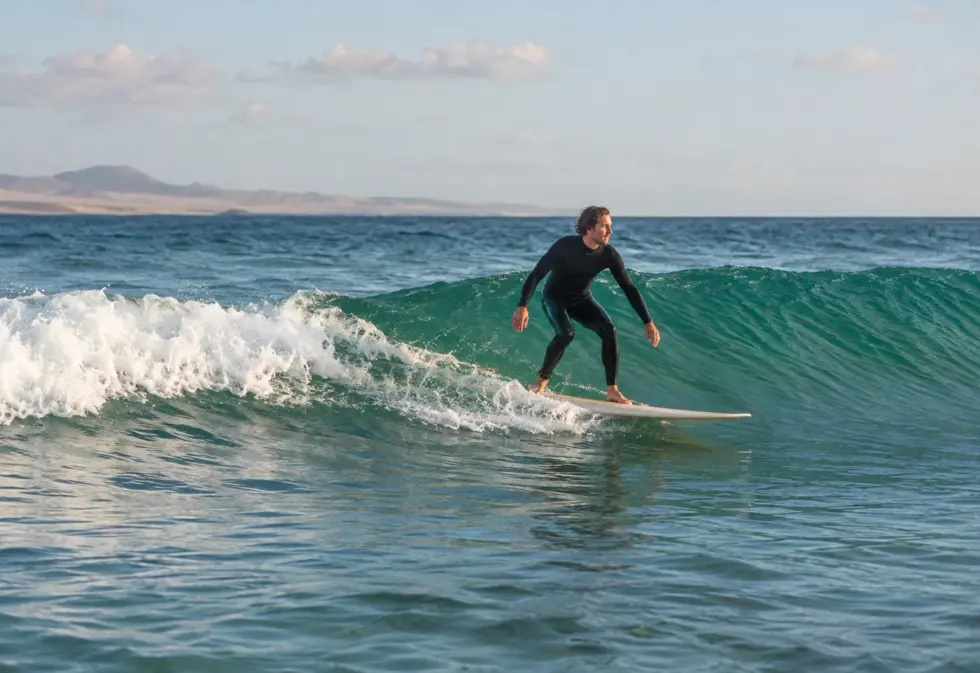
How do you ride along a green wave?
To surf green waves down the line, pick the open shoulder as you paddle in. Point the nose slightly towards it, keep paddling until the wave carries the board and look along the wave face as you stand. Keep your knees soft and guide the board across the shoulder in one smooth line.
Three steps onto the open wave face
Plan the first turn before you stand up. As you paddle in, work out which side of the wave face will stay open.
Find the open shoulder
Watch where the wave starts to break. The smooth shoulder next to the peak is where you want to ride.
Take off at a slight angle
Point the nose slightly towards the open side as you paddle. The more gently the wave rises, the more you may need to paddle towards the beach before turning.
Guide the board along the wave
Once you stand up, look along the wave face. Keep your knees relaxed and shift your weight gently to guide the board in the direction you want to go.
Choose a wave with room to ride
The peak is where the wave starts breaking. The shoulder is the unbroken face beside it. Watch several waves and follow the edge of the foam. If one part breaks first and the face alongside it stays smooth, you can see where your ride could go. A closeout breaks along a wide stretch at once. Let it pass when practising this drill.
Left and right are from the surfer’s perspective looking towards the beach. The directions look reversed to someone watching from shore. Before you commit, check who has priority and make sure your line is clear. Surf etiquette and priority.
Choose an angle that lets the board glide
If a wave builds slowly, turning too far across it too soon can let it pass underneath you. On your next attempt, start a little straighter, then guide the board gently towards the shoulder as it begins to glide. If the face opens early and breaks quickly, a slight angle before you stand may help. Let the shape of the wave determine when you set your line.
Keep your first turn small
As the wave takes the board, look at the next clear section of the face. Stand up compactly and keep your knees and hips mobile. Steer just enough to point the nose along the shoulder. Holding a steady height on the wave face for a few metres is called trimming. You can practise a deeper turn at the foot of the wave, the bottom turn, later. Once you can carry speed from that turn up the wave face, you can start practising the top turn.

An angled take-off starts while you paddle. Leave yourself room to guide the nose towards the open shoulder. AI-generated illustration.
Ride towards the open side
The dot marks the take-off. The arrow shows how to use your initial speed to ride along the shoulder.
Surf green waves frontside and backside
Your stance and the direction the wave breaks determine whether you ride frontside or backside. In both cases, look towards the next clear stretch of wave face.
Frontside
Your chest faces the wave face, so the open shoulder is usually easier to see. Look past the nose along the face, bend your knees and let your shoulders follow the direction of travel. If the board keeps running straight for the beach, looking along the wave as you stand can help you turn earlier.
Backside
Your back faces the wave. Look over your front shoulder in the direction of travel and keep your knees soft. For a regular-footed surfer with the left foot forward, a wave that breaks left from the surfer’s perspective is a backside wave. If your right foot is forward, it is the other way round.

Keep your eyes on the clear line ahead of the board. Bent knees help you stay mobile as you ride. AI-generated illustration.
How to tell if your line is working
If your board runs out onto flat water in front of the wave, you may have ridden too far down the face. On your next attempt, look a little sooner towards the open section ahead. If you lose balance as you turn, soften your knees and shift your weight less.
A short, smooth ride across a small shoulder is progress when you’re learning to surf green waves. Once you can repeat it, experiment with riding a little higher or lower on the wave face. The Barefoot Surf guide to trimming explains how stance and pressure on the rail affect your line.
From spotting the shoulder to riding it
Three moments to pay attention to on your next wave.

Before you paddle
Notice where the wave starts to break and where the shoulder stays open.

At take-off
As you stand, look towards the next clear section of the wave face.

On the shoulder
Keep your knees soft and hold a steady line along the wave face.
AI-generated illustrations. Each image shows a different stage of the drill.
One wave, one thing to practise
With your coach, pick a small, gently breaking wave with a clear shoulder. Work on one thing per attempt.
- Attempt 1. Before paddling, say which way you expect the wave to stay open. Compare your prediction with what you see once you’re on the wave.
- Attempt 2. Look towards the shoulder as you stand. Afterwards, check whether the nose followed your gaze.
- Attempt 3. Keep your gaze and starting point the same. Adjust the take-off angle slightly and see whether the board begins to glide earlier or later.
It’s easier to learn to surf green waves when you can name one thing that improved. If the waves were similar, ask yourself which change helped across the three attempts. Footage from the side, filmed from shore, can show exactly when the board started gliding and when it changed direction.
Common mistakes and what to try
I always go straight.
Choose a direction as you paddle and pick a point on the open wave face to look at as you stand.
The wave passes underneath me.
Check where you started and how far you angled the board. If it was pointing too far across the wave before you had speed, start straighter and steer once the wave carries you.
The whitewater catches me straight away.
From shore, watch how long the face stays open. A quick closeout may leave little room. If other surfers are making the same section, check whether you waited too long to make your first turn.
The nose dives while I’m paddling.
Check whether you started late on a steep wave or were lying too far forward. Pick a wave that builds gently for your next attempt and watch the nose before you stand. Our guide to the take-off can help you troubleshoot.
On backside waves I turn back towards the foam.
As you stand, look over your front shoulder towards the next clear part of the face. Keep the turn small and your knees bent. If you have footage, check whether your eyes went back to the whitewater first.
Where to surf green waves in El Cotillo
For your first rides down the line, look for a small, gentle wave that gives you time to stand, with a clear way in and out.
At the surf beach south of El Cotillo, watch several sets from one spot on shore. You might see the centre of the beach close out across a wide stretch, while a smaller wave farther along starts breaking at one point and leaves a shoulder open. The second shape usually gives you more room to practise, provided the currents, exit and space in the water suit your ability.
Check wind and swell on the AEMET beach forecast. Check the tides as well and compare the forecast with what you see on the beach. Follow local flags and advice, and ask a lifeguard or local coach if in doubt. FreshSurf arranges private surf coaching in El Cotillo. Bring one clear goal to your session, such as staying on the shoulder after you stand.
FAQs about riding down the line
How much should I angle my take-off to surf green waves?
Start with a slight angle towards the open side. On a softer wave, you may need more speed towards the beach before you turn onto the face. A wave that breaks faster may call for angling a little earlier. Let the shape of the wave and the moment the board begins gliding guide you.
Can I surf green waves on a softboard?
Yes. A suitable softboard gives you float and a stable platform for take-off. For your first line along the face, an open shoulder and a controlled start matter more than switching boards early. See our beginner surfboard guide for help choosing.
What’s the difference between trimming and a bottom turn?
When trimming, you hold a line on the face with small adjustments. A bottom turn arcs around the lower part of the wave and sets you back up towards the open face. Start by riding the shoulder smoothly at a steady height.
If you slow down on the open face, our guide to building and maintaining speed in surfing explains line choice, trimming and pumping.
When should I keep practising in the whitewater?
Build the basics in suitable conditions if you often lose balance when standing, struggle to control your board when paddling out, or are unsure about priority and getting ashore. Our guide from whitewater to green waves walks you through the transition.
More surf knowledge guides
Image credits. The cover image and training illustrations are AI-generated.