




Surfing can be an exciting and fulfilling sport, but it’s important to always keep safety in mind. If you follow these surf safety tips and surf responsibly, you’ll get the most out of your surf experience – protecting not only yourself but others too. Have fun surfing!
Are you new to the surfboard or thinking about going surfing for the first time soon? Then there are a few things you should know about surf safety. Because what matters is that you and the other surfers are unharmed after your session. In this blog we want to give you the most important safety tips for beginner surfers.

Surf safety tip 1 – choosing the surf spot
Choosing the surf spot is one of the most important safety aspects of surfing. Don’t overestimate your abilities and pick a spot that matches your skills. You’re still a beginner and your safety should always come first.
So rather choose a beach break than a wave that breaks over a reef – ideally a spot watched by a lifeguard. You should also have the spot explained to you by a friend, a surf teacher or simply another surfer who knows the spot, instead of just paddling out. There may be currents at the spot that you can’t see from the outside or that you completely underestimate as a beginner. On top of currents, there’s the wave size, which is easy to underestimate from the beach, and conditions such as low and high tide.
As a beginner, you should always stay in roughly hip-deep whitewater and make sure the wave isn’t bigger than you. Once you’ve found out about the spot, you should of course also get familiar with your equipment.

Surf safety tip 2 – handling your board in the water
To avoid hurting yourself or others in the water, there are a few things you should know about your surfboard and how to handle it.
First, as a beginner it’s important to choose a surfboard that suits your height and weight.
It’s also a good idea to always use a softboard at the beginning. Treat your surfboard like your best friend: handle it with care and look after it. Most softboards have a handle that makes them easy to carry.
Once in the water, you should hold your board by the nose and keep the fins behind you. Just before the wave, turn the surfboard 180° and lie down on it to catch the wave.
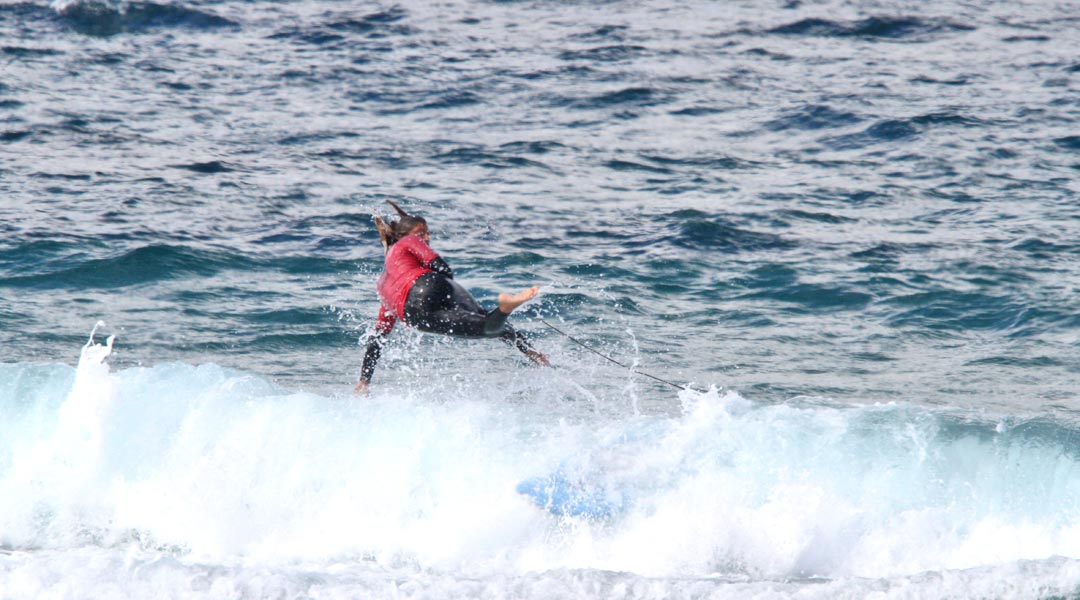
Once you’ve caught the wave and surfed it, be careful when jumping off the board. Don’t just let your friend fly off while you make a spectacular exit. Think of the other people in the water. Your board is a good two metres long, plus the leash, which is almost another two metres. So if you jump off and let your board shoot away, there’s a high risk of hitting someone.
If you do fall off the board uncontrolled, protect your head to at least keep yourself from getting hurt.
More on this topic: The most important surfer slang terms – part of surf culture · The most beautiful surf tattoos
Surf safety tip 3 – protect your head
It takes time as a beginner to learn how to bail properly. With limited knowledge of surfing and waves in general at first, beginners often feel helpless when they wipe out and get tossed around in the whitewater (some call it the “washing machine”!).
Experienced surfers sometimes feel the same. Even if you’ve learned how to get yourself out of the water, there are still situations where you have no control. That’s part of surfing. The ocean dictates what happens when you lose control. If there’s one thing you can still do in most cases, it’s to protect what matters most: your head. By protecting your head with your hands and forearms, you can prevent injuries from hitting the surfboard or the bottom.
Surface hands first before sticking your head out of the water. We know you want to get air as quickly as possible, especially after a really good wipeout. But it’s important to put your hands over your head first to make sure you don’t bang your head on the surfboard when you come up.

Surf safety tip 4 – keep your distance
When you’re waiting for waves, find your own spot. Always make sure there are at least a few metres between you and the other surfers. And very important: never sit behind (or in front of) other surfers.
While waiting for a wave, you should always look out to the open sea to see what’s happening. That way you’ll see not only what the other surfers are doing but also what kind of waves are coming towards you. Most accidents between surfers happen either because they didn’t keep their distance or because one of them wasn’t paying attention.
So before your first surf session, learn the right-of-way rules – you’ll be doing yourself and other surfers a favour and avoiding stress in the water.

Surf safety tip 5 – don’t panic and know the distress signals
Whatever happens in the water, one of the most important tips is not to panic!
Of course, that’s easier said than done. If you study some surf theory beforehand, you’ll at least have heard how to react in certain situations.
One thing that quickly makes beginners panic is currents. If you ever get stuck in a current and can’t get out, please don’t panic. With currents, it’s important to paddle out of the current sideways, parallel to the beach.
If you’re held under water a little longer after a heavy wipeout, don’t get frantic – try to count down slowly and calmly from 23. Usually you won’t even get to 20.
Should you ever need help, it’s important to know the distress signal in the water: raise a clenched fist as quickly as possible. As soon as another surfer or the lifeguard spots you, they’ll rush to help.

Surf safety – conclusion
Reading up on surf safety beforehand is never a bad idea, because surfing is a risk sport. Nature shouldn’t be underestimated either – and it’s different every day. Assess yourself, your abilities and your surroundings realistically, be considerate of the other surfers in the water and communicate with them, and nothing should happen to you.
when in doubt – paddle out!
Want to learn to surf safely? In our surf course with experienced instructors you’ll learn it right in the water – with experienced surf instructors in El Cotillo.