



Surf fever has got you, and after your first surf courses you can hardly wait to buy your very own surfboard and conquer the waves on your own?
Or have you been surfing for a while, keep renting boards on holiday and long for something of your own? We’ve put together the ultimate tips on how to find the perfect surfboard for you!

Why your own surfboard?
Surf fever has got you, you’ve successfully mastered your first attempts or have been surfing on your own for a while? You don’t want to depend on local surf shops’ opening hours and their choice and quality of boards any more? Decision made: you need your own surfboard!
Buying your first surfboard is like looking for a needle in a haystack. The perfect surfboard has to suit you, your skills & surf style and the local waves.
But the search is worth it!

Having your own surfboard makes you more independent. You can surf whenever you want – from sunrise to sunset, from the first to the last day of your surf holiday – without having to worry about surf shop opening hours.
You can also be sure that your own surfboard – with proper care – meets your needs. Gone are the days of hunting waves on a badly dented board, always worrying that the rental board won’t last much longer.
You also save real money: even if your first surfboard isn’t exactly cheap, you’ll quickly recoup your investment if you go surfing regularly and no longer have to rent a board.

Das eigene Surfbrett – es muss passen!
When you decide on your own surfboard, there are several factors to consider. First, of course, your own height and build: a petite person of 1.60 m can ride different surfboards than a strong 1.90 m giant.
Your surf level matters too: too often we see surfers casually carrying a cool, toothpick-like board on the beach, only to struggle in vain in the line-up for waves they just can’t catch – the board is simply too short and has too little volume to paddle into the wave.

Not only your height and fitness are decisive, but above all your surf level. Reflect on your skills and be honest with yourself; if you overestimate yourself, you’ll end up in the line-up with the wrong board and just get frustrated.
- You’ve done your first surf courses or haven’t been surfing yet but would love to learn
- You’re starting to stand up in white water waves, but the take-off is still hit and miss
- You feel most comfortable in hip-deep water
- You want to keep practising on your own and further improve your take-off in white water waves
You need a board with lots of volume that gives you enough stability so you can keep practising safely
- You can do the take-off reliably
- You paddle into green, unbroken waves and have mastered the turtle roll to get into the line-up
- You ride the wave sideways and are practising your turns
You need a board with medium volume; that way you have enough stability but can turn more easily and work on your skills.
- You feel comfortable even in big waves and crowded line-ups
- You have your board under control
- You’ve mastered the duck dive as well as top and bottom turns and cutbacks
You can ride a surfboard exactly to your taste: from shortboard to longboard, the choice is yours!

Your own surfboard & the waves you surf
Now that you’ve assessed your surf level, the next important factor is the place where you’ll most likely surf the most.
Your own surfboard should of course be ridden as often as possible and suit the waves you surf. If you’ll mainly be surfing fast, steep waves, you need a board that lets you do more radical manoeuvres. And the skills to match, of course 😉

Do you tend to surf powerful reef breaks or do you prefer small, gently breaking waves? Your own surfboard can’t suit every wave, of course, but your choice should depend on where you will (realistically) surf most.
Your own surfboard should also suit your preferred surf style. If you see yourself on a longboard, buying a shortboard doesn’t make much sense, and longboard waves don’t suit a very short board anyway. If, on the other hand, you see yourself on a small, manoeuvrable board, it makes sense to work your way down to shorter surfboards step by step.
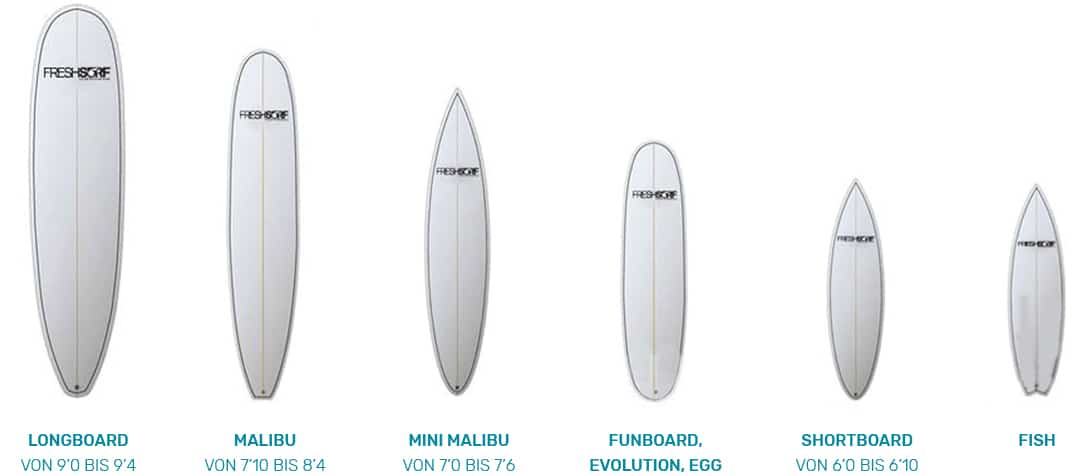
Your own surfboard & spoilt for choice of board type
With surfboards, a distinction is made between the shape (the form of the board) and the material. Many people make their first attempts on a softboard. These boards, affectionately called “foamies”, are made of soft foam covered with a layer of smooth plastic. These colourful foam boards offer lots of volume and stability and reduce the risk of injury in crowded line-ups and during your first attempts.
But it’s not only beginners who can have fun on softboards! Softboards come in all sizes and shapes, so especially on days with small waves, more advanced surfers can have much more fun on a softboard, too.
On the other hand, there are hardboards. They’re made of epoxy or fibreglass, much lighter than softboards and less voluminous, but more manoeuvrable.
Your own surfboard should be shaped to suit your surfing and your needs. The rule of thumb: the bigger and more voluminous the board, the easier it is to paddle into waves. Skilfully steering a longboard through the line-up, however, requires different skills than a (mini) malibu or a funboard.
Surfbretter
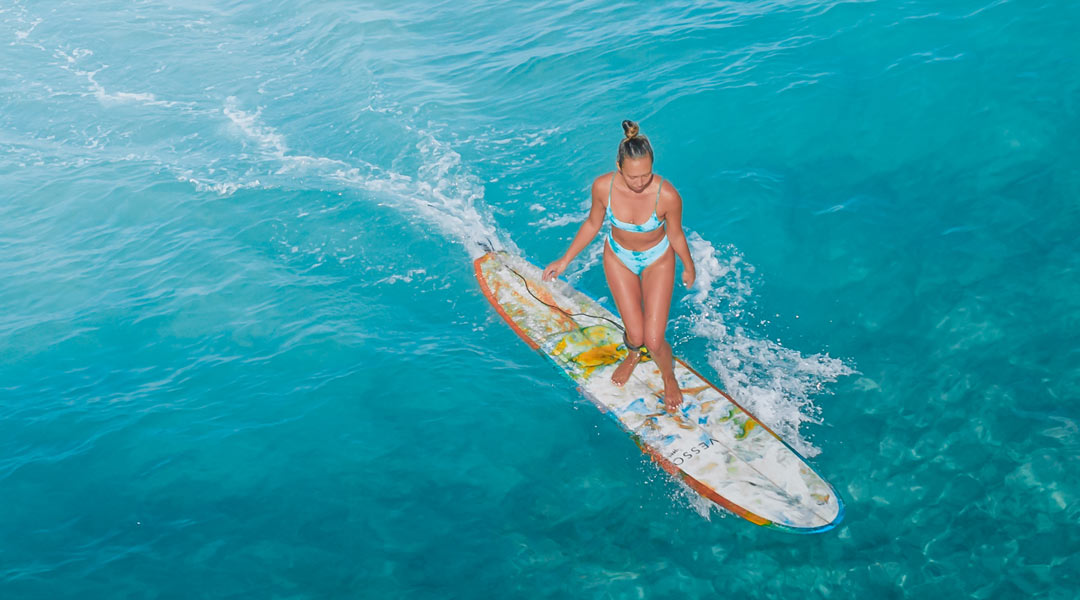
Your own surfboard – what to look out for when buying
You know your surf level and which kind of wave you like to surf most? Then nothing really stands in the way of buying your own surfboard. Really? Your own surfboard isn’t exactly cheap, so we wouldn’t recommend rushing into it.
Above all, it’s important to get a feel for different boards. So check out a well-stocked surf shop and rent different boards. That way you’ll notice the differences in shape, size and volume directly and find out which board suits you. Feel free to test for a few days before deciding on your own surfboard.
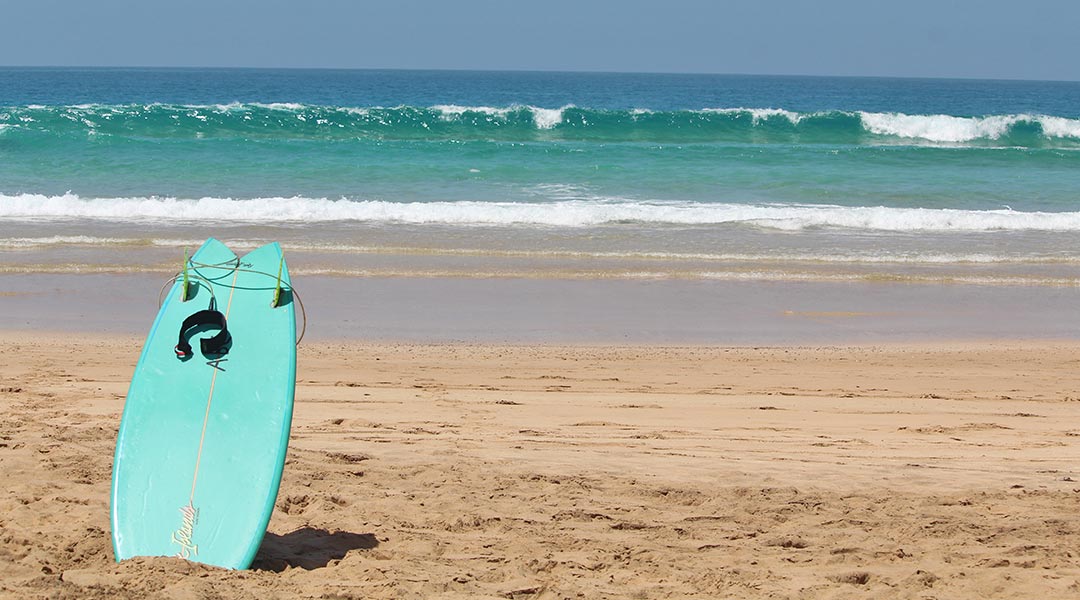
Your own surfboard doesn’t always have to be brand new, either. Many surf towns have a large second-hand market where you can buy good used surfboards directly in surf shops or online. Of course, don’t let yourself be ripped off, and make sure the board isn’t too badly damaged and has no unrepaired dings. You can read again here what to look out for when buying a used surfboard.