
Planning a surf trip involves more than just booking a flight, packing your board, and hoping for good waves. Your destination, surf conditions, your skill level, accommodations, and transportation options should all work well together.
That’s exactly what we experience at FreshSurf on Fuerteventura: It’s not necessarily the most famous surf spot or the cheapest lodging that makes for a great surf trip. What matters most is that the travel dates, conditions, your skill level, lodging, and transportation all work together.
Especially if you’re planning your first surf trip, you don’t have to figure everything out on your own. With these five tips, we’ll show you which decisions really matter.

Image: AI-generated
1. Choose a destination that’s truly right for you
The perfect surf trip doesn’t start with the question of where the most spectacular waves are. What matters most is finding conditions that match your skill level during the time you’ll be traveling.
Fuerteventura is a good example of this:
The island offers a variety of surf spots and conditions. Which spot is right for you on any given day depends, among other things, on the swell, the wind, and your skill level. So don’t choose your destination just because of one famous spot.

Image: AI-generated
Before booking, be sure to check the following:
- Surfing level: Are there spots suitable for your skill level?
- Travel season: How do the waves, wind, and weather change?
- Transportation: How will you get to the right surf spots?
- Surf gear: Should you bring your own board or rent equipment there?
- Travel: How time-consuming and expensive are the flight and onward travel?
- Budget: What is the total cost of lodging, transportation, surfing, gear, and meals?
- Entry & Safety: What are the current regulations and travel advisories?
A cheap flight won’t do you much good if the conditions there aren’t suited to your skill level.
2. Plan your surf trip well in advance
Once your destination and travel dates are set, a simple preparation plan is usually sufficient. Create a short to-do list and packing list early on, including clothing, sunscreen, surf gear, and, if necessary, your first-aid kit.
For long-distance trips, you should check well in advance to see if there are any special health recommendations or required vaccinations. You can get reliable information from your family doctor or a travel medicine clinic, for example.
If you’re flying with your own surfboard, also check your airline’s baggage policies. Fees, allowed dimensions, and conditions for sports equipment vary.

Image: AI-generated
Our tip for Fuerteventura:
Think about whether you really need your own board. Especially as a beginner or if you want to try out different boards, renting equipment can be more practical.
You’ll save yourself the trouble of transporting a board and can adjust your gear on-site to suit your skill level and the conditions.
3. Alone or with a surf buddy? Clarify your expectations
A surf trip works just as well on your own as it does with friends. What matters most isn’t so much who you travel with, but whether your ideas about the vacation align.
Traveling alone gives you plenty of flexibility. At the same time, surf camps and surf lessons offer an easy way to meet other surfers. We see this firsthand at the FreshSurf Surfhouse in El Cotillo: Many guests arrive alone and later take surf lessons, have breakfast, or spend their free time together with other guests.

Image: AI-generated
If you’re traveling with friends, clear up a few simple questions beforehand:
- Do you all want to surf about the same amount?
- Do your budgets match?
- Do you want to plan your daily schedule around the surf conditions?
- And how important are day trips, the beach, and other activities besides surfing to you?
You don’t all have to be equally good at surfing. Different expectations for the vacation are usually more important than different surfing skill levels.
4. Get in shape for surfing
Paddling, take-offs, balance, and navigating the surf all work your whole body. That’s why you don’t need a complicated training program before your surf trip—but a little preparation can make your first few sessions much more enjoyable.

Image: AI-generated
Endurance, strong shoulder and back muscles, core stability, and flexibility are especially helpful. Swimming, yoga, mobility exercises, or a simple surf workout can be easily incorporated into your daily routine.
And don’t automatically plan every day of your vacation as a full-on surfing day. Especially when you’re doing several sessions in a row, rest is just as much a part of a surf trip as the next wave.
5. Choose your accommodations based on your surf trip—not just on price
Hotel, apartment, campervan, or surf camp? The best accommodations are the ones that fit the kind of surf trip you want to take.

Image: AI-generated
So don’t just ask yourself how much the overnight stay costs, but also:
- How do I get to the surf spots?
- Can I easily arrange surf lessons or gear?
- Do I need a rental car?
- Do I want to cook for myself, or would I prefer meals included?
- Do I want to meet other surfers?
- How much freedom do I want outside of surfing?
An apartment offers plenty of privacy, while a campervan offers plenty of flexibility. A surf camp, on the other hand, makes it especially easy to combine lodging, surfing, and meeting other travelers.
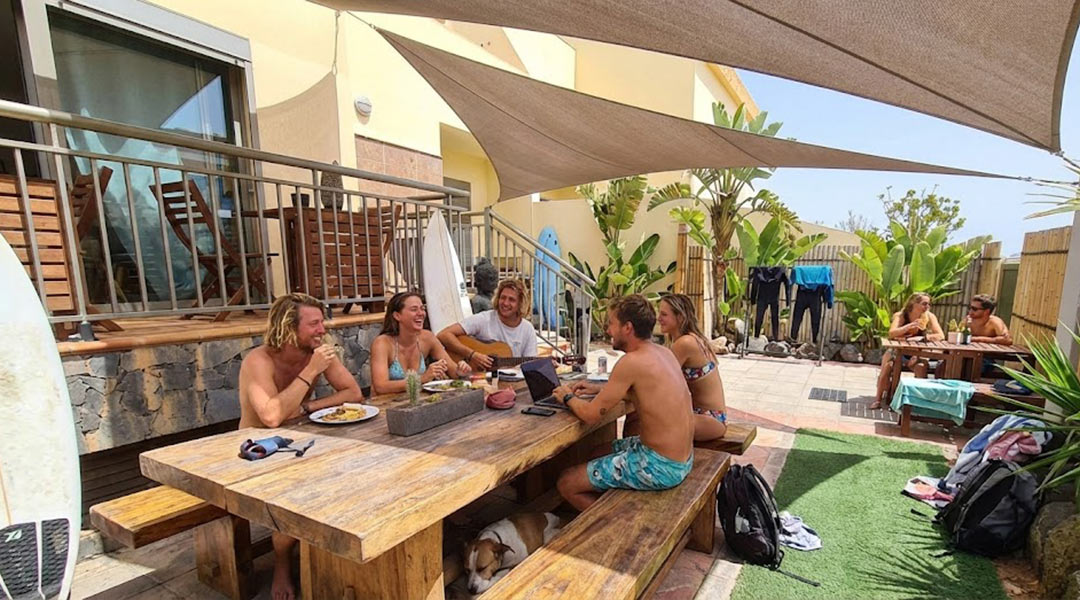
That’s exactly what our FreshSurf Surfhouse in El Cotillo is all about: You can combine your stay with surf lessons, enjoy breakfast together at the surfhouse Monday through Friday, and still have plenty of freedom to explore Fuerteventura on your own.
This takes a lot of the planning off your hands, especially for your first surf trip. The surf spots and lesson times are based on current conditions and your skill level—so you don’t have to plan your entire vacation around a single spot.
Planning a surf trip to Fuerteventura? Here’s how to go about it with FreshSurf
If Fuerteventura sounds like the right fit for you, FreshSurf
lets you
combine many of the points from this article directly.

Our surf camp is located in the north of Fuerteventura. From here, you can combine accommodations and surf lessons while still having plenty of free time to enjoy the beach, the island, and your own activities.
Surf lesson times and surf spots depend on the conditions at the time. For us, that’s exactly what makes for a great surf trip: Your vacation shouldn’t be planned around a single surf spot—instead, you should surf based on the conditions that match your skill level on any given day.

That way, you’ll have more of what a surf trip is really all about:
having a great time in the water and by the ocean instead of dealing with unnecessary organizational stress.
FAQ: Planning a Surf Trip
What should I figure out first when planning a surfing trip?
Start with your surfing level, travel dates, and destination. First, check whether the expected surfing conditions match your skill level. Then you can plan your flight, accommodations, and other services.
How long should a surfing trip last?
It depends on your travel arrangements, your surfing level, and your destination. If possible, don’t plan to spend every day entirely surfing. Conditions and physical recovery may make it a good idea to take a day off.
Should I bring my own surfboard?
Not necessarily. If you really want to surf with your own gear, it might be worth the trip. For beginners and less experienced surfers, rental gear is often more convenient and can be better adapted to your skill level and the conditions on-site.
Is a surf camp also suitable for solo travelers?
Yes. It’s easy to combine lodging and surfing, and you’ll find it easier to meet other travelers. Even outside of the group activities, you can still tailor your vacation to your own preferences.
Do I need a rental car for a surfing trip?
That depends on your destination and accommodations. If the best surf spots are spread out or if you want to explore the region on your own, a rental car offers much more flexibility. So when choosing your accommodations, be sure to check how you’ll get to the spots you want to visit.
Ready for your surfing trip to Fuerteventura?
A good surf trip doesn’t have to be planned down to the last detail. If the destination and surfing conditions match your skill level, the key organizational details are sorted out, and your accommodations fit your vacation plans, you’re already off to a great start.
If your next surf trip is headed to Fuerteventura, you can book combine lodging and surf lessons all in one place.