



Day trips / Ajuy
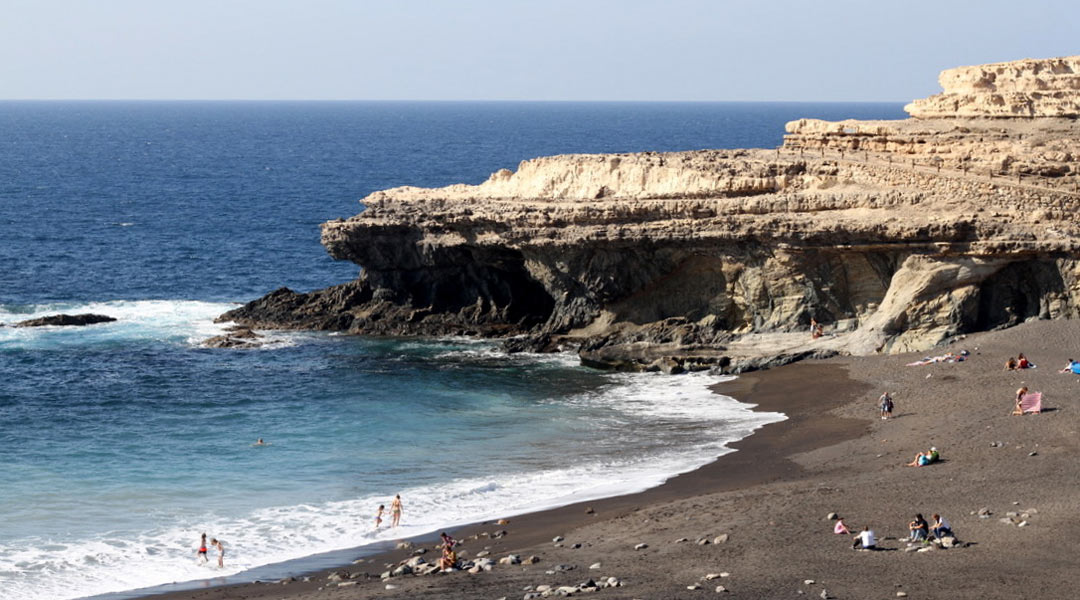
West coast · Municipality of Pájara
Ajuy Caves and the Black Beach on Fuerteventura
Black sand, pale cliffs and Atlantic surf. A short coastal trail from the fishing village leads towards the Ajuy Caves. Allow about 1.5 to 2 hours for the village, beach and trail, then check whether the steps are open and the sea is calm before deciding how far to go.
Ajuy at a glance
- Location
- West coast of Fuerteventura, in Pájara
- Time needed
- Around 1.5–2 hours for the village, beach and path
- Cave walk
- Short out-and-back walk, with rocky stretches and steep steps
- Admission
- Free on the path and in open cave areas
- Getting there
- Paved FV-621 road from Pájara. Check bus route 18 from Gran Tarajal.
- In heavy surf
- Keep clear of the water’s edge and follow the signs on site.

Ajuy, a fishing village with a black-sand beach
Ajuy lies west of Pájara, at the foot of Fuerteventura’s inland hills. A handful of houses and restaurants sit behind the beach. From the bay, you look out over the Atlantic and the pale cliffs on either side. The village is small enough to see the beach and find the start of the coastal path in a single stop.
Start by the beach and take a look along the coast. You can watch the surf from a safe distance or stop for a meal in the village. The Ajuy Caves are north of Playa de Ajuy.

The ancient rocks around the Ajuy Caves
The layers along the path reveal an early chapter in the island’s geology. North of the village, part of Fuerteventura’s Basal Complex is exposed in the cliff. A geological report from the Canary Islands dates this outcrop to around 100 to 150 million years ago.
That estimate refers to the rock. The visible sea caves were shaped later by coastal erosion. Along the trail you can also see fossil dunes and old lime kilns. The area is protected as the Monumento Natural de Ajuy.
Why are they also called the Pirate Caves?
Local stories tell of pirates and privateers using the caves to hide or store supplies. Pirate raids are part of the Canary Islands’ history, but there is no clear evidence that these particular caves were used that way. The name survives in local storytelling.
Walking to the Ajuy Caves
The path starts at the village beach. Set aside roughly 45 to 90 minutes for the return walk, stops at viewpoints and a possible visit to the caves. The walk itself takes less time. Pájara council lists it as the blue route.

1. Start at Ajuy beach
Face the Atlantic from the beach and look to your right for the path up onto the cliffs. After a short climb the bay opens up below you. From here you can see how the swell is breaking against the rocks.

2. Follow the rock layers along the coast
The trail stays above the coast, passing bands of rock, fossilised dune sand and historic lime kilns. Stop for photos where there is room to stand, and keep to the marked path.

3. The steps down to the sea caves
Steep steps lead towards the cave openings. Sand and moisture can make them slippery. Stay above the steps if the route is closed, waves are reaching the access area or you are unsure whether it is safe to go down.

Before you go down
When can you go down to the Ajuy Caves?
Check the marine forecast before leaving and look at the sea, signs and barriers when you arrive. Skip the descent in heavy swell, if water reaches the access route or when official warnings are in force. Keep back from the coast in unusually rough seas.
Low tide alone does not make the descent safe. Individual waves can run further than expected between the rocks and into the caves. If in doubt, stay on the open upper path or visit the village instead.
AEMET marine forecast · Canary Islands coastal safety advice
Visiting Ajuy with children
The upper path may be manageable in good conditions for older children who are steady on their feet. Take particular care near the cliffs and on the steep steps. The descent is unsuitable for pushchairs or anyone who needs step-free access.
With younger children, the village beach and the beginning of the path make a shorter outing. Turn back before the surface or wind makes the walk uncomfortable.

Ajuy’s black-sand beach, Playa de los Muertos
Playa de Ajuy is also known as Playa de los Muertos. Its dark sand lies between high cliffs on the exposed west coast. Late afternoon light can bring out the layers of the cliffs and the shape of the bay.
Can you swim at Ajuy beach?
This exposed coast can have strong surf and currents, and the official beach information lists no lifeguard service. Enjoy the view from dry ground and keep back from the water when the swell is strong.
How to get to Ajuy
By hire car
Take the paved FV-621 from Pájara to Ajuy. Use the designated parking in the village. The beach and the start of the path to the Ajuy Caves are a short walk from there.
By bus
TIADHE lists Ajuy on route 18 between Ajuy and Gran Tarajal. Check the timetable for your day, any connections you need and the return service before you set out. If the times do not work, look for an organised island trip that includes a stop in Ajuy.
TIADHE route 18 timetable · Pájara council’s map and trailhead
Practical tips for visiting the Ajuy Caves
- Sea and daylight. Decide how far to go once you see the surf. A low tide on its own is not enough for a safe descent.
- Footwear. Wear closed shoes with good grip for rock and steps.
- Water and sun protection. There is little shade on the coastal path.
- Nature protection. Keep to marked paths and leave rocks, fossils and plants where they are.
- Finding your way. Follow the signs and respect closures.
Ajuy and Betancuria in one day
If you have a car, combine Ajuy with Betancuria. The historic village is in Fuerteventura’s mountainous interior, while the caves open onto the Atlantic.
- Walk through Betancuria’s historic centre in the morning.
- Drive to Ajuy via Pájara.
- Explore the open coastal path. Consider the cave steps only if the sea is calm and the route is open.
- Take a break at the black-sand beach or eat in the village.
Frequently asked questions about the Ajuy Caves
How long does the walk to the Ajuy Caves take?
Allow around 45 to 90 minutes for the return walk, viewpoint stops and a possible visit to the caves. The walking time itself is shorter.
Are the Ajuy Caves free to visit?
Yes. There is no admission fee for the coastal path or the parts of the caves that are open to visitors.
Can you visit the caves with children?
Older children who are steady on their feet may manage the coastal path in good conditions. Take extra care near the cliffs and on the steep steps. The cave entrance is unsuitable for pushchairs.
Can you visit the caves at high tide?
Skip the descent at high tide, in heavy surf or when water reaches the access route. Individual waves can be dangerous even at lower tide. Make your decision based on the sea conditions you see on the day.
Can you swim at Ajuy?
Ajuy is unsuitable for a swim because of potentially strong surf and currents and the lack of lifeguards. Choose a beach with suitable conditions and, where possible, lifeguard cover.
Why are they called the Pirate Caves?
Local stories say pirates and privateers used the caves as hiding places. There is no clear historical evidence that these particular caves served that purpose.
Is a trip to the Ajuy Caves worth it?
The fishing village, black-sand beach, ancient rock layers and sea caves are all close together. You can get a good sense of this stretch of coast even if you stay above the caves. Bring suitable shoes, leave time for the viewpoints and have a plan for rough seas.
For more places to explore, see our Fuerteventura travel guide.
Official sources Visit Fuerteventura – Ajuy Caves · Pájara council – coastal route · TIADHE – route 18.
FreshSurf team in El Cotillo · Reviewed 5 November 2026