



Salinas del Carmen, Fuerteventura: salt museum, salt making & visitor tips
Salt pans beside the Atlantic, small white piles of salt and a museum explaining a traditional craft: Salinas del Carmen is one of the distinctive places to visit on Fuerteventura’s east coast.
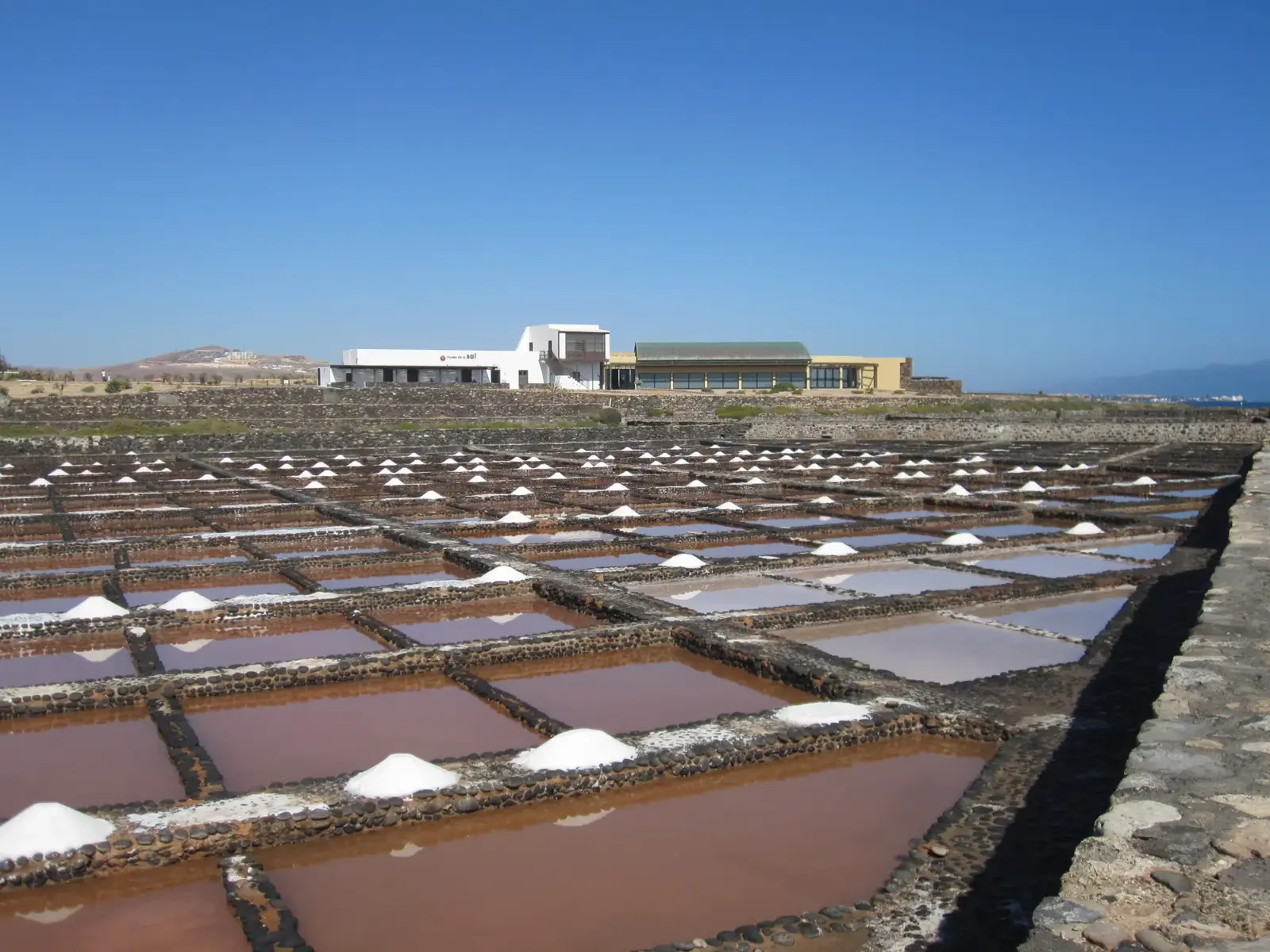
Salinas del Carmen: salt pans and museum building · Summerbrize / Wikimedia Commons · CC BY-SA 4.0 · WebP, resized; cropped for the header layout.
Discover how seawater becomes salt and why salt making once mattered so much to island life. These historic saltworks are more than a monument: sea salt is still produced here using traditional methods.
Allow around 60–90 minutes for the museum and outdoor area. It makes an interesting stop if you would like to see a side of Fuerteventura beyond the beaches.
Salinas del Carmen at a glance
- Location
- East coast, south of Caleta de Fuste
- Time to allow
- Around 60–90 minutes
- Admission without Canary Islands residency
- Adults €6 · Children €3
- Opening hours
- Seasonal; see visiting information below
- What makes it special
- Traditional salt production by the Atlantic
Checked: 4 November 2026. Prices and opening hours may change.
What are the Salinas del Carmen?
The saltworks are in the small coastal village of Las Salinas del Carmen, south of Caleta de Fuste in the municipality of Antigua. Salt production at this site dates back to the late 18th century. The works were rebuilt and expanded from 1910.
Today, the saltworks form part of Fuerteventura’s cultural heritage. Shallow pans, channels and working areas stand beside the sea. The site is both a working saltworks and part of the museum visit.
How is salt made at Salinas del Carmen?

Pans used in traditional salt production · Norbert Nagel, Mörfelden-Walldorf, Germany / Wikimedia Commons · CC BY-SA 3.0 · WebP, resized; technical preparation: FreshSurf.
The basic principle is simple: seawater evaporates and salt remains. Several stages of work turn it into finished sea salt.
A distinctive feature is the Saltadero, where waves strike the coast and bring seawater into the works. An open channel carries it into the cocederos, or warming ponds, and then into the tajos, the shallow crystallisation pans.
- Bring in seawater: Seawater enters the works and is distributed through the prepared areas.
- Let the water evaporate: Sun and wind gradually remove water, increasing its salt concentration.
- Harvest the salt: Once enough crystals have formed, workers gather the salt using traditional tools.
- Dry the salt: The harvested salt is collected and prepared for further use.
A speciality is Sal de Espuma. Its name refers to the distinctive way seawater enters the works at the Saltadero.
Museo de la Sal: what is there to see?
The salt museum complements the outdoor works with an exhibition about the craft and its importance to Fuerteventura.
The exhibition takes you back to around 1910. Rooms staged as living and working spaces explore the history of the saltworks, the role of the Saltadero, traditional tools and the salt workers’ daily lives. They help make sense of the pans you see outside.
Salt pans, salt piles and a whale skeleton
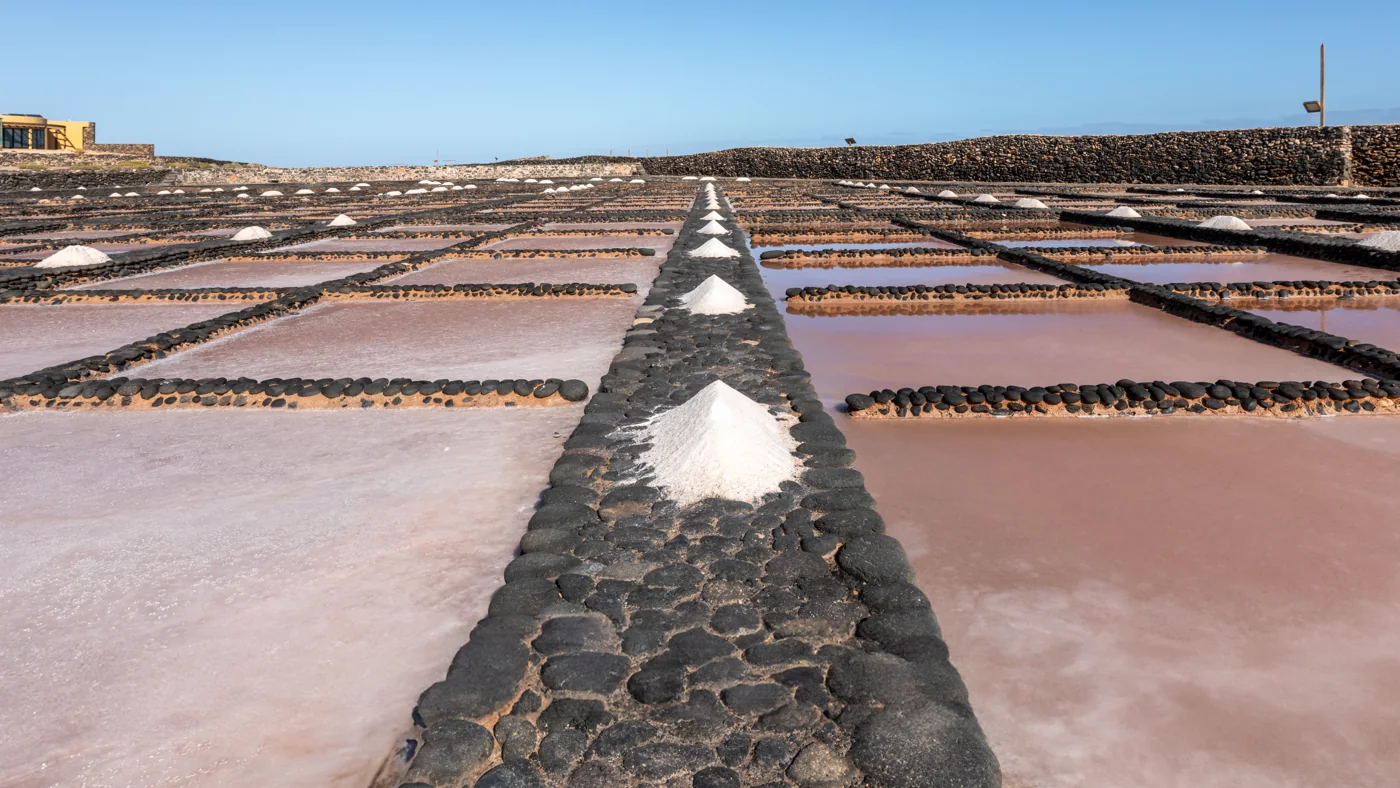
Crystallisation pans: water and salt along the edges · Dietmar Rabich / Wikimedia Commons · CC BY-SA 4.0 · WebP, resized; technical preparation: FreshSurf.
The salt pans
Here, seawater evaporates and salt forms. The appearance of the pans varies with the stage of production. Look at their narrow edges too: harvested salt is gathered there to drain.

White salt piles after harvesting · Dietmar Rabich / Wikimedia Commons · CC BY-SA 4.0 · WebP, resized; technical preparation: FreshSurf.
The salt piles
The bright piles are a characteristic sight at the works. They show the results of manual harvesting and contrast with the dark edges of the pans.

The whale skeleton beside the Atlantic · Norbert Nagel, Mörfelden-Walldorf, Germany / Wikimedia Commons · CC BY-SA 3.0 · WebP, resized; technical preparation: FreshSurf.
The whale skeleton
A large whale skeleton displayed against the Atlantic is another eye-catching part of the walk, especially for children.
The museum also has a shop and food and drink facilities. Check what is open when you visit.
“Salinero por un día”: a salt worker for a day
For a closer look at traditional salt production, the museum offers Salinero por un día. The activity introduces the practical work and tools of the salineros.
According to Museos Fuerteventura, it runs on Wednesdays with advance booking. Ask the museum directly about dates, languages, participation requirements and any weather restrictions.
Visiting Salinas del Carmen: hours, admission & getting there
Opening hours and admission
The official sites publish partly conflicting opening hours. The museum’s own website gives summer and winter schedules; the wider museum directory lists 10am–6pm all year. The table below follows the museum’s own visiting page.
| Information | Details |
|---|---|
| May–October | Daily, 10am–6pm |
| November–April | Daily, 9:30am–5:30pm |
| Adults without Canary Islands residency | €6 |
| Children without Canary Islands residency | €3 |
| Children aged 0–3 | Free |
| Adults with Canary Islands residency | €3 |
| Children with Canary Islands residency | €2 |
The museum’s own website says the ticket office closes 45 minutes before the museum. Combined tickets are also offered with Museo del Queso Majorero and Centro de Interpretación los Molinos. Check age limits and evidence required for reduced rates before buying.
Getting there and parking
Reach the east-coast saltworks by hire car via the FV-2. Follow signs for Museo de la Sal or Las Salinas del Carmen.
Address: Barrio Las Salinas 2, 35610 Antigua, Fuerteventura. Follow local signs when looking for parking near the museum.
Travelling by bus is also possible in principle. Check current routes, stops and your return journey with Tiadhe.
What should you bring?
The pans are exposed to the coastal weather. Bring sun protection, water and a light layer against the wind. Wear comfortable shoes, stay on visitor paths and respect the working areas.
Is the salt museum worth visiting with children?
Yes, especially if your children enjoy discovering how everyday things are made. Seawater, sunshine, wind and manual work combine to produce something we use every day.
The museum, outdoor works and whale skeleton provide different things to explore. Allow breaks in strong sun or wind. Around 60–90 minutes is usually a useful planning guide for families.
Frequently asked questions about Salinas del Carmen
Is Salinas del Carmen worth visiting?
Yes, if you enjoy traditional crafts, island history and distinctive coastal landscapes. You can visit historic salt pans and learn how sea salt is still harvested by hand.
How long does a visit to the salt museum take?
Allow around 60–90 minutes for the museum and outdoor works. Up to two hours is useful if you want to explore in detail or take a break.
Can you visit the salt pans for free?
Admission is charged for a regular visit to the museum and saltworks. Parts of the coastal landscape can be seen from public areas outside the site. Access to the actual visitor and working areas is subject to the site’s access rules.
Is salt still produced at Salinas del Carmen?
Yes. The historic works are still used for traditional salt production. The salt workers harvest sea salt by hand.
Where can I find current opening hours and prices?
Current visiting information is available on the salt museum’s official website. Check before your outing because opening hours and admission prices may vary.
Discover more of Fuerteventura
Salinas del Carmen shows how closely life in Fuerteventura is connected with the sea, and how much the island offers beyond its beaches.
Find more places, outings and holiday tips in our Fuerteventura guide.
Sources & editorial information
FreshSurf Team · Based in El Cotillo since 2009 · Updated: 4 November 2026
- Official museum website: visiting hours and admission
- Official museum website: exhibition and history
- Official museum website: traditional salt production
- Museos Fuerteventura: museum, prices and activities
- Official tourism information: museums in Fuerteventura
Photo credits
- Salinas del Carmen, Meersalz-Saline auf Fuerteventura.jpg · Summerbrize / Wikimedia Commons / CC BY-SA 4.0 · WebP, resized; cropped for the header layout.
- Marine water saline – Salinas del Carmen – Museo de la Sal – Fuerteventura – Canary islands – Spain – 17.jpg · Norbert Nagel, Mörfelden-Walldorf, Germany / Wikimedia Commons / CC BY-SA 3.0 · WebP, resized; technical preparation: FreshSurf.
- Antigua (Fuerteventura, Spain), Museo de las Salinas del Carmen, Kristallisierungsbecken — 2025 — 7262.jpg · Dietmar Rabich / Wikimedia Commons / CC BY-SA 4.0 · WebP, resized; technical preparation: FreshSurf.
- Antigua (Fuerteventura, Spain), Museo de las Salinas del Carmen, Kristallisierungsbecken — 2025 — 7219.jpg · Dietmar Rabich / Wikimedia Commons / CC BY-SA 4.0 · WebP, resized; technical preparation: FreshSurf.
- Marine water saline – Salinas del Carmen – Museo de la Sal – Fuerteventura – Canary islands – Spain – 22.jpg · Norbert Nagel, Mörfelden-Walldorf, Germany / Wikimedia Commons / CC BY-SA 3.0 · WebP, resized; technical preparation: FreshSurf.