



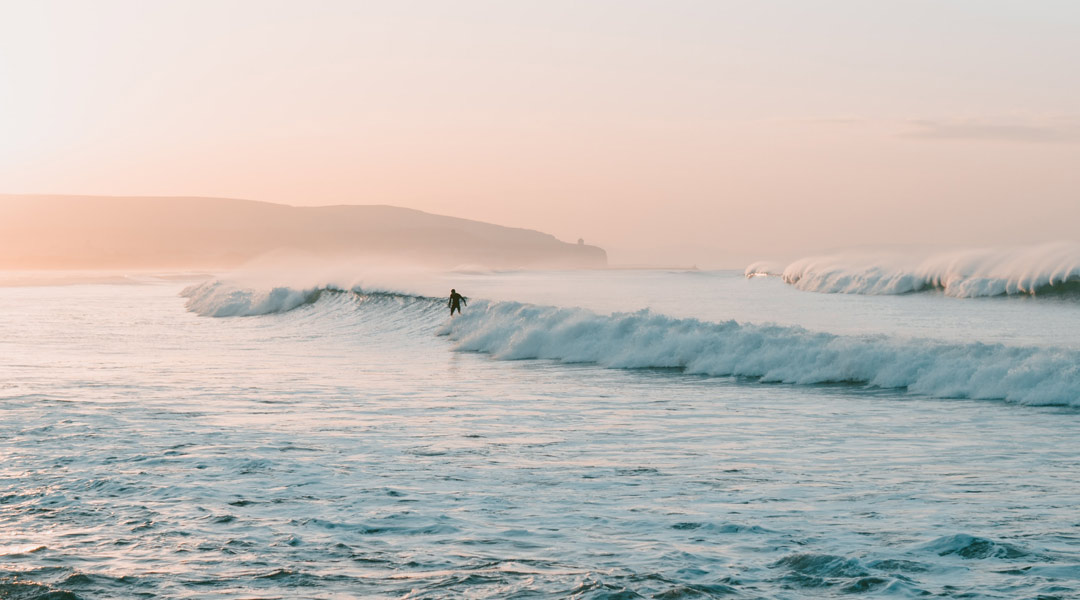
A common half-truth leads many visitors to believe that Fuerteventura means “strong wind” in Spanish. “Fuerte” does indeed mean strong, but “aventura” translates as adventure – so Fuerteventura can be translated as “great adventure”. The island’s name probably goes back to the French-speaking explorer Jean IV de Béthencourt (“forte aventure”). Whether or not Fuerteventura owes its name to this, anyone who has been here knows it: a strong, steady wind. Without wind we’d be lost at the surf camp Fuerteventura. Wind creates the waves we need for surfing.
surfing
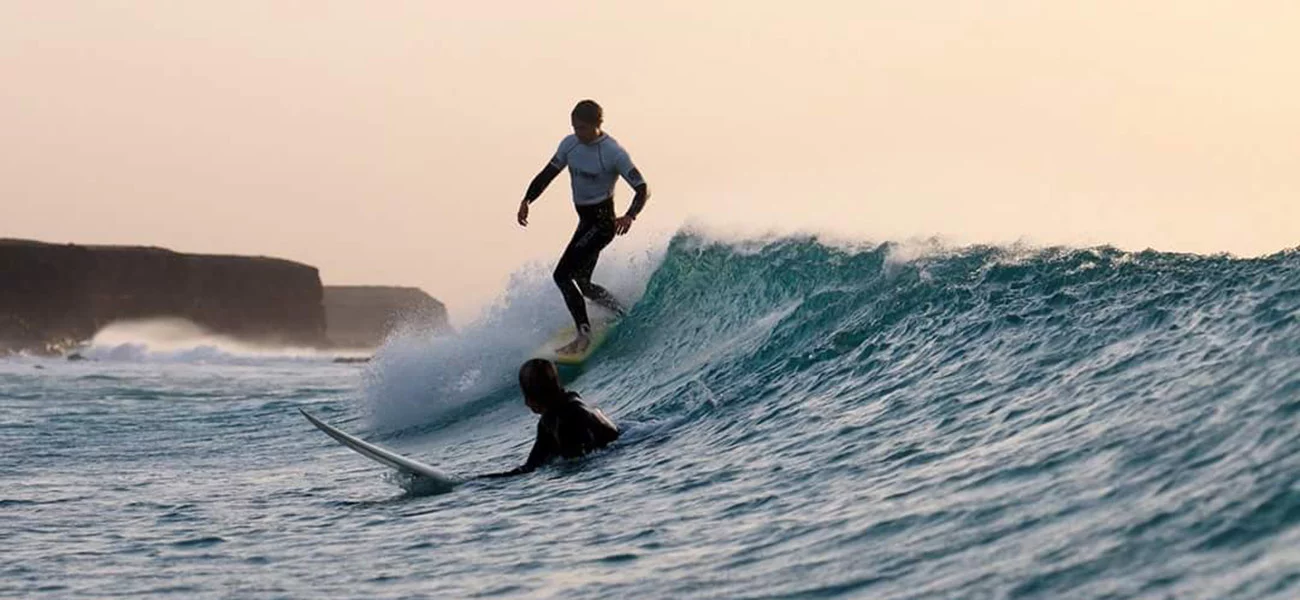
The Canary Island of Fuerteventura lies close to the equator and boasts a very stable, mild climate. It rarely rains here, thanks to the extremely flat landscape where clouds can hardly build up. The waves break over reefs and sandbanks, and there’s a suitable surf spot for every level. Few places close to Europe have such pleasant weather and such consistent waves during the European winter as Fuerteventura. But how are waves actually formed?
The waves we surf on Fuerteventura are created by wind. The wind transfers its energy to the water. The water particles barely move from their spot – they “just” pass on energy. This energy then travels through the water in a wave-like motion, the so-called orbital particle motion. The further out on the ocean the wind blows across the water surface, the more time the waves have to organise themselves and sort into sets through frequency overlap. When the waves, or the swell, then meet a rising seabed, they pile up until they can no longer hold their own weight and finally break on the beach. So thanks to the wind, we have the waves in which we want to teach you to surf.
Paragliding
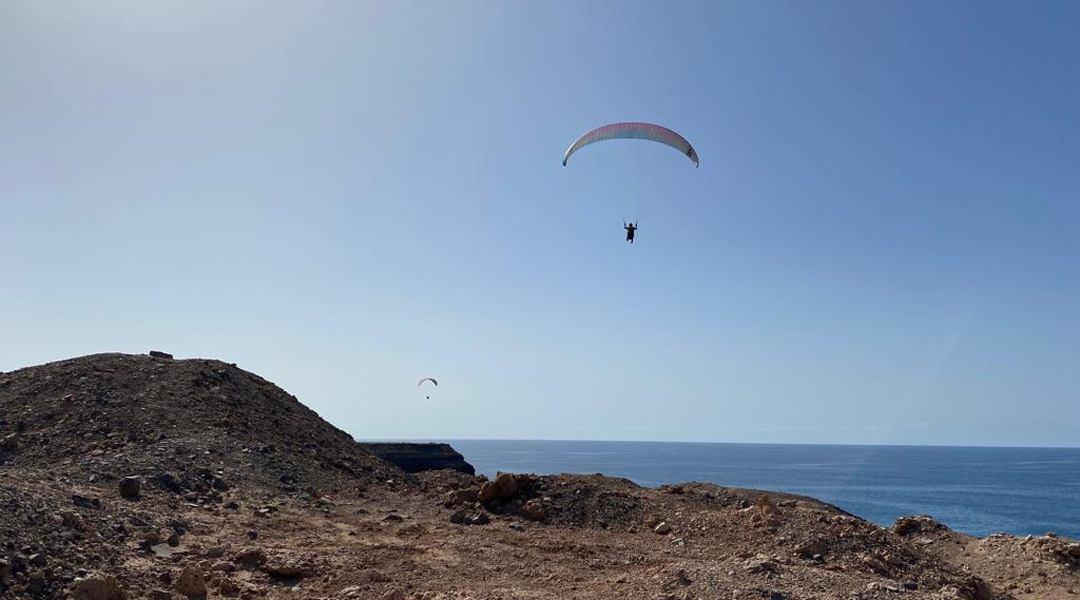
The onshore winds are perfect for coastal paragliding. Together with the wind on Fuerteventura, the steep stretches of coast regularly create strong updrafts on the windward side – a build-up of wind that gives paragliders enough lift in these zones to fly practically forever.
Windsurfing
One of the more classic sports is, of course, windsurfing. Almost everyone has watched windsurfers from the beach or even tried it themselves. Even if the sport no longer enjoys the cool factor it once had, windsurfing is still great on our island. The constant wind on Fuerteventura and large flat-water areas offer good conditions for beginners and pros alike.

Kitesurfing
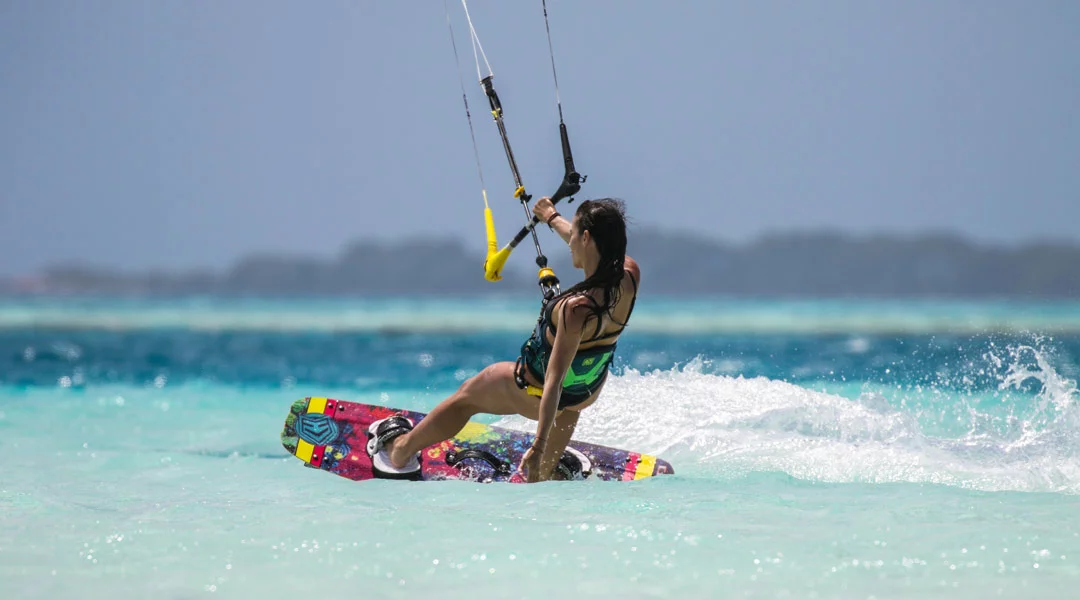
For more than 34 consecutive years, Fuerteventura has hosted the Windsurfing and Kitesurfing World Cup. That alone shows how well established both sports are here. Besides the wind on Fuerteventura, there’s also the option of sheltering from the wind, e.g. behind palm trees or mountains.
If you’d like to learn more about kitesurfing, have a look here!
For windsurfers and kiters, 2 major surf centres have become established – Costa Calma with neighbouring Sotavento and its standing-depth lagoon, which is perfect for learning, and in the north Corralejo with Flag Beach and its at times very demanding wave. Especially for experienced windsurfers, Fuerteventura offers extremely challenging spots with Hawaiian conditions on the North Shore, the island’s north coast, particularly in winter.
Questions about wind on Fuerteventura
Is it always windy on Fuerteventura?
The climate of the Canary Islands is subtropical. The weather and climate are strongly influenced by the trade wind belt, and Fuerteventura is normally affected too. The topography of the second-largest Canary Island means the trade wind can blow across the land with great force. Fuerteventura has few elevations and is a rather flat island, so the wind on Fuerteventura is hardly held back.
When is the wind strongest on Fuerteventura?
Depending on the season, there are months with more or less wind on Fuerteventura. April to August are considered the months with the strongest wind, though this period can extend into September. From September/October to March is considered the less windy period, and of course there are also often completely windless days.
Where is it calm on Fuerteventura?
Which beaches on Fuerteventura are particularly sheltered from the wind? That’s difficult to answer, but on the Costa Calma – literally the “calm coast” – there are some less windy beaches, such as Playa de Tarajalejo.
Is the wind cold on Fuerteventura?
The temperature of the wind depends heavily on its direction. While winds from the north often feel colder, the easterly winds that blow over from the Sahara in Africa are very warm and bring fine sand dust with them. This wind is also known as calima.
Where can I see how the wind is blowing on Fuerteventura?
There are various weather and wind forecast websites where you can check wind direction and wind strength. One of them is Windfinder.
What’s the difference between onshore and offshore wind?
Onshore wind blows from the sea towards the land and flattens the waves, while offshore wind blows from the land towards the ocean and keeps the waves “open” for longer – which is great for us surfers, until the wind gets too strong. Then we can’t get into the waves anymore. You’ll find more about onshore and offshore wind here!
More on this topic: Looking back on Jeanine’s surf holiday
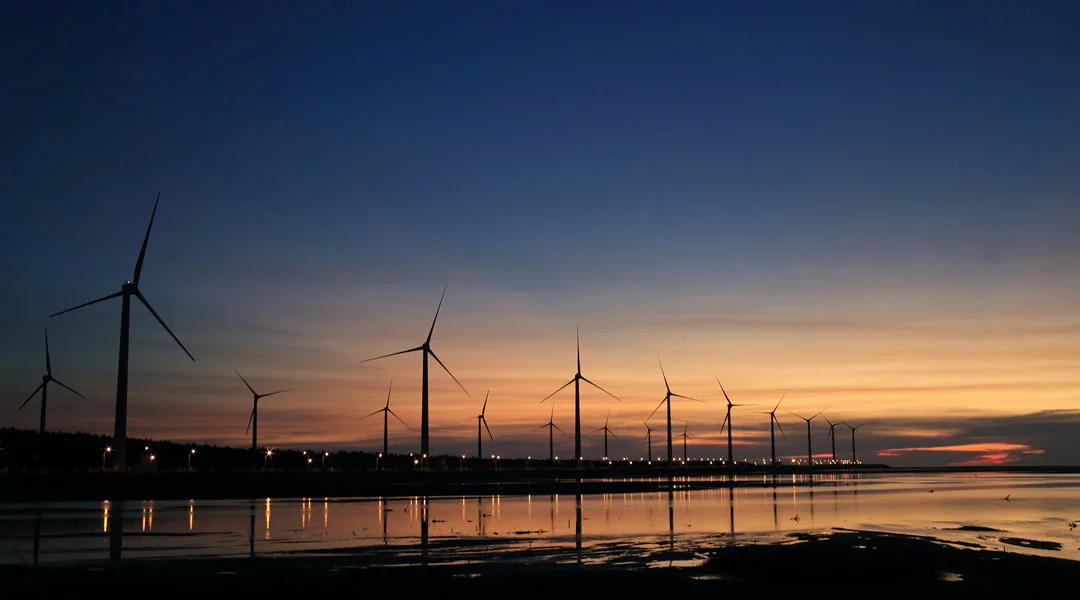
Modern use of wind
It’s not just athletes who love the wind on Fuerteventura – the island’s modern power supply relies on it too.
The energy transition on Fuerteventura is just around the corner. The Canary Islands government is currently drawing up a plan for the energy transition that sets out the areas where new installations are to be built. With the plans already on the table, Fuerteventura is relying above all on wind farms, both on land and at sea.
You often see wind turbines on Fuerteventura. The reliable winds ensure a high yield. More than 70 wind farms are in operation across the Canary Islands, and 70% of the electricity needed for water treatment comes from wind energy.
By 2030, the regional government plans to install 192 megawatts of onshore wind power and 50 megawatts offshore on the island. Thermal generation at the power plant in the capital’s El Charco district is to be reduced to 98 megawatts – less than photovoltaics, where up to 110 megawatts are to be installed.
Ruins on Fuerteventura
But what came before the sporting and modern use of the wind in the Canary Islands?
People made use of the wind on Fuerteventura much earlier – not for fun, but out of sheer necessity. Driving across Fuerteventura, you’ll regularly come across structures like these:
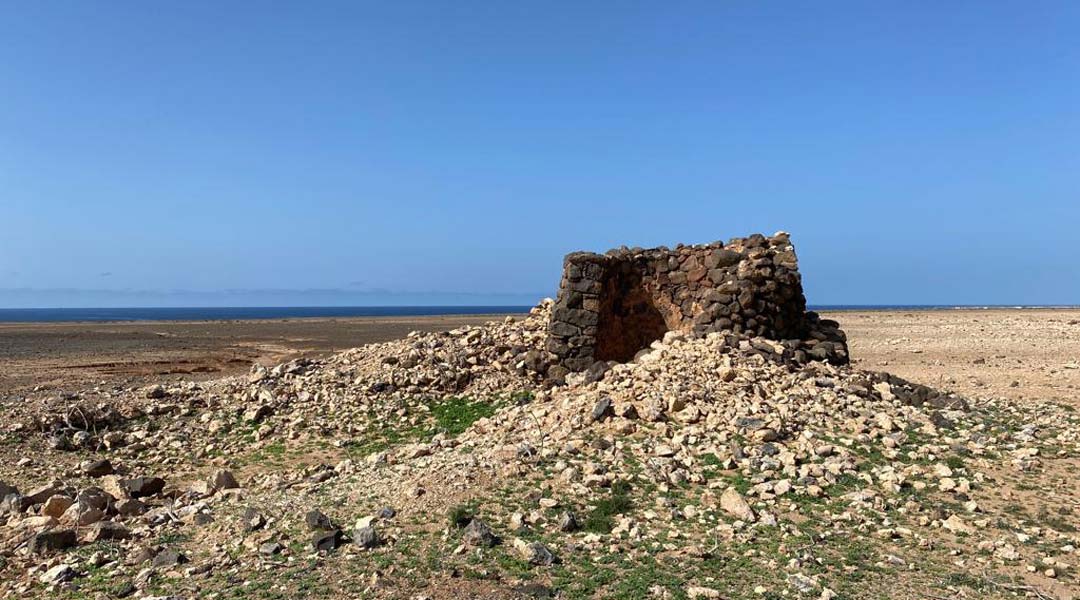
These piles of stones were once a useful tool: windmills. Some have been restored, others are no longer recognisable – but they’re scattered all over the island.
Windmills on Fuerteventura – the high-tech of the past
Windmills were introduced on Fuerteventura between the end of the 18th and the beginning of the 19th century, at a time when the cultivation of tomatoes, alfalfa, wheat and barley was flourishing. Their spread was favoured by the trade winds, their source of energy. That’s why they were built in wind-exposed spots, especially in the north and centre of the island, where they are part of the rural landscape.
Their arrival meant that other, more traditional methods of grinding grain, such as the tahona or the hand mill found in almost every house, gradually fell out of use – although they didn’t disappear completely, but continued to be used in the household and during windless periods.
Windmills used for grinding cereal grains, sometimes roasted, to make gofio or unroasted flour, offered enormous advantages for this task. Gofio is a product made by grinding roasted grain, with or without added sea salt.

The wind on Fuerteventura moves the stones inside the windmill
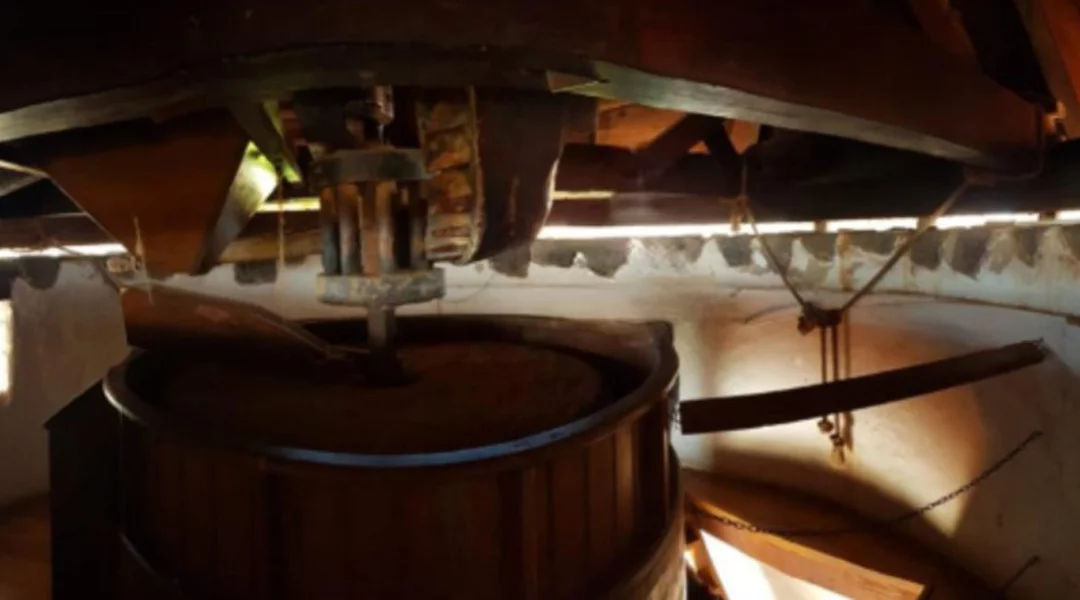
The traditional windmill, known on the island as the “male windmill” (molino), was the first on Fuerteventura and is a copy of the windmills of Castile. They are circular, have two or three levels and four or six sails. Their walls are made of stone and joints, sometimes with clay and sometimes with lime mortar. The grinding mechanism consists of two millstones, the hopper and the chute, and is located at the foot of the tower.
On the third floor, under a conical wooden roof, are the gear wheel with its shaft, the spindle and the sails, usually four or six, attached to a slightly inclined horizontal axis.
Sails covered with linen cloth drove this mechanism inside. Here, too, the constant wind on Fuerteventura is a big advantage.
Wind use in the future
In short, the wind on Fuerteventura has always served people well – even if imported goods mean there’s no longer any need to use these techniques. Today the wind is a big part of our sporting fun and in this way contributes to the island’s prosperity.
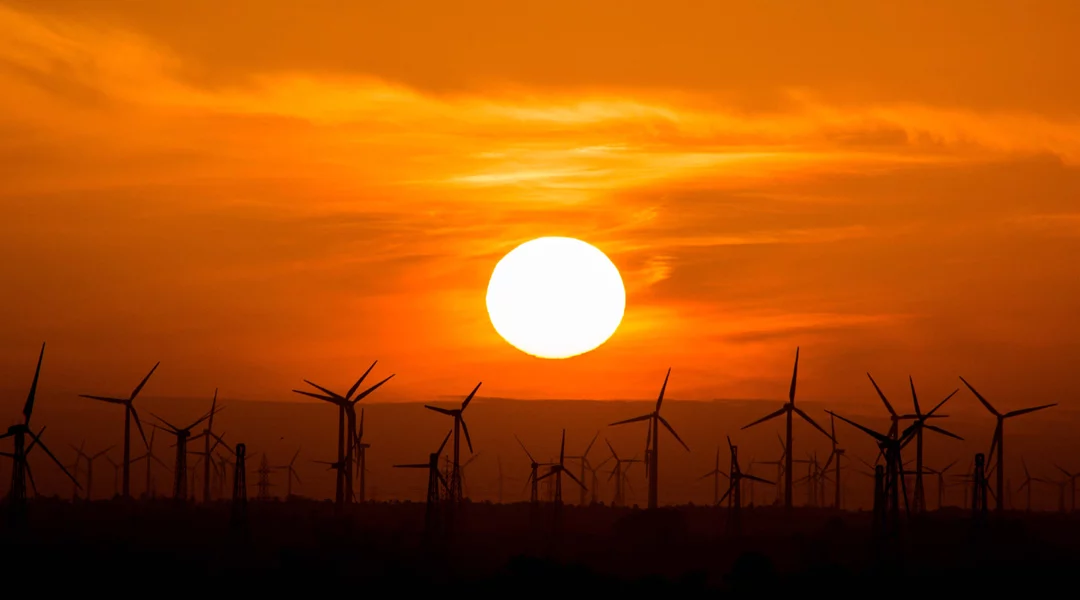
Unfortunately, the future of wind power generation isn’t looking great. Although the government supports renewable energies, the recent deaths of two guirres (a highly endangered vulture species) led to some wind turbines being shut down. Storing renewable energy is also still a general problem that needs to be solved. As a result, most of Fuerteventura’s energy demand is still covered by imported diesel. But that’s going a bit too far now ????
We hope we’ve been able to bring the island’s history a little closer to you and explain some of the things you’ll experience on the island. So if you need a break from our surf camp, there are plenty of places to discover this history, e.g. the cheese museum in Antigua
If you’re planning a road trip across Fuerteventura, we also have a whole list of sights you should check out!
Best to use our surf camp as a base for all these adventures 😉