



Pájara, Fuerteventura: sights & tips for your visit
A small village square, palm trees, traditional houses and a church with remarkable stone carvings: Pájara reveals a side of Fuerteventura beyond the beach.
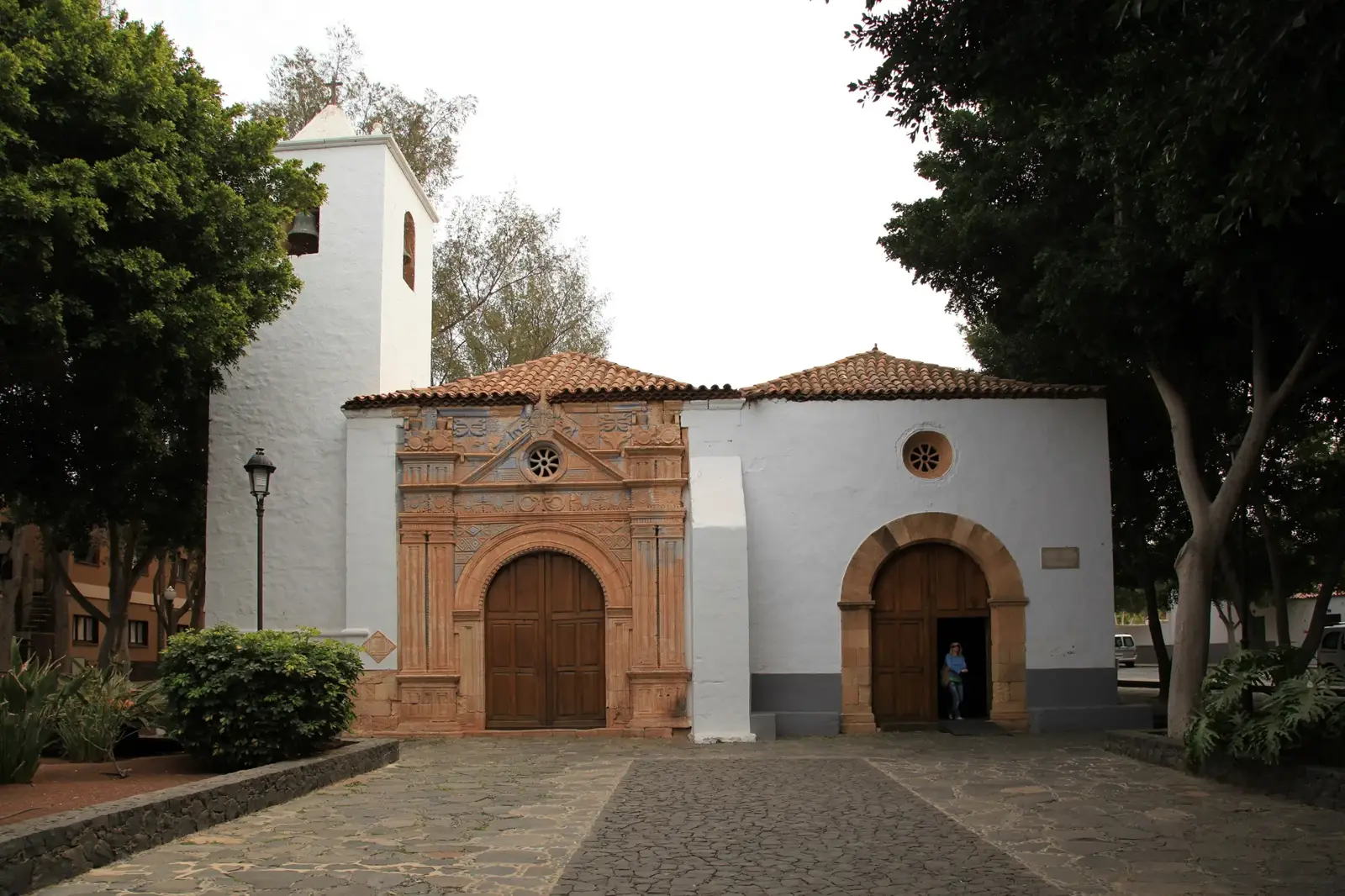
Nuestra Señora de Regla church · Frank Vincentz / CC BY-SA 3.0 · Converted to WebP and resized; cropped for the header layout.
The inland village is best known for the church of Nuestra Señora de Regla. An old water-lifting device and a traditional grain mill also tell the story of everyday life on this dry island.
Allow around 45–90 minutes for the village centre. That makes Pájara a useful stop on a drive through the mountains, perhaps combined with Betancuria.
Pájara: village or municipality?
Pájara lies in the south-western interior of Fuerteventura and is the administrative centre of the municipality of the same name.
For your trip planning, remember that Costa Calma, Morro Jable and parts of the Jandía peninsula also belong to the municipality. These coastal destinations are much farther south.
- Time in the village
- 45–90 minutes
- Combine with
- Betancuria & the interior
- Worth knowing
- Village and municipality differ
The best sights in Pájara
1. Iglesia de Nuestra Señora de Regla
Nuestra Señora de Regla is Pájara’s best-known landmark. It stands on the village square opposite the town hall. Construction began in the 17th century, and a second nave was added in the 18th century.
Take a closer look at the richly carved stone doorway. You can spot geometric patterns, moons, birds and unusual figures. The carvings alone do not establish a single origin or explanation for every motif.

Details of the church doorway · Tony Hisgett / CC BY 2.0 · Converted to WebP and resized; full image proportions retained.
2. The historic noria by the town hall

Noria and town hall on the village square · Frank Vincentz / CC BY-SA 3.0 · Converted to WebP and resized; full image proportions retained.
In the village centre you will find a historic noria: a mechanical device once used to lift water from a well.
An animal, such as a donkey or camel, walked in a circle to drive the lifting mechanism through a system of gears. On an island as dry as Fuerteventura, this was valuable technology: the water served households and agriculture.
3. The tahona: milling grain with animal power
Another feature is the traditional tahona around Calle de los Geranios. The municipality’s official village route leads to this historic installation.
Unlike the noria, the tahona ground grain rather than drawing water. An animal drove the mechanism that turned the millstones. The grain was processed into flour or gofio.
- Noria
- Lifts water from a well
- Tahona
- Grinds grain into flour or gofio
4. The village square and historic streets
Around the church you will find pale houses, palm trees and small streets with a traditional Canarian character.
Pájara is a quiet stop rather than a large visitor centre. A short walk and a break in the square are often enough to enjoy its atmosphere. Allow extra time if you also walk to the tahona.
Visiting Pájara: getting there, parking & timing
How long to stay
Allow around 45–90 minutes for the church, noria and village centre. Around two hours is comfortable with a longer break, a walk to the tahona or additional visits.
Getting there
A hire car gives you access via the roads through the island’s interior. The FV-30 connects Pájara with Betancuria through winding mountain scenery. Treat the drive as a separate part of your outing.
Parking
Look for signposted parking around the village centre and follow local signs. You can then walk between the church and noria.
Without a hire car
Check the current bus connections for your travel day before setting out, especially your return journey. Public transport gives you less flexibility in the island’s interior.
Discover Pájara and Betancuria in one day
If you would like to explore Fuerteventura’s historic side, Pájara and Betancuria combine well in one outing.
- Pájara: a church with a remarkable carved doorway, a historic water-lifting device and a grain mill.
- Betancuria: the former island capital, with its old centre, church and archaeological museum.
For example, start in Betancuria and then follow the FV-30 to Pájara. Allow around three to four hours for the two village visits together, plus driving time and longer breaks. Check current opening hours before planning a museum visit.
Frequently asked questions about Pájara
Is Pájara in Fuerteventura worth visiting?
Yes, especially if you enjoy historic villages, Canarian architecture and Fuerteventura’s history. Nuestra Señora de Regla church, the noria and the tahona are the main sights.
How long do you need in Pájara?
Around 45–90 minutes is enough for a walk around the village centre. Allow about two hours if you want a longer break or additional visits.
Can you visit Pájara without a car?
Yes, in principle. However, bus connections into the island’s interior are limited. A hire car makes it easier to combine Pájara with Betancuria and other places of interest.
Are Costa Calma and Morro Jable part of Pájara?
Yes. Both coastal towns belong to the municipality of Pájara, but they are not in the historic village. To visit the village centre, you need to travel inland.
Discover more of Fuerteventura
Pájara reveals a quieter side of the island, shaped by its history. Find more villages and outing ideas in our Fuerteventura guide.
When you feel like returning to the sea, beach and waves, take a look at our tips for El Cotillo.
Sources & editorial information
FreshSurf Team · Based in El Cotillo since 2009 · Updated: 4 November 2026
- Municipality of Pájara: village route and Nuestra Señora de Regla church
- Municipality of Pájara: noria and tahona on the ethnographic route
Photo credits
- Pájara village – Plaza de Nuestra Señora de Regla-FV-30 – Iglesia ex 01 ies.jpg · Frank Vincentz · Wikimedia Commons · CC BY-SA 3.0 · Converted to WebP and resized; full image proportions retained.
- Church door detail Pajara (3311415643).jpg · Tony Hisgett · Wikimedia Commons · CC BY 2.0 · Converted to WebP and resized; full image proportions retained.
- Pájara village – Plaza de Nuestra Señora de Regla-FV-30 – Ayuntamiento+Noria 01 ies.jpg · Frank Vincentz · Wikimedia Commons · CC BY-SA 3.0 · Converted to WebP and resized; full image proportions retained.